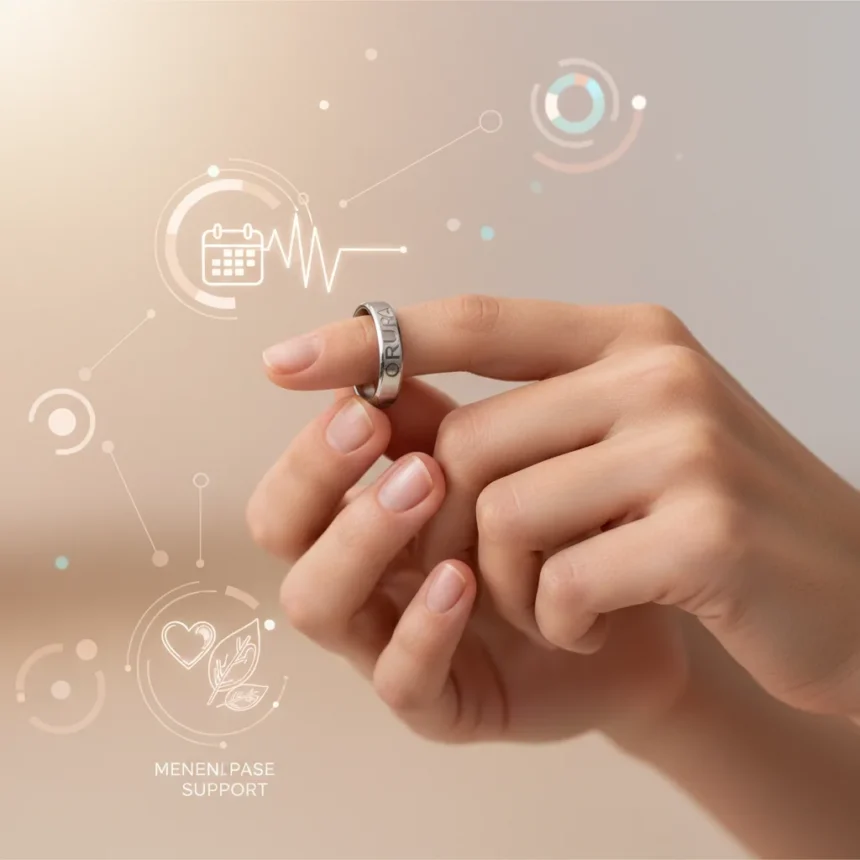
Women’s health tracking on mainstream wearables remains frustratingly shallow. Oura Ring is trying to change that. The smart ring maker is rolling out dedicated women’s health tracking features, including birth control support and Menopause Insights, in a free May software patch for existing Oura Ring users.
Key Takeaways
- Oura Ring adds birth control tracking and Menopause Insights in May via free software update
- New features address a documented gap in women’s reproductive and hormonal health monitoring
- Existing Oura Ring owners receive these capabilities without additional hardware purchase
- The expansion positions Oura as a specialist in personalized women’s health wearables
Why Women’s Health Tracking Matters for Wearables
Most fitness trackers and smartwatches treat women’s health as an afterthought. Period tracking exists on many devices, but deeper reproductive and hormonal insights—the kind that actually help women understand their bodies—remain rare. Oura identified this gap and decided to fill it. The distinction matters because women’s health is not a niche feature; it is a core use case that billions of people depend on daily.
Hormonal cycles affect sleep quality, recovery, mood, and athletic performance. A wearable that ignores these patterns is leaving critical health data on the table. Oura’s decision to build dedicated women’s health tracking signals that the company sees this not as a checkbox feature but as a fundamental pillar of what a health wearable should do.
Birth Control Support and Menopause Insights Explained
Oura is introducing two major women’s health features in the May update. Birth control support allows users to log their contraceptive method and receive personalized insights based on how their body responds to hormonal birth control. Menopause Insights tracks hormonal shifts and symptoms associated with menopause, helping users understand what their body is experiencing during this major life transition.


These are not generic features. Birth control affects sleep, temperature, and recovery patterns—all metrics Oura’s ring already measures. By connecting contraceptive data to these biometrics, the app can surface patterns that users might otherwise miss. Similarly, menopause involves dramatic hormonal changes that reshape sleep architecture and body temperature regulation. A wearable that understands this context becomes genuinely useful rather than just decorative.
The features roll out as a free software update, meaning existing Oura Ring owners gain access without buying new hardware. That is a significant advantage over competitors that require device upgrades to unlock new capabilities.



How This Positions Oura in the Wearables Market
Oura Ring competes in a crowded wearables space dominated by Apple Watch and Fitbit, both of which offer period tracking but lack the depth of women’s health insights Oura is now building. Apple Watch focuses on general fitness and wellness; Fitbit emphasizes step counting and basic cycle tracking. Neither has invested heavily in reproductive health or menopause-specific monitoring.
By doubling down on women’s health, Oura is carving out a distinct market position. The company is essentially saying: if you care deeply about understanding your reproductive and hormonal health, this is the wearable built for you. That specialization can be more valuable than trying to be everything to everyone.
The May rollout also signals that Oura is listening to its user base. Women have been asking for better health tracking for years. The fact that Oura is delivering dedicated features—rather than treating women’s health as a secondary concern—suggests the company understands what its audience actually needs.
What Users Should Know Before the Update
The May software patch is free for all existing Oura Ring owners. No purchase is required. The features integrate directly into the existing Oura app, so users will not need to learn a new interface or switch apps to access birth control and menopause tracking.



One important caveat: the research brief does not specify which Oura Ring models will receive these features or whether there are any hardware limitations. Users should check Oura’s official channels closer to the May launch to confirm compatibility with their specific device.
Will This Actually Change How Women Use Wearables?
New features alone do not guarantee adoption. The real test is whether Oura’s birth control support and Menopause Insights actually deliver insights that users find actionable. Can the app tell you something meaningful about your cycle? Does menopause tracking help you make better decisions about sleep, exercise, or health management? If yes, this becomes a genuine significant shift. If the features are surface-level, they are just another checkbox.
What we know so far is that Oura is taking women’s health seriously enough to build dedicated features and roll them out for free. That is a stronger signal than most wearable makers have sent.
Is the May update free for all Oura Ring users?
Yes. Birth control support and Menopause Insights arrive as a free software patch in May for existing Oura Ring owners. No additional purchase or subscription is required to access these features.
Will these features work on older Oura Ring models?
The research brief does not specify hardware compatibility. Check Oura’s official announcement or support site closer to the May launch for details on which Oura Ring generations support the new women’s health features.
How does Oura’s approach compare to other health wearables?
Most mainstream wearables like Apple Watch and Fitbit offer basic period tracking but lack dedicated birth control or menopause insights. Oura’s decision to build specialized women’s health features sets it apart, positioning the ring as a wearable designed specifically for users who want deeper reproductive and hormonal health monitoring.
Oura’s move to expand women’s health tracking is overdue, but it is also significant. In a wearables market that has treated women’s health as optional for too long, a company choosing to specialize in this space sends a clear message: women’s health matters, and it deserves real engineering investment. The May update will show whether Oura can back that promise with features that actually work.
Edited by the All Things Geek team.
Source: Android Central