





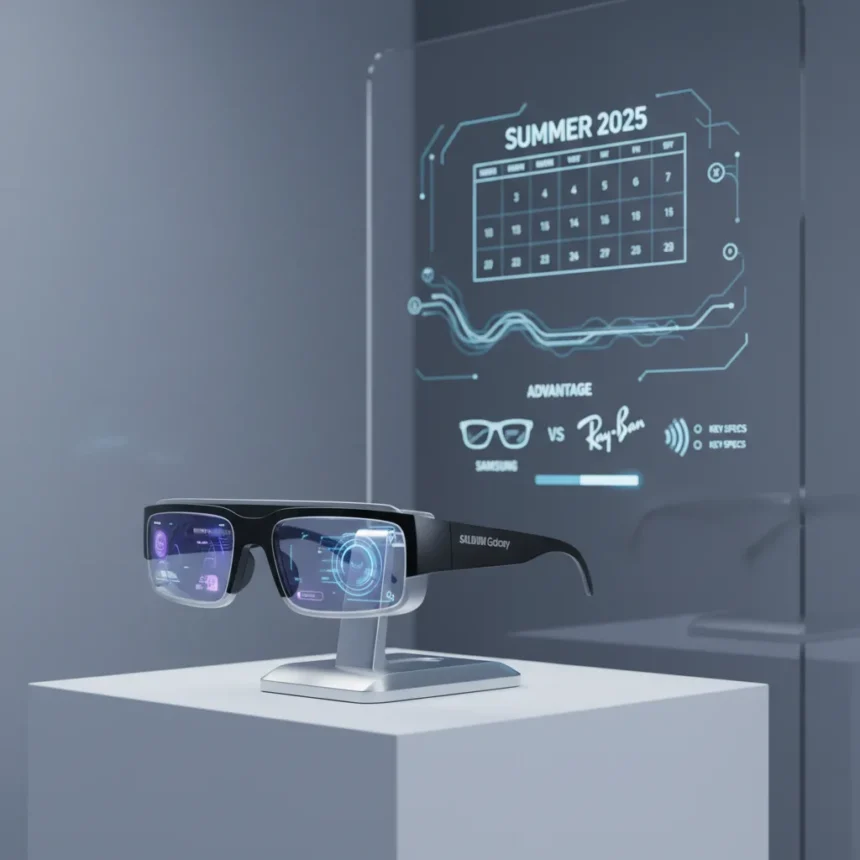
Samsung Galaxy Glasses are coming this summer, marking a surprisingly aggressive timeline for Samsung’s entry into the AR glasses market. The device will launch as sunglasses, giving it a practical advantage over existing competitors and positioning it as an all-day wearable rather than a niche gadget.
Key Takeaways
- Samsung Galaxy Glasses are launching this summer, earlier than many industry observers expected.
- The device will be designed as sunglasses, not a standalone headset.
- Samsung Galaxy Glasses will have at least one major specs advantage over Ray-Ban’s competing product.
- The summer Unpacked event is the expected venue for the official announcement.
- This positions Samsung as a serious competitor in the emerging AR glasses space.
Samsung Galaxy Glasses Launch Window Narrows
The surprise here is timing. Samsung Galaxy Glasses were initially expected as a 2026 product, but the company has accelerated its plans significantly. A summer 2025 launch window means Samsung will beat most industry predictions and get its AR glasses into consumers’ hands before the year’s end. This aggressive schedule suggests Samsung believes it has solved enough of the technical challenges to justify a commercial release.
The summer Unpacked event appears to be Samsung’s chosen stage for the reveal. Unpacked is traditionally where Samsung unveils flagship devices, and positioning Galaxy Glasses alongside other flagship products would signal Samsung’s confidence in the category. A summer event also creates natural marketing momentum heading into the holiday shopping season, when AR glasses could appeal to early adopters and tech enthusiasts.
Sunglasses Form Factor Sets Samsung Apart
Samsung Galaxy Glasses will launch as sunglasses, not as a headset or visor. This design choice matters more than it might seem. Ray-Ban’s competing offerings, built in partnership with Meta, maintain a more obvious tech aesthetic. Samsung’s approach as functional eyewear means the device could work as everyday sunglasses first and AR device second, lowering the barrier to adoption for people who are hesitant about wearing visible tech.


The sunglasses form factor also addresses a practical problem: AR glasses that look like gadgets get left at home. Sunglasses are already a normal accessory, especially during summer. If Samsung Galaxy Glasses deliver UV protection and sun reduction alongside AR features, they become a genuine lifestyle product rather than a specialized tech toy.
Specs Advantage Over Ray-Ban Competitors
Samsung Galaxy Glasses will have at least one significant specs advantage over Ray-Ban’s AR glasses. The exact nature of this advantage remains unconfirmed, but it likely involves either processing power, display quality, battery life, or optical performance. Given Samsung’s expertise in display technology and its in-house chip design capabilities, the advantage could involve sharper visuals or more responsive performance.


Ray-Ban’s Meta glasses are the primary benchmark here. Meta’s offering focuses on social features and AI integration, but has faced criticism for battery life and limited practical utility. If Samsung Galaxy Glasses offer superior hardware specifications, it could shift the competitive balance in a market that has struggled to find mainstream appeal. The specs advantage alone may not determine success, but it signals Samsung is not entering the market with a me-too product.
What This Means for the AR Market
Samsung’s accelerated timeline and consumer-friendly design suggest the company sees genuine demand for AR glasses. The AR wearables market has been slower to develop than many predicted, with high prices, limited battery life, and unclear use cases holding back adoption. Samsung’s entry with a summer launch and a sunglasses design could either validate the market or expose why AR glasses remain a niche product.
The competition with Ray-Ban and Meta is just beginning. Apple is widely expected to enter the space eventually, and other manufacturers are watching closely. Samsung’s willingness to launch this summer, rather than waiting for a more mature technology cycle, suggests the company believes the market is ready now. Whether consumers agree will become clear once Samsung Galaxy Glasses reach the market and reviewers can assess real-world performance.
When will Samsung Galaxy Glasses launch exactly?
Samsung Galaxy Glasses are scheduled to launch this summer, with the summer Unpacked event as the expected announcement venue. An exact date has not been officially confirmed, but summer 2025 is the confirmed window.


How do Samsung Galaxy Glasses compare to Ray-Ban Meta glasses?
Samsung Galaxy Glasses will be designed as sunglasses with at least one major specs advantage over Ray-Ban’s competing product. Ray-Ban’s offering focuses more on social and AI features, while Samsung appears to be prioritizing hardware performance and everyday wearability.
What will Samsung Galaxy Glasses cost?
Pricing for Samsung Galaxy Glasses has not been announced. The company will likely reveal the price alongside the device at the summer Unpacked event.
Samsung Galaxy Glasses represent a calculated bet that the AR market is ready for mainstream products. By launching as sunglasses with a specs edge over existing competitors and hitting the market this summer, Samsung is signaling it believes AR wearables are no longer a distant future—they are here now. Whether the market agrees depends entirely on what Samsung delivers when the glasses finally arrive.
Where to Buy
Samsung Galaxy S26 Ultra | £379
Edited by the All Things Geek team.
Source: T3




