





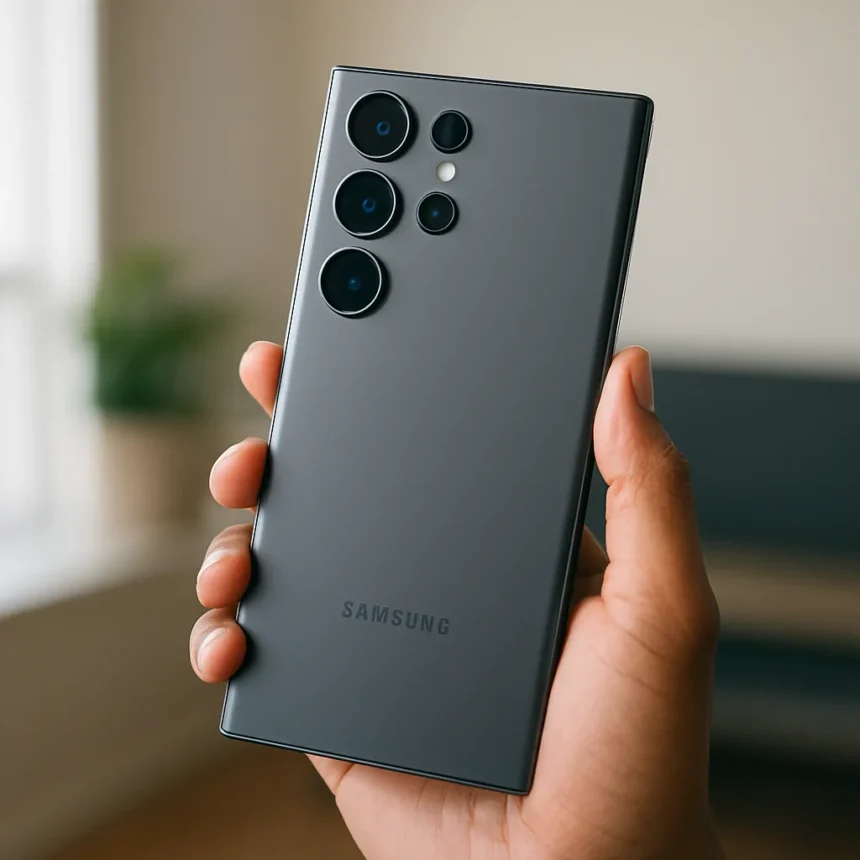
The Samsung Galaxy S26 series is Samsung’s latest flagship smartphone lineup, unveiled at Galaxy Unpacked 2026 and positioned as the most capable AI-integrated Galaxy phone to date. With a wave of new features spanning privacy, photography, and conversational AI, the series makes a strong case for itself on paper — but not every headline feature will matter equally to every buyer. Here is a clear-eyed look at what is genuinely new, what is genuinely useful, and where Samsung still has work to do.
What Makes the Samsung Galaxy S26 Series Stand Out This Year
The feature that is most likely to turn heads in public is Privacy Display, exclusive to the Galaxy S26 Ultra. It restricts the viewing angle so that people beside you cannot see your screen — a practical tool for anyone who works on sensitive documents in cafes, airports, or open-plan offices. It is the kind of feature that sounds like a gimmick until the moment you actually need it, and Samsung deserves credit for shipping it as a hardware-level solution rather than a software workaround.
On the video side, Super Steady mode has been upgraded with a horizontal lock option, which keeps footage level even when the phone tilts. Paired with enhanced Nightography for low-light video capture, the Galaxy S26 series is making a serious play for the creators and vloggers who currently default to dedicated cameras for anything shot after dark.
Galaxy AI: More Agents, More Ambition
Samsung has gone wide with its AI strategy on the Galaxy S26 series, integrating Bixby, Google Gemini, and Perplexity as distinct conversational agents that users can switch between depending on the task. That is a notably different approach from Apple’s tighter integration of a single assistant model, and it gives power users genuine flexibility — though it also risks confusing mainstream buyers who just want one reliable assistant, not three competing ones.


Photo Assist has also been upgraded, now supporting natural language prompts for AI-powered photo editing. Instead of navigating menus to remove a background or adjust lighting, you can describe what you want in plain language and the phone interprets the instruction. Whether this works as smoothly in practice as it does in a press demo remains the real question, but the direction is right.
How the Galaxy S26 Series Compares to Its Predecessor and Rivals
Compared to the Galaxy S25 series, the S26 lineup represents a meaningful step forward specifically in AI depth and video capability rather than raw hardware. The multi-agent AI approach is a genuine differentiator — neither the iPhone 16 series nor Google’s Pixel 9 lineup offers the same level of user choice between competing AI assistants at the system level. Whether that flexibility translates into a better daily experience depends entirely on how well Samsung has managed the handoffs between Bixby, Gemini, and Perplexity.



The Privacy Display feature on the Ultra model also has no direct equivalent on current Pixel or iPhone flagships, making it a legitimate reason to consider the S26 Ultra specifically if screen privacy is a priority in your daily environment.
Is the Samsung Galaxy S26 series worth upgrading to?
If you are coming from a Galaxy S24 or earlier, the combination of improved Nightography, upgraded Super Steady video, and the expanded Galaxy AI suite makes the S26 series a meaningful upgrade. If you are on an S25, the calculus is tighter — the Privacy Display on the Ultra is genuinely new, but most of the AI enhancements may arrive via software updates to existing devices.
Which Galaxy S26 model should most people buy?
For most buyers, the standard Galaxy S26 or S26 Plus will deliver the core AI and camera improvements without the Ultra’s premium. The Privacy Display is the Ultra’s clearest exclusive advantage, and unless that feature directly solves a problem in your daily life, the base models offer the better value proposition.
Does the Galaxy S26 Ultra have better low-light video than competitors?
Samsung has made enhanced Nightography a headline feature of the Galaxy S26 series, with specific improvements to low-light video capture. Without independent benchmark data available at launch, a direct numerical comparison to the iPhone 16 Pro or Pixel 9 Pro is not yet possible — but Samsung’s Nightography improvements have historically been competitive at the flagship level.



The Samsung Galaxy S26 series arrives with enough genuinely new features — Privacy Display, multi-agent AI, upgraded video stabilisation, and smarter photo editing — to justify the launch excitement. The question is not whether these features are real, but whether Samsung has executed them well enough to hold up under daily use outside of a controlled demo environment. On the evidence available, the S26 Ultra stands as the most differentiated device in the lineup, while the base models offer the AI upgrades most buyers actually care about.
Where to Buy
Samsung Galaxy S26 Plus | Samsung Galaxy S26
Edited by the All Things Geek team.
Source: Android Central




