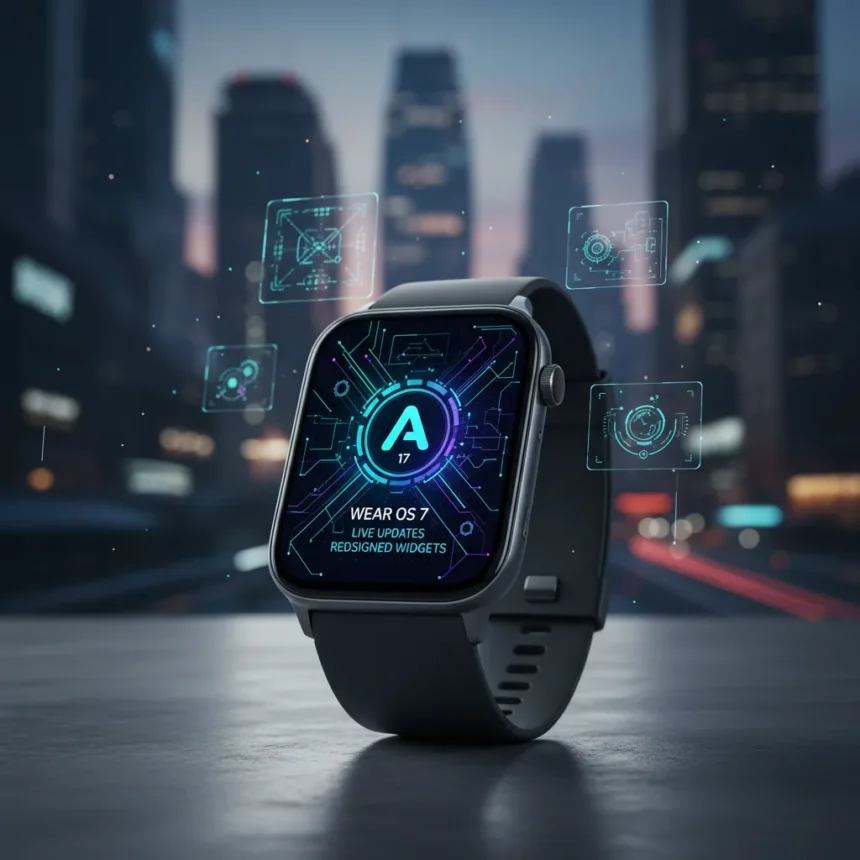
Wear OS 7 is Google’s latest smartwatch operating system, officially unveiled to bring flagship features from Android 17 directly to wrist-worn devices. The update introduces Live Updates, improved battery life, and a brand-new widget experience designed specifically for the smaller screens of smartwatches.
Key Takeaways
- Wear OS 7 officially unveiled with three major feature additions
- Live Updates bring real-time notifications to smartwatch displays
- Battery life improvements make all-day wear more reliable
- Redesigned widgets optimized for smartwatch form factors
- Android 17 features now extend to wearable devices
What Wear OS 7 brings to your wrist
Google has officially announced Wear OS 7, marking a significant step forward in smartwatch functionality. The update delivers three headline features: Live Updates that push real-time information to your wrist, meaningful improvements to battery longevity, and a completely rethought widget system built from the ground up for smartwatch screens. These additions signal Google’s commitment to making smartwatches less dependent on companion phones and more capable as standalone devices.
Live Updates represent the most significant feature pull from Android 17. Rather than forcing users to swipe through multiple screens or open apps individually, Live Updates surface critical information directly on watch faces and notification panels. This mirrors how Android 17 handles real-time data on phones, but adapted for the constraints of a circular or rectangular smartwatch display. The feature prioritizes brevity and glanceability—exactly what wearable users demand.
Battery life and widget redesign in Wear OS 7
Battery performance has long been the Achilles heel of smartwatches. Wear OS 7 addresses this directly with optimizations that extend wear time between charges. While Google has not published specific figures, the improvement targets the core complaint that plagued previous versions: needing a nightly charge. A redesigned widget system complements these efficiency gains by allowing watch manufacturers and third-party developers to create interfaces tailored to small screens, eliminating the awkward scaling and truncation that plagued earlier Wear OS releases.


The widget overhaul matters because smartwatch interaction differs fundamentally from phones. Scrolling through a tiny list of options is frustrating; tapping a widget that displays exactly what you need without entering an app is intuitive. Wear OS 7’s new widget framework gives developers the tools to build this kind of direct, friction-free experience.
How Wear OS 7 compares to previous versions
Earlier Wear OS iterations struggled with fragmentation and performance inconsistency across different smartwatch models. Wear OS 7 represents a consolidation effort, focusing on features that matter most to daily users rather than adding bloat. The emphasis on battery life and glanceable information surfaces directly addresses the gap between smartwatch potential and smartwatch reality—many users abandon their watches because they cannot reliably last a full day or because accessing information requires too many taps.



The decision to port Android 17’s best features to smartwatches also signals a shift in Google’s platform strategy. Rather than treating Wear OS as a separate ecosystem, Google is now actively bridging the gap between phone and watch experiences. This approach gives smartwatch owners access to innovations designed for larger screens, adapted intelligently for wearable constraints.
Is Wear OS 7 worth upgrading to?
If you own a compatible smartwatch and battery life has been a frustration point, Wear OS 7’s efficiency improvements alone justify the update. The Live Updates feature will appeal to users who rely on real-time information—weather changes, calendar shifts, message previews—without wanting to pull their phone from a pocket. The widget redesign benefits everyone, as it makes navigating watch apps faster and less cumbersome.
When will Wear OS 7 roll out to my smartwatch?
The research brief provided does not include specific rollout dates, device eligibility lists, or regional availability information for Wear OS 7. Check your smartwatch manufacturer’s support page or the Google Play Store on your device for timing details specific to your model.
What is the Android 17 feature coming to Wear OS 7?
The research brief identifies Live Updates as the Android 17 feature being brought to smartwatches via Wear OS 7. This feature delivers real-time information directly to your watch display, eliminating the need to open apps or navigate menus to see critical updates.



Wear OS 7 represents a meaningful refresh for smartwatch users who have grown frustrated with battery limitations and clumsy navigation. By pulling proven features from Android 17 and redesigning core interactions around wearable constraints, Google is finally delivering on the promise of smartwatches as genuinely useful companions rather than novelties that drain batteries by noon.
Edited by the All Things Geek team.
Source: Android Central