





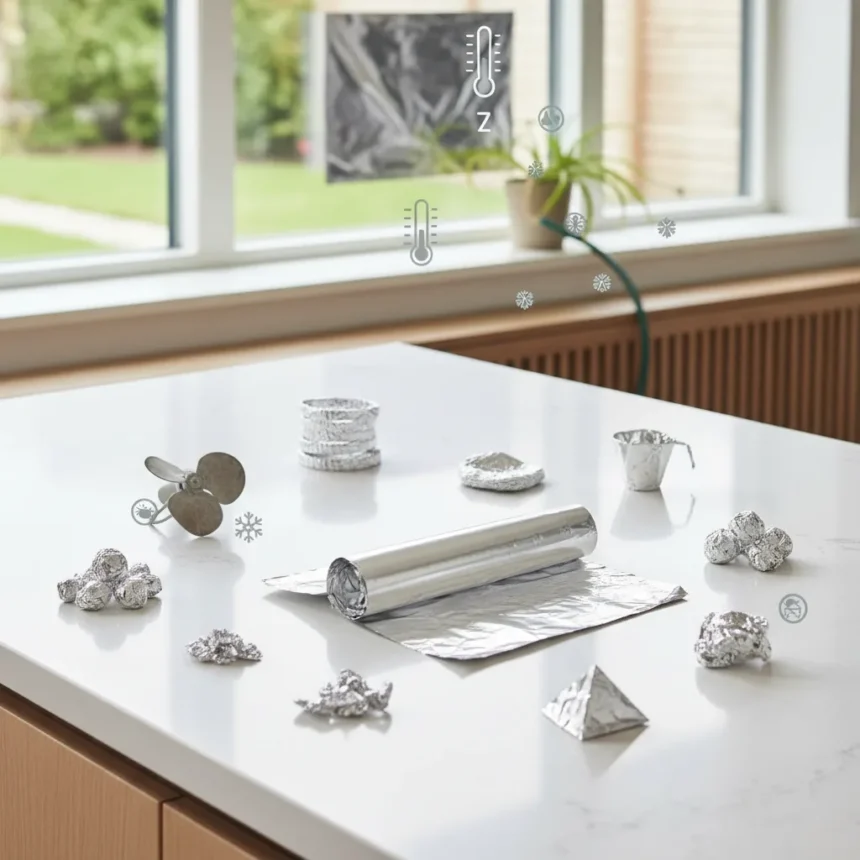
Aluminum foil hacks are reshaping how homeowners approach pest control and household maintenance without reaching for chemicals. The reflective surface and texture of ordinary kitchen foil deters everything from garden pests to indoor insects, while its flexibility makes it useful for cleaning, organizing, and protecting plants. At under $25 for a six-roll pack, foil offers one of the cheapest non-toxic alternatives to pesticides and commercial pest sprays.
Key Takeaways
- Aluminum foil hacks use reflective surfaces and pest-repelling scents to deter birds, squirrels, rats, and insects without chemicals.
- Indoor pest pouches combine foil with bay leaves, cloves, red pepper, and turmeric to repel mosquitoes and flies.
- Garden applications include wrapping foil strips around plant stems to block vine borers, cutworms, and squash bugs.
- Slug and snail barriers use foil sheets for a slippery surface that pests avoid.
- Sugar-toothpaste foil balls attract and trap ants, cockroaches, and other household pests.
How Reflective Surfaces Stop Garden Pests
The reflective property of aluminum foil deters pests through light reflection and movement. When hung from strings or stakes above plants, foil strips spin and flash in the wind, startling birds, squirrels, rats, and pigeons. Many pests also dislike the feel of foil under their feet or on their teeth, adding another layer of deterrence. This makes aluminum foil hacks particularly effective for protecting seedlings and vulnerable crops without spraying toxins.
Hanging shiny objects such as CDs, sections of foil, or takeout containers means they spin in the wind, creating visual and auditory disturbances that keep pests at distance. For budget-conscious gardeners, foil strips cost far less than commercial bird netting or electronic deterrents, though experts note these methods work best as part of a layered pest management approach rather than standalone solutions.
Indoor Pest Pouches with Spices
One of the most practical aluminum foil hacks for indoor use involves creating small scent-releasing pouches. Take a small piece of foil, fold it in half and then again into a pouch shape, then add one bay leaf inside, approximately eight cloves, one teaspoon of red pepper, and half a teaspoon of turmeric for a stronger effect. Seal the pouch well and poke about ten small holes on one side only. Bay leaf, cloves, red pepper, and turmeric contain strong essential oils and a pleasant aroma that insects don’t like.


Place these pouches in corners, near windowsills, or in problem areas where mosquitoes, flies, and other bugs congregate. The scent releases slowly over time, providing continuous low-level deterrence without overpowering indoor air. This method works because insects avoid spaces with these aromatic compounds, making it a genuinely chemical-free option for households with children or pets.
Wrapping Plant Stems to Block Borers and Cutworms
For garden protection, wrap two to three inch foil strips around the main stem base of vulnerable plants, with the shiny side facing outward, starting just below the soil line. This barrier prevents vine borers, cutworms, and squash bugs from accessing the stem, which is where they typically bore into plants and cause fatal damage. The foil physically blocks their access while the reflective surface may also deter them visually.



Slugs and snails can be deterred by wrapping foil sheets around the base of plants for a slippery surface they naturally avoid. However, long-term foil wrapping risks fungal issues like powdery mildew, so remove foil before frost arrives and avoid wetting the stems while they are wrapped. This aluminum foil hack works best as a temporary seasonal measure rather than a permanent installation.
Sugar-Toothpaste Foil Balls for Ants and Flies
A lesser-known but effective aluminum foil hack combines household ingredients into pest-trapping balls. Mix five tablespoons of sugar, grated lemon zest, and a generous amount of toothpaste, then place the mixture in the center of a foil piece and shape it into a compact ball with several layers. Alternatively, mix two tablespoons sugar, one heaping tablespoon toothpaste, and grated citrus peel, scoop onto foil, and form into balls.
These foil balls attract ants, flies, cockroaches, and moths while the combination of sweetness and minty toothpaste confuses their sensory systems. Place them in spots where you notice pest activity. Some homeowners create variations using foil packets instead—sprinkle a pinch of the mixture on a small foil piece, fold it, poke holes with a toothpick, and make several packets arranged under a larger foil cover with holes poked through. This method targets multiple pest species simultaneously without toxic chemicals.
Other Practical Uses Beyond Pest Control
Aluminum foil hacks extend beyond pest management. Line seed containers with foil shiny side up, poke drainage holes, and fill with soil to boost seedling growth—the reflective surface bounces light back onto young plants. For kitchen tasks, double heavy-duty foil into a cone shape to create a disposable funnel for pouring oils, honey, or other sticky liquids without mess or cleanup.



These secondary uses demonstrate why foil remains a staple in resourceful households. The material costs almost nothing, works with items already in your kitchen, and requires no special tools or expertise to deploy. Unlike commercial pest control solutions or cleaning products, foil hacks pose no toxicity risk to children, pets, or beneficial insects.
Do aluminum foil hacks actually work against all pests?
Aluminum foil hacks are effective for many common pests but not foolproof. Reflective surfaces work best on visual pests like birds and squirrels, while scent-based pouches target insects with strong olfactory systems. However, experts note these methods work best as simple, budget-friendly options rather than guaranteed solutions—a layered approach combining multiple deterrents yields better results than relying on foil alone.
How long do foil pest pouches last indoors?
Scent-based foil pouches release their aroma gradually over weeks, providing continuous low-level deterrence. Refresh or replace pouches when the scent becomes noticeably weaker, typically every two to four weeks depending on room size and ventilation. Making new batches is inexpensive since all ingredients—foil, bay leaves, cloves, red pepper, and turmeric—are common pantry items.
Can I use aluminum foil hacks year-round in the garden?
Foil wrapping works best during growing season when pests are most active. Remove foil barriers before frost and winter dormancy to prevent fungal issues and allow plants to breathe. In spring, reapply foil wraps as soon as soil warms and pest activity increases, typically after the last frost date in your region.
Aluminum foil hacks deliver genuine value for homeowners seeking non-toxic, budget-friendly pest control and household solutions. Whether you are protecting seedlings with reflective barriers, creating scent pouches to repel indoor insects, or wrapping plant stems against borers, foil offers multiple practical applications that cost pennies compared to commercial alternatives. The key is matching the right hack to your specific pest problem and combining methods for stronger results.
Where to Buy
7% OFFMR.SIGAMicrofiber Cleaning Clothes, 12-pack$13.99$14.99shop now | 20% OFFBamllumRubber Kitchen Dishwashing Gloves, 4 Pairs $7.99$9.99shop now | SwifferDuster Kit With 3 Ft Extendable Handle$9.84shop now | 25% OFFScotch-BriteZero Scratch Scrub Sponge, 6-pack$5.97$7.99shop now
Edited by the All Things Geek team.
Source: Tom's Guide




