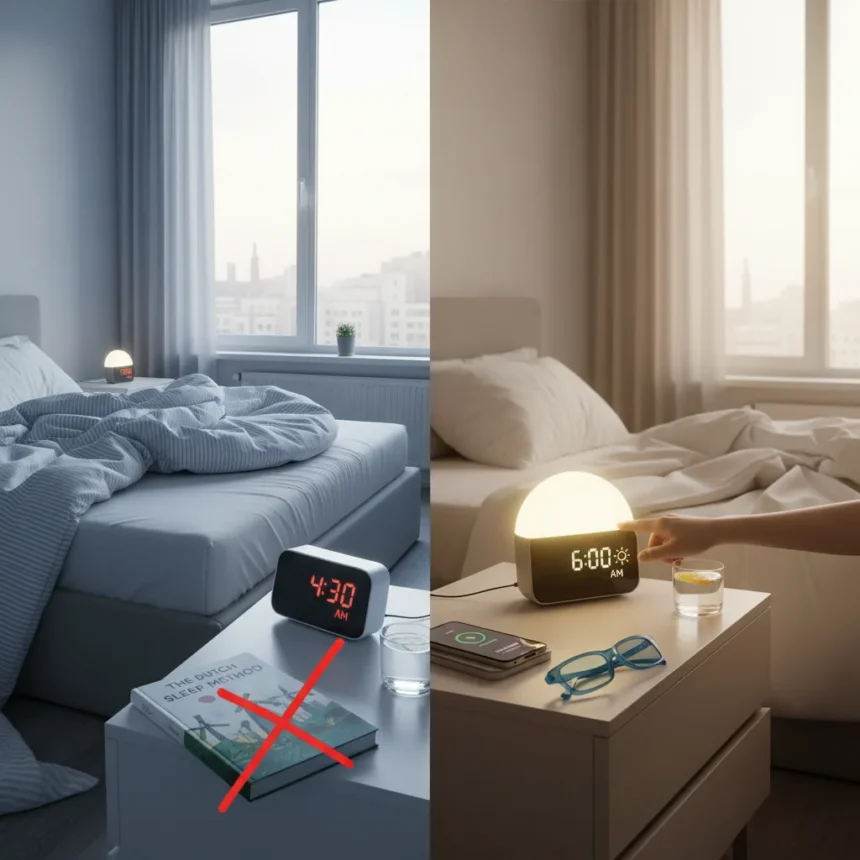
The Dutch sleep method—where one partner goes to bed early while the other stays up later, reuniting later in the night—sounds logical in theory. Staggered bedtimes should minimize sleep disturbances and keep both people rested. In practice, it’s a bust. One Tom’s Guide wellness writer tested the method and found zero improvement in sleep quality or morning energy. The result? A search for alternatives that actually deliver.
Key Takeaways
- The Dutch sleep method involves staggered bedtimes but failed to improve the author’s sleep quality or morning energy.
- Simple sleep hygiene practices—consistent routines, reduced screen time, morning light exposure, and hydration—proved more effective than trendy couple-focused methods.
- The Scandinavian sleep method (separate blankets) lacks strong research evidence and is not a reliable alternative.
- Light management and consistent bedtime routines are foundational to waking refreshed, regardless of relationship status.
- Behavioral sleep hacks cost nothing and outperform expensive or complicated sleep optimization trends.
Why trendy sleep methods fail couples
The Dutch sleep method gained traction because it addresses a real problem: couples sharing a bed often disturb each other’s sleep. One person’s 11 PM bedtime clashes with another’s midnight routine. The method’s promise—separate sleep schedules, same bed, maximum rest—is appealing. But personal experience reveals the flaw. The author tried it and reported no measurable improvement in how rested she felt upon waking. The underlying assumption that staggered timing alone solves sleep quality issues ignores what actually drives refreshed mornings: sleep consistency, not sleep separation.
The Scandinavian sleep method—using separate blankets instead of one shared comforter—offers a different couple-focused approach. Yet it too lacks convincing evidence and is not a significant shift. Both methods treat sleep as a logistics problem when it is fundamentally a behavioral one. Couples seeking better rest should not rely on method names or trendy hacks. They should focus on what sleep science actually supports: routine, light, and hydration.
What actually works: simple sleep hacks that deliver results
After the Dutch sleep method failed, the author switched to evidence-based sleep hacks that require no special method, no partner coordination, and no expensive products. Consistent bedtime routines topped the list. Going to bed at the same time each night—even weekends—trains the body to recognize sleep cues and fall asleep faster. Reduced evening screen time followed. Blue light from phones and tablets suppresses melatonin production, making it harder to drift off. Cutting screens 30 to 60 minutes before bed noticeably improves sleep onset.


Morning light exposure proved equally critical. Sunlight signals the body’s circadian rhythm, anchoring wake time and boosting alertness. The author reported waking with more energy after deliberately exposing herself to natural light within 30 minutes of rising. Hydration upon waking completed the formula. Dehydration mimics fatigue; drinking water first thing amplifies that morning energy boost. None of these hacks are new. None require a partner’s cooperation. All of them work because they address sleep’s actual drivers: consistency, light exposure, and basic physiology.
Why couples should abandon method-based thinking
The appeal of named sleep methods—Dutch, Scandinavian, or otherwise—lies in their simplicity: follow the formula, get the result. Reality is messier. Sleep quality depends on individual chronotypes, stress levels, room temperature, and dozens of other variables that no method can standardize. A staggered bedtime works for some couples and irritates others. Separate blankets suit some sleepers and feel isolating to others. Instead of chasing trendy methods, couples benefit from treating sleep as a personal practice that happens to occur in shared space. One partner’s ideal bedtime might be 10 PM; the other’s, midnight. Rather than forcing alignment or adopting a method that suits neither, each person should optimize their own routine—consistent sleep and wake times, light management, screen discipline—and let the other do the same. The bed becomes a shared outcome of two optimized individual practices, not the arena where a method is applied.



Is the Dutch sleep method worth trying?
Only if you enjoy experimenting with your sleep schedule and do not mind potential disruption. The method’s core idea—reducing sleep disturbances through timing—is sound in principle. But personal results vary widely, and the author’s experience suggests it is not a reliable fix for low morning energy. If you are considering it, try it for two weeks and track your sleep quality and waking energy. If you see no improvement, abandon it and focus on the fundamentals: consistent bedtimes, light exposure, and reduced screens.
What is the best sleep method for couples?
There is no universal best method. Sleep is deeply individual. Instead of adopting a named approach, couples should prioritize consistent personal routines, maintain cool and dark sleeping environments, and reduce evening screen time. If one partner’s schedule differs from the other’s, that is normal—not a problem to solve with a method. Many couples thrive with different bedtimes and wake times, as long as each person maintains individual sleep consistency.
Can light exposure really improve morning energy?
Yes. Morning sunlight exposure within 30 minutes of waking anchors your circadian rhythm and signals your body to produce cortisol and suppress melatonin, boosting alertness. This effect is not a trend; it is foundational sleep science. Even 10 minutes of natural light can shift your waking energy noticeably.
The Dutch sleep method promised a shortcut to better rest. It delivered disappointment instead. The real path to waking refreshed is not a method at all—it is consistency, light, and basic self-care. Skip the trends. Build the habits.



Where to Buy
Dreamegg Sunrise 1 | Hatch Restore 3
Edited by the All Things Geek team.
Source: Tom's Guide