Mistral AI supply-chain breach has exposed the French AI giant to extortion after hackers claiming to possess internal repositories demanded $25,000 for stolen code. The incident exposes a critical vulnerability in how developer tools distribute updates—and raises uncomfortable questions about what data really was compromised.
Key Takeaways
- Threat actor TeamPCP claims nearly 450 Mistral repositories and 5GB of source code, asking $25,000 for exclusive sale.
- Mistral confirms SDK packages were contaminated via a developer device hit by the TanStack supply-chain attack.
- Company denies core code repositories, hosted services, and user data were breached, per forensic investigation.
- Compromised packages were removed within hours: npm packages in 3 hours, PyPI release in 3 hours.
- Broader Mini Shai-Hulud campaign affected 170+ packages across npm and PyPI, including UiPath and Guardrails AI.
The Mistral AI Supply-Chain Breach Explained
The Mistral AI supply-chain breach began when a developer device at the company was compromised through the TanStack supply-chain attack, a broader malware campaign spreading across npm and PyPI ecosystems. Using stolen CI/CD credentials, attackers published contaminated versions of Mistral’s SDK packages—npm packages uploaded May 11, 2026 at 22:45 UTC and removed by 01:53 UTC the next day, with PyPI packages following hours later. This is not a case of hackers breaking into Mistral’s servers; it is a case of legitimate build pipelines being weaponized against the company and its users.
The Mistral AI supply-chain breach is part of a larger coordinated campaign researchers call Mini Shai-Hulud. The attack affected more than 170 packages across multiple projects, including UiPath, Guardrails AI, and OpenSearch. What makes this incident particularly dangerous is that it exploits trust in the development workflow itself—developers pull updates expecting them to be safe, and the automated nature of CI/CD pipelines means malicious code can spread rapidly before detection.
What Hackers Claim vs. What Mistral Says
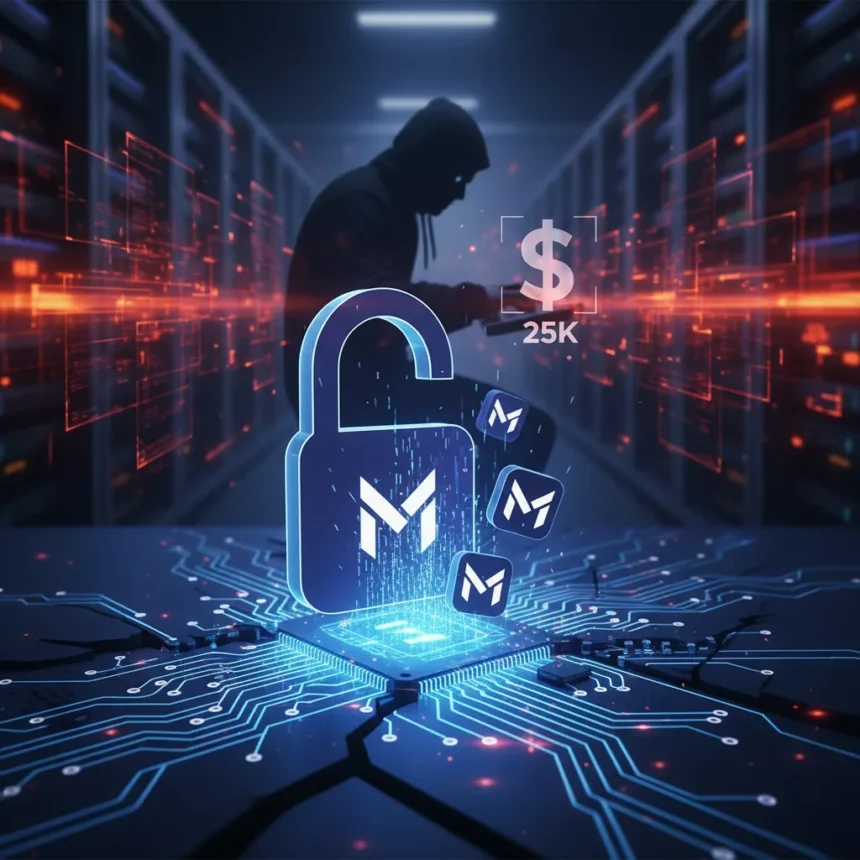
Threat actor TeamPCP posted on a hacker forum claiming to have stolen nearly 450 repositories and 5 gigabytes of internal source code, offering them exclusively to a single buyer for $25,000. The group said the asking price was flexible and threatened to leak the entire archive for free within one week if no buyer emerged. This is classic extortion: create artificial scarcity, set a deadline, and force a decision under pressure.


Mistral’s response flatly contradicts the scope of the hacker claim. The company’s forensic investigation determined that the compromised data was not part of core code repositories. Mistral stated explicitly: neither hosted services, managed user data, nor research and testing environments were compromised. This distinction matters. The Mistral AI supply-chain breach affected SDK distribution—the packages developers install—not the foundational models or infrastructure that power the company’s services. The hacker claim of 450 repositories remains unverified; TeamPCP has not disclosed the actual contents of the alleged archive.
Why This Matters Beyond Mistral
The Mistral AI supply-chain breach is not an isolated incident. The TanStack attack that triggered it also compromised packages used by thousands of projects globally. When a supply-chain attack succeeds, it does not just threaten one company—it threatens every developer who trusted that company’s packages. A developer pulling an update to Mistral’s SDK had no way to know it was malicious. The same applies to users of TanStack, UiPath, and the 170+ other affected packages.



What separates this incident from purely technical breaches is the extortion angle. TeamPCP is not quietly selling stolen code to competitors; they are publicly demanding payment and threatening to release it. This raises the stakes for incident response. Mistral had to disclose the breach publicly, issue a security advisory, and address the extortion threat—all while managing the reputational damage of having contaminated packages in the wild.
Did Mistral’s Response Work?
Speed matters in supply-chain incidents. Mistral removed the compromised npm packages within three hours of detection and the PyPI release within the same window. This is fast enough to limit exposure, though not fast enough to prevent every developer from installing a malicious version. The company’s security advisory status is listed as Mitigated, and Mistral confirmed that previous versions of the affected packages are not affected.
The real test is whether developers trust Mistral to prevent this from happening again. The Mistral AI supply-chain breach originated from a compromised developer device, which suggests the attacker had access to credentials stored locally—a common but preventable mistake. Mistral has not disclosed what additional security measures it has implemented to harden CI/CD pipelines against similar attacks, which would be the kind of detail that rebuilds confidence.
What Happens if TeamPCP Leaks the Code?
If TeamPCP releases the alleged 450 repositories, security researchers will immediately analyze them to determine whether the hacker claim was legitimate or inflated. If the archive contains only the contaminated SDK packages Mistral already disclosed, the leak proves nothing new. If it contains genuine internal code, Mistral faces a credibility crisis. Either way, the threat of a leak is a pressure tactic—and the company’s job is to ensure that even a leak would not expose critical infrastructure or user data.



How Does This Compare to Other Supply-Chain Attacks?
The Mistral AI supply-chain breach follows the same pattern as the TanStack attack that triggered it: compromise a trusted package, inject malicious code, and let the automated distribution system do the work. What differs is the extortion component. Many supply-chain attacks are purely opportunistic—steal credentials, plant code, disappear. TeamPCP is explicitly monetizing the breach, which raises visibility and urgency. The broader Mini Shai-Hulud campaign affected more projects than any single incident Mistral has disclosed, suggesting the attacker has access to multiple stolen CI/CD credentials across the ecosystem.
FAQ
What exactly was compromised in the Mistral AI supply-chain breach?
Mistral’s SDK packages (distributed via npm and PyPI) were contaminated with malicious code injected through stolen CI/CD credentials. The company’s core code repositories, hosted services, and user data were not compromised, according to Mistral’s forensic investigation.
Should developers remove Mistral packages from their projects?
Developers who installed Mistral packages between May 11 and May 12, 2026 should check their systems for signs of compromise and update to patched versions. Mistral’s security advisory confirms that previous versions are not affected, so rolling back is a safe option.
Is the $25,000 asking price real?
TeamPCP posted the price publicly on a hacker forum, but there is no way to verify whether a buyer actually emerged or whether the alleged 450 repositories are authentic. The extortion demand is real; the actual contents of the claimed archive remain unverified.
The Mistral AI supply-chain breach is a reminder that even companies with strong security practices can be compromised through trusted third parties. The real vulnerability is not in Mistral’s code—it is in the shared infrastructure that all developers depend on. Until CI/CD pipelines are hardened against credential theft and supply-chain attacks are treated with the same urgency as direct breaches, incidents like this will keep happening.
Edited by the All Things Geek team.
Source: TechRadar