





PS6 launch plans, according to multiple leakers, are shaping up to be the most ambitious PlayStation rollout Sony has ever attempted. The claim: three separate systems — two home consoles and one handheld device — potentially arriving around 2027. None of this is confirmed by Sony, but the sources making these claims have track records worth taking seriously, and the pattern of evidence is starting to stack up.
Key Takeaways
- Leakers claim Sony plans to release three PS6 systems: two consoles and one handheld.
- Leaker Moore’s Law is Dead states PS6 manufacturing is expected around Q2 2027.
- Sony’s own 7-year console cycle — PS3 (2006), PS4 (2013), PS5 (2020) — points to a PS6 launch in late 2027 or early 2028.
- Sony’s handheld project, reportedly called “Project Canis,” was flagged by Bloomberg in 2024 and has since gained hardware detail from leaked AMD documents.
- Modified PS5 dev kits featuring a “Low Power Mode” with 8 CPU threads suggest Sony is already preparing software infrastructure for a handheld.
Why the PS6 Launch Plans Point to 2027
The 2027 window is not guesswork. Sony executives have publicly stated that the PS5’s lifecycle will mirror the PS4’s roughly seven-year run. Apply that logic to the PS5’s November 2020 launch and you land squarely in late 2027. Leaker Moore’s Law is Dead goes further, stating that “internal documents show the PS6 is currently expected to be ready for manufacturing around Q2 of 2027” — a timeline that, if accurate, makes a significant delay to 2028 increasingly unlikely.
Leaker Kepler L2 separately corroborates the 2027 target, aligning with the established cycle. That said, some predictions still float a scenario where Sony reveals specs in late 2027 but holds the actual launch into 2028 to give developers more preparation time. Sony has not commented on any of this, so treat every date as provisional.
What Are the PS6 Launch Plans for the Handheld?
The handheld component of the PS6 launch plans is the most interesting part. Sony is reportedly investigating a dedicated gaming handheld internally referred to as “Project Canis,” a project that Bloomberg flagged in 2024. Leaked AMD documents, surfaced by Moore’s Law is Dead, have added hardware-level detail to what was previously just a rumour.

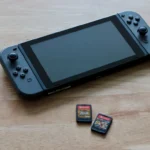
The clearest technical signal comes from Sony’s own development infrastructure. Modified PS5 dev kits have reportedly been configured with a “Low Power Mode” running just 8 CPU threads — a configuration that makes no sense for a home console but maps neatly onto handheld power constraints. That is the kind of behind-the-scenes preparation that suggests this project is past the whiteboard stage. Whether the handheld launches alongside the home consoles or arrives later as an ecosystem add-on remains unclear.
PS6 Hardware Rumours: What Leakers Claim About Specs
Rumoured PS6 specifications, none of them verified, include a TSMC N2 (2nm) manufacturing node for improved efficiency, an AMD Zen 6 CPU replacing the PS5’s Zen 2 architecture, a configuration of 8 high-performance cores plus 2 efficiency cores, and a 160-bit memory bus targeting roughly 640 GB/s of bandwidth. These are leaker claims, not confirmed specs — but the Zen 6 upgrade alone would represent a generational leap over the PS5’s CPU, which has been the bottleneck that developers have complained about most.



One rumoured feature stands out above the rest: two-generation backwards compatibility covering both PS5 and PS4 titles. If accurate, that would be the first time Sony has offered that kind of backwards reach since the original PS3, which launched in 2006. For a console ecosystem with two decades of back catalogue, it would be a meaningful selling point — and a direct answer to criticism Sony received when the PS5 launched without PS3 compatibility.
How Do These Plans Compare to What Sony Has Done Before?
Sony’s previous multi-SKU launches have typically meant one standard console and one premium version — the PS5 Digital Edition versus the disc model being the obvious recent example. A three-system launch including a dedicated handheld would be a structural shift, not just a tier variation. Nintendo has long demonstrated that a handheld-plus-home-console ecosystem can coexist, but Sony’s previous handheld efforts — the PSP and PS Vita — both struggled to sustain long-term third-party support. Project Canis would need to be deeply integrated into the PS6 ecosystem, not treated as a separate product line, to avoid repeating that history.
Is the PS6 launch date confirmed for 2027?
No. Sony has not officially confirmed any PS6 release date. Multiple leakers, including Moore’s Law is Dead and Kepler L2, point to 2027, and Sony’s own stated lifecycle goals align with that window. However, some analysts suggest a reveal in late 2027 with an actual launch in 2028 remains possible.
What is Project Canis?
Project Canis is Sony’s reported internal codename for a PlayStation handheld device, first flagged by Bloomberg in 2024. Leaked AMD documents have added hardware detail to the project, and modified PS5 dev kits with low-power configurations suggest active software preparation. Sony has not officially acknowledged the project.



Will PS6 be backwards compatible with PS4 games?
Leaker Kepler L2 claims PS6 will support two generations of backwards compatibility, covering both PS5 and PS4 titles. If accurate, this would be the first such offering from Sony in roughly 20 years. It is an unconfirmed rumour, not an official Sony announcement.
The emerging picture of Sony’s PS6 launch plans — three systems, a 2027 manufacturing target, and a handheld that may finally crack what the Vita could not — is compelling precisely because it is supported by converging signals rather than a single source. None of it is real until Sony says so. But the window for dismissing all of this as noise is closing fast.
This article was written with AI assistance and editorially reviewed.
Source: Tom's Guide