





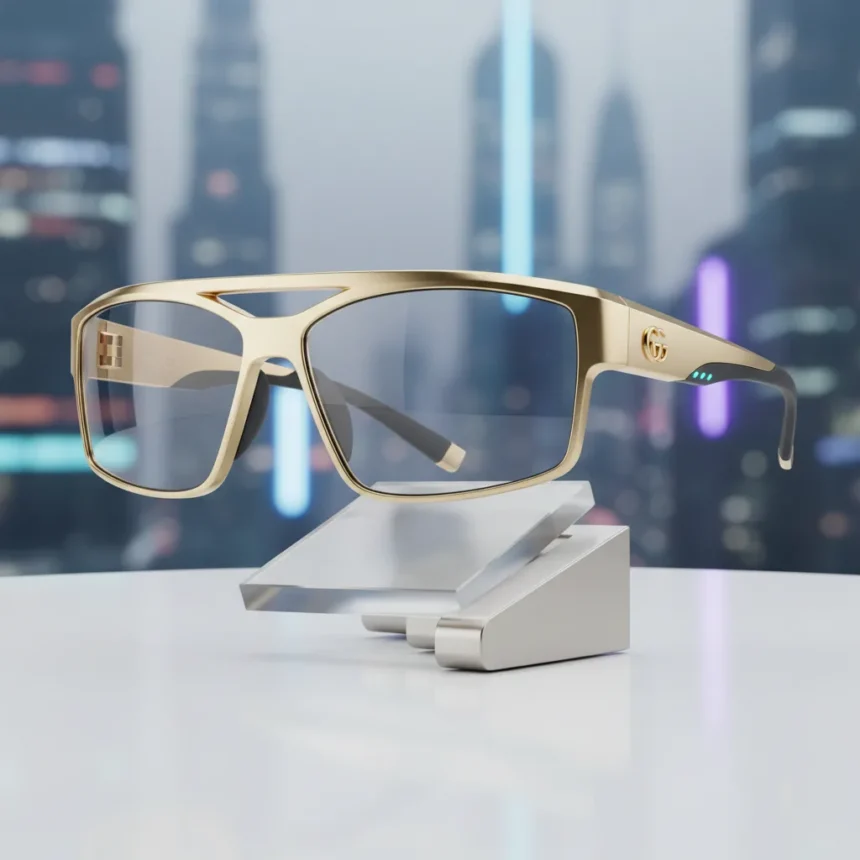
Gucci Android XR smart glasses are coming, and they represent a significant shift in how luxury fashion brands approach wearable tech. Google has partnered with Gucci, owned by parent company Kering, to develop a premium pair of smart glasses running Android XR, with a target launch no earlier than 2027. This marks the first time a mainstream luxury fashion house has committed to the smart glasses category as a core product line.
Key Takeaways
- Gucci and Google are developing luxury-branded Android XR smart glasses, launching by 2027 at the earliest.
- Gucci will leverage its optical frame expertise to design premium, all-day wearable designs.
- Google’s non-luxury Android XR glasses from partners like Warby Parker and Samsung are expected in 2026.
- It remains unclear whether Gucci’s glasses will feature displays or operate as audio-only devices.
- Gucci glasses will share the same Android XR operating system as other partners, with differentiation through design and materials.
Why Gucci Entering Smart Glasses Matters Now
The smart glasses market has been waiting for a credible luxury player. Meta’s Ray-Ban partnership dominates the audio-focused space, but those glasses target a mass-market audience. Gucci’s involvement signals that premium eyewear manufacturers now see smart glasses not as a niche tech experiment but as the future of everyday accessories. Kering CEO Luca de Meo confirmed the partnership with Reuters, positioning the 2027 launch as a deliberate play in the luxury wearables segment rather than a rushed entry.
The timing also matters. Google’s initial Android XR glasses from Project Aura are expected in 2026, with partners including Warby Parker, Gentle Monster, and Samsung. By waiting until 2027, Gucci gains the advantage of launching after the market has seen early Android XR implementations. This allows the brand to refine the design language and feature set specifically for luxury consumers who expect premium materials and all-day wearability, not just novelty tech.
What We Know About Gucci Android XR Smart Glasses Design
Gucci’s core strength lies in optical frames and sunglasses design, and that expertise will directly shape the smart glasses. Rather than bolting tech onto a generic frame, Gucci is expected to integrate Android XR components into frames that feel like premium eyewear first, smart device second. This is a crucial distinction from Google’s Project Aura prototype, which features thick black plastic frames similar to Meta’s Ray-Ban design with a 70-degree field of view and optical see-through technology.


One critical detail remains unconfirmed: whether Gucci’s glasses will include a display or operate as audio-only devices. Audio-only smart glasses are technically simpler to implement and align with how many users actually interact with wearables—brief voice commands, notifications, and audio playback rather than constant visual overlays. If Gucci opts for audio-only, the design could be virtually indistinguishable from high-end regular sunglasses, a significant advantage for a luxury brand concerned with aesthetics.
Gucci Android XR vs. Competitors and Alternatives
The competitive landscape includes Meta’s Ray-Ban smart glasses, which focus on audio, camera, and AI integration, and Samsung’s Galaxy XR headset, which runs the same Android XR operating system. However, neither of these directly competes with Gucci’s positioning. Ray-Ban targets mainstream consumers with tech-forward eyewear, while Galaxy XR is a spatial computing device rather than everyday glasses. Gucci’s entry occupies a distinct segment: luxury eyewear with smart capabilities, designed for all-day wear without compromising on fashion credentials.


Google’s other Android XR partners—Warby Parker, Gentle Monster, and Samsung—will share the same underlying operating system and likely similar internal components. What differentiates Gucci is brand heritage, optical expertise, and the luxury market’s willingness to pay premium prices for design and materials. This is the same dynamic that allows Gucci sunglasses to command significantly higher prices than functionally identical frames from mass-market brands. Gucci Android XR smart glasses will likely follow the same pricing philosophy, though exact costs remain unannounced.
What Happens Between Now and 2027?
Google’s Android XR ecosystem will mature significantly before Gucci’s 2027 launch. The non-luxury partner devices arriving in 2026 will establish use cases, refine the software, and prove (or disprove) whether smart glasses can achieve mainstream adoption. Gucci can observe what works and what doesn’t, then build a product that appeals specifically to luxury consumers rather than early adopters or tech enthusiasts.
The partnership also signals confidence from both companies. Google gets validation that Android XR is attractive to premium brands, not just tech manufacturers. Gucci gets access to a proven platform without building its own operating system from scratch, allowing the brand to focus entirely on hardware design and user experience. This is a win for both sides and a departure from how luxury brands have historically approached tech partnerships.
Will Gucci Android XR Smart Glasses Actually Succeed?
Success depends on whether the product solves a real problem for luxury consumers. Smart glasses have failed before—Google Glass was a cautionary tale of technology searching for a use case. But the market has matured. Ray-Ban’s glasses prove that consumers will wear smart eyewear if the design is acceptable and the features are genuinely useful. Gucci’s challenge is to deliver a product that feels like premium eyewear rather than a tech gadget wearing designer branding.


The luxury market also has different expectations than mass-market tech buyers. Durability, repairability, and timeless design matter more than latest specs. If Gucci can deliver Android XR glasses that look and feel like Gucci sunglasses first and smart device second, the brand has a genuine shot at defining a new category. If the glasses feel like a tech prototype wrapped in leather and gold, they’ll fail regardless of price.
What features might Gucci Android XR smart glasses include?
Gucci Android XR smart glasses will run the same Android XR operating system as Samsung’s Galaxy XR and other partner devices, meaning core features like voice control, notifications, and AI integration will be available. Whether the glasses include a display or operate as audio-only remains unconfirmed, but either approach is technically feasible with Android XR.
When can I actually buy Gucci Android XR smart glasses?
The earliest possible launch is 2027, according to Kering CEO Luca de Meo. This is not a 2026 release. Google’s non-luxury Android XR partners like Warby Parker and Gentle Monster are expected to launch in 2026, giving Gucci additional time to refine its design before entering the market.
How will Gucci Android XR smart glasses compare to Ray-Ban smart glasses?
Ray-Ban smart glasses are primarily audio-focused devices designed for mass-market consumers, while Gucci’s Android XR glasses will be premium eyewear targeting luxury buyers. Both use different operating systems and ecosystems—Ray-Ban runs Meta’s platform, while Gucci will run Android XR. The key difference is positioning: Ray-Ban sells tech with style, while Gucci will likely sell style with embedded tech.
Gucci’s entry into Android XR smart glasses represents a genuine inflection point for the category. When a 100-year-old luxury fashion house commits to a product category, it signals that the category has matured beyond novelty. The 2027 launch gives the brand time to get the design right, and that’s exactly what Gucci should do. A mediocre luxury product damages brand equity far more than waiting an extra year for excellence.
Where to Buy
RayNeo Air 3s | Xreal One | Ray-Ban Meta Skyler (Gen 2) | Ray-Ban Meta Wayfarer (Gen 2) | Ray-Ban Meta Wayfarer (Gen 1)
Edited by the All Things Geek team.
Source: TechRadar




