Wearables patient expectations are fundamentally reshaping how people view their own health and what they demand from healthcare systems. Continuous self-monitoring through wearable devices has become normalized for millions of users worldwide, creating a widening gap between what patients now expect and what traditional diagnostic pathways—particularly in systems like the NHS—are designed to deliver.
Key Takeaways
- Wearables are normalizing continuous health monitoring, raising patient expectations beyond traditional appointment-based care.
- NHS England is modernizing digital infrastructure through apps, websites, and connected systems to improve care access.
- AI-augmented healthcare can extend care continuity beyond appointments and support personalized medicine pathways.
- Traditional NHS tariffs and reimbursement models are not yet aligned with wearable-driven diagnostic expectations.
- The future requires bridging the gap between patient-generated data and clinical decision-making systems.
The Wearables Patient Expectations Problem
Wearables patient expectations have shifted dramatically in the past three years. Patients now expect real-time health insights, continuous monitoring, and rapid access to care based on the data they are collecting themselves. This expectation clash creates a fundamental problem: traditional healthcare systems, especially public services operating on fixed tariffs and appointment-based models, are not architecturally designed to respond to continuous streams of patient-generated data. The NHS, despite its strengths in equity and universal access, operates on diagnostic pathways built for episodic care—you book an appointment, you see a clinician, you receive a diagnosis. Wearables have made that model feel glacially slow to patients who are already tracking their heart rate, sleep quality, and activity levels in real time.
NHS England recognizes this challenge and is working to modernize its digital infrastructure. The health service is deploying websites, apps, and connected computer systems that give clinical staff immediate access to test results, patient history, and evidence for better decisions. These tools represent a necessary first step, but they address only part of the problem. The real tension lies in the mismatch between what wearables enable—continuous, granular health data—and what traditional reimbursement and diagnostic protocols are prepared to act upon.
How AI and Continuous Monitoring Are Reshaping Care Pathways
AI-augmented healthcare systems offer a potential bridge between wearables patient expectations and clinical reality. These systems can extend care beyond the traditional appointment, supporting medication adherence, creating continuity that episodic models cannot match, and ultimately shortening the path from symptom to treatment. The promise is not to replace clinicians but to support them—AI-augmented intelligence is designed to keep the necessary human touch while improving efficiency and reducing diagnostic delays.


This shift matters because wearables generate far more data than any single appointment can address. A smartwatch tracking sleep, heart rate variability, and activity patterns produces insights that a clinician might miss in a 10-minute consultation. When those insights are fed into AI systems that can flag anomalies, predict deterioration, and recommend interventions, the entire care pathway accelerates. Patients no longer wait weeks for a diagnosis; instead, data-driven systems can alert them to issues before they become acute. This is what wearables patient expectations have come to demand—and what healthcare systems are scrambling to provide.
The Gap Between Wearables Patient Expectations and Healthcare Infrastructure
The core challenge is not technological—it is structural. Wearables have created a new category of patient: the informed, self-monitoring individual who expects their health data to inform clinical decisions immediately. But most healthcare systems, including the NHS, operate on tariff structures and diagnostic protocols designed for a different era. A GP practice is reimbursed based on appointment volume and outcomes, not on the quality of data integration or the speed at which wearable insights are acted upon. This misalignment creates friction. Patients arrive with months of detailed health data, expecting it to streamline their care, only to find that clinicians lack the time, systems, or protocols to meaningfully incorporate it into decision-making.


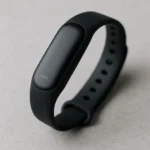
The NHS’s digital modernization efforts are moving in the right direction. Connected systems that share patient data across providers, apps that let patients access their own records, and websites that reduce unnecessary appointments all chip away at the problem. But wearables patient expectations are moving faster than these systems can be deployed and integrated. The question facing healthcare leaders is not whether to embrace wearable data—patients have already made that choice—but how to redesign care pathways, reimbursement models, and clinical workflows to make that data actionable.
What Does the Future Look Like?
The future of healthcare will likely involve a hybrid model: traditional clinical expertise combined with continuous patient monitoring and AI-driven insights. Patients will continue to wear devices that track their health. Healthcare systems will need to evolve to ingest, analyze, and act on that data in ways that are clinically meaningful and economically sustainable. This is not about replacing doctors with algorithms—it is about giving clinicians the tools and time to interpret wearable data in context and make faster, more informed decisions.
For the NHS and similar systems worldwide, this evolution requires investment not just in technology but in training, infrastructure, and new care models. It means rethinking how clinicians spend their time, how data flows through organizations, and how patients are engaged as active participants in their own care rather than passive recipients of episodic interventions. Wearables patient expectations have already changed the conversation; now healthcare systems must change to match.
How are wearables changing patient expectations?
Wearables have normalized continuous health monitoring, making patients expect real-time insights and rapid clinical responses based on their own data. This contrasts sharply with traditional appointment-based care, where patients wait weeks for diagnostic results. The gap between what wearables enable and what healthcare systems can deliver is widening, forcing a reckoning in how care is organized and reimbursed.


Can AI close the gap between wearables patient expectations and healthcare delivery?
AI-augmented systems can extend care beyond appointments, support adherence, and create continuity that traditional models lack. By analyzing wearable data and flagging anomalies, AI can help clinicians respond faster and more accurately. However, success depends on integrating these systems into existing workflows and reimbursement models—technology alone is not enough.
Is the NHS prepared for wearables patient expectations?
The NHS is modernizing its digital infrastructure through apps, websites, and connected systems that improve data sharing and care access. However, these initiatives address only part of the challenge. True alignment between wearables patient expectations and NHS delivery requires deeper changes to diagnostic protocols, clinician workflows, and how healthcare is reimbursed for data-driven, continuous care rather than episodic appointments.
The rise of wearables has fundamentally altered what patients believe healthcare should be. Continuous monitoring, real-time insights, and rapid clinical response are no longer aspirational—they are expected. Healthcare systems that fail to adapt will find themselves increasingly out of step with the people they serve. The question is not whether to embrace wearables patient expectations, but how quickly and effectively organizations can restructure themselves to meet them.
Edited by the All Things Geek team.
Source: TechRadar