





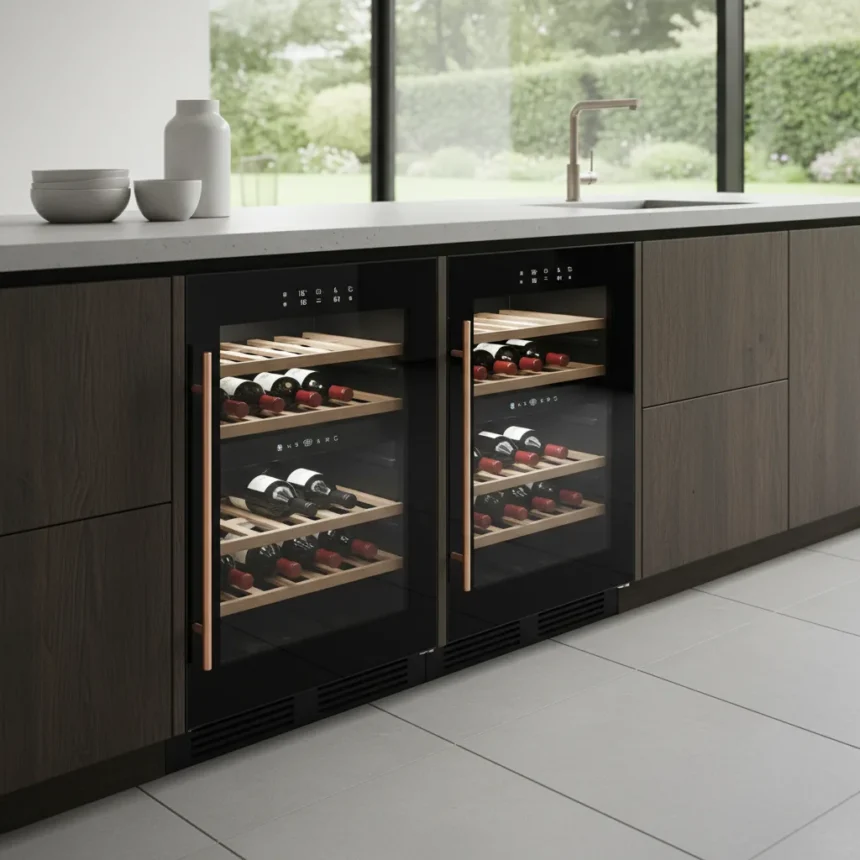
Smeg’s new under-counter wine coolers represent a rare intersection of practical wine storage and kitchen design ambition. These dual-zone units hold 38 bottles and fit smoothly beneath countertops, making them ideal for homes where space is precious but wine collection aspirations are not.
Key Takeaways
- Smeg launched two new under-counter wine cooler models with 38-bottle capacity each
- Both units feature dual temperature zones for storing different wine types simultaneously
- Design aesthetics are central to the appeal, not an afterthought to function
- Under-counter installation integrates wine storage directly into kitchen cabinetry
- Dual zones allow separate climate control for reds, whites, and sparkling wines
What Makes Smeg’s Under-Counter Wine Coolers Stand Out
The dual temperature zones are the functional heart of these under-counter wine coolers. This architecture allows you to store Sauvignon and Chablis at cooler temperatures in one zone while maintaining warmer conditions for Chenin Blanc or reds in the other. You are not locked into a single temperature profile anymore. Instead, each wine type gets its own microclimate within the same unit. That flexibility matters for collectors who refuse to compromise on serving temperature.
What distinguishes Smeg’s approach is the deliberate marriage of engineering and aesthetics. These are not generic stainless steel boxes tucked under a counter. The brand has invested in making the coolers visually compelling—a choice that reflects the reality that kitchen appliances are now part of interior design conversations, not hidden utilities. For homeowners who have spent money on cabinetry and countertops, an appliance that looks serious matters as much as one that performs.
Under-Counter Wine Coolers vs. Freestanding Units
Under-counter wine coolers occupy a specific niche in the wine storage market. Unlike freestanding units that sit on floors or shelves, under-counter models integrate directly into kitchen cabinetry, preserving sightlines and creating a seamless aesthetic. This integration comes with trade-offs: capacity is typically lower than freestanding alternatives, and installation requires proper ventilation planning around existing cabinetry.


The 38-bottle capacity in Smeg’s new units is respectable for under-counter placement. Freestanding coolers often exceed this, sometimes reaching 50 or more bottles, but they demand dedicated floor space and break up kitchen flow. For apartment dwellers, smaller homes, or anyone prioritizing kitchen continuity, under-counter placement is the only viable option. Smeg’s design focus acknowledges that these buyers are not settling—they are choosing deliberately.
Dual Temperature Zones: Why They Matter for Wine Storage
Wine storage is not one-size-fits-all. Red wines typically rest between 45–65°F, white wines between 45–50°F, and sparkling wines closer to 40°F. A single temperature zone forces compromise: you either chill whites properly and risk over-chilling reds, or you warm the cabinet and sacrifice white wine freshness. Dual temperature zones eliminate this conflict entirely.



Smeg’s two-zone architecture lets you dedicate one section to whites and sparkling wines, maintaining crisp acidity and aromatic complexity, while the other section holds reds at slightly warmer temperatures that allow their tannins and flavors to develop without degradation. This is not a luxury feature—it is a practical solution for anyone serious enough about wine to own a dedicated cooler. The fact that Smeg has made this the standard across both new models suggests the brand understands its audience.
Design Philosophy in Wine Cooler Territory
Smeg built its reputation on the principle that appliances do not have to look utilitarian. The new under-counter wine coolers extend this philosophy into a category where competitors often prioritize specs over style. The aesthetic commitment is visible in the details: finish options, handle design, and how the unit integrates with surrounding cabinetry all reflect intentional choices rather than cost-cutting compromises.
This matters because wine coolers are visible. They sit at eye level in kitchens, often becoming focal points in entertaining spaces. A cooler that looks serious—that looks like it belongs in the room—changes how the entire kitchen feels. Smeg recognizes that buyers of under-counter wine coolers are not just seeking climate control; they are making a statement about how they live and what they value.
Practical Considerations for Under-Counter Installation
Buying an under-counter wine cooler is not just about selecting a unit; it is about planning installation. Proper ventilation is critical. Under-counter appliances need airflow to dissipate heat, which means cabinetry must accommodate ventilation slots or open space above the cooler. If your kitchen cabinetry is already built, retrofitting these coolers may require modifications. This is not a plug-and-play purchase for most homes.



The 38-bottle capacity works well for most households, but consider your actual wine consumption and storage habits. Are you buying bottles to drink within months, or are you building a collection for aging? The answer shapes how you use the space. A collector might fill the cooler quickly; a casual drinker might find 38 bottles more than sufficient for years.
How do Smeg’s under-counter wine coolers compare to other compact options?
Under-counter wine coolers from other manufacturers typically offer similar capacities and single-temperature zones, making Smeg’s dual-zone approach a meaningful differentiator. However, without verified pricing and full specifications for the Smeg units, direct cost comparisons are not possible. The design-forward positioning suggests these coolers occupy a premium tier within the under-counter category, competing on aesthetic appeal and integration rather than rock-bottom pricing.
What wine types work best in dual-zone coolers?
Dual-zone coolers excel at storing multiple wine categories simultaneously. Whites and sparkling wines thrive in the cooler zone, reds in the slightly warmer zone. Smeg’s marketing specifically mentions Sauvignon, Chablis, and Chenin Blanc—all white varieties that benefit from crisper storage temperatures. This reflects real usage patterns: most wine drinkers keep a mix of reds and whites on hand, and dual zones eliminate the need to choose between them.
Do under-counter wine coolers require professional installation?
Installation depends on your kitchen setup and cabinetry. If your space already has proper ventilation and the cooler fits your existing cabinetry dimensions, installation may be straightforward. If modifications are needed—cutting ventilation slots, adjusting cabinet openings, or rerouting utilities—professional installation is advisable. Always check the manufacturer’s installation guidelines before purchase.
Smeg’s new under-counter wine coolers represent a smart bet for anyone who wants wine storage that does not sacrifice kitchen aesthetics. The dual temperature zones solve a real problem for wine enthusiasts, and the design commitment ensures these coolers enhance rather than detract from your kitchen. They are not the cheapest option in the market, but they address a specific need: seamless integration of wine storage into homes where design matters as much as function. For the right buyer, that is exactly what makes them worth considering.
Where to Buy
Smeg DCF02 | Smeg Traditional Pump Espresso Coffee
Edited by the All Things Geek team.
Source: TechRadar




