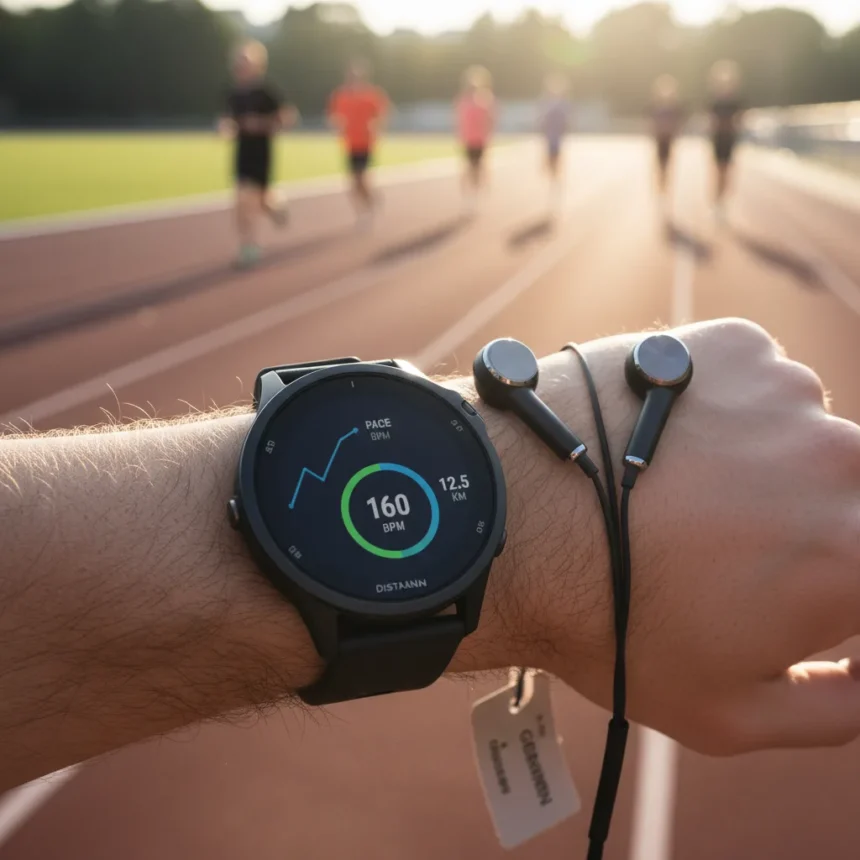
The Garmin Forerunner 70 is a lightweight running watch made by Garmin, launched in May 2026, priced at $249, and available globally as Garmin’s new entry-level running watch. For two weeks of testing, the Forerunner 70 proved that Garmin has finally figured out how to pack serious training intelligence into a sub-$250 watch without the bloat of unnecessary smartwatch features.
Key Takeaways
- Garmin Forerunner 70 costs $249, replacing the Forerunner 55 at $199 with 4x more workout types.
- Features advanced running metrics like Training Load, VO2 max, and race predictions despite entry-level pricing.
- Bright AMOLED display and 13-day battery life in smartwatch mode; drops to 5 days with always-on enabled.
- Missing NFC means no Garmin Pay, and lacks skin temperature sensor found on the pricier Forerunner 170.
- Weighs about 40g and built from fiber-reinforced polymer with 50-meter water resistance.
The Forerunner 70 Fills the Gap Garmin Left Wide Open
Garmin’s entry-level running watch line has been stuck in the past. The Forerunner 55 was cheap but dumb—it tracked your run and that was mostly it. The Garmin Forerunner 70 changes that entirely by moving Training Load, Training Status, Training Readiness, and race time predictions down from Garmin’s premium line. These are the metrics serious runners obsess over, and suddenly they’re available at a price that doesn’t require justifying a premium purchase to a skeptical spouse.
The $50 price jump from the Forerunner 55’s $199 launch price stings at first, but the feature gap is massive. The older watch supports 18 workout types; the Forerunner 70 offers 80+. More importantly, the new model includes Garmin Run Coach with adaptive training plans for 5K, 10K, half marathon, and full marathon distances. It generates custom daily workouts and sends morning and nightly health reports—tools that typically live in Garmin’s $300+ watches.
Display and Battery Life Make This Watch Live Up to Its Price
The bright AMOLED display is where the Forerunner 70 separates itself from the Forerunner 55. Text is crisp, colors pop, and outdoor readability is excellent. That screen makes a real difference when you’re checking splits mid-run or reviewing metrics post-workout. Battery life is rated at 13 days in smartwatch mode, though enabling the always-on display cuts that to 5 days. GPS workout battery lasts 16 to 23 hours depending on how aggressively you use satellite features.


For most runners, these numbers are honest. The watch weighs about 40g and feels almost negligible on the wrist, built from fiber-reinforced polymer with 50-meter water resistance. It won’t replace a dedicated swim watch, but it handles pool running and rain without complaint.
What the Forerunner 70 Sacrifices to Hit the Price
The compromises are real but defensible. The Forerunner 70 lacks NFC, so Garmin Pay is off the table. There’s no skin temperature sensor, a feature that steps up to the Forerunner 170 at $299 to $349. The case design, dimensions, and button layout stay identical to the Forerunner 55, which means the Forerunner 70 doesn’t feel like a generational leap in hardware.


Compared to the Forerunner 170, you also lose a compass, altimeter, open water swimming, meditation modes, cycling power meter support, and smart trainer compatibility. These omissions make sense at $249—they’re niche features that most entry-level runners don’t need. The Forerunner 170 exists for runners who want a smartwatch that also tracks running; the Forerunner 70 is a running watch first.
Forerunner 70 vs. Apple Watch SE 3: The Value Argument
The Garmin Forerunner 70 runs circles around the Apple Watch SE 3 for runners. Apple’s watch is a better all-around smartwatch with apps, notifications, and ecosystem integration. But if you care primarily about running metrics—ground contact time, vertical oscillation, vertical ratio, stride length, VO2 max, and recovery time—the Garmin wins decisively. The Forerunner 70 speaks the language of running; the Apple Watch speaks the language of lifestyle. For $249, the choice depends entirely on what you actually need the watch to do.
Should You Buy the Garmin Forerunner 70?
Buy it if you run seriously but don’t want to spend $300+. Buy it if you want training metrics that adjust to your fitness level rather than a generic step counter. Buy it if you’re upgrading from the Forerunner 55 and want to feel the leap in capability. Skip it if you need NFC payments, if you’re a competitive cyclist, or if you want a watch that handles email and app notifications. The Forerunner 70 is ruthlessly focused on running, and that focus is its greatest strength.
Does the Forerunner 70 have NFC for payments?
No, the Forerunner 70 does not include NFC, so Garmin Pay is unavailable. If contactless payments are important to you, you’ll need to step up to the Forerunner 170 or higher.


How much better is the Forerunner 70 than the Forerunner 55?
The Forerunner 70 offers 4x more workout types (80+ vs. 18), adds advanced training metrics like Training Load and race predictions, and includes an AMOLED display. Battery life is similar, but the training intelligence gap is enormous—the new watch actually coaches you instead of just recording your runs.
What’s the battery life difference between always-on and smartwatch mode?
In standard smartwatch mode, the Forerunner 70 lasts 13 days. Enabling the always-on display cuts battery life to 5 days, a significant trade-off if you want to glance at the time without raising your wrist.
The Garmin Forerunner 70 proves that entry-level doesn’t have to mean compromised. Garmin moved the features that matter to runners down from the premium tier and kept the price honest at $249. If you run regularly and want a watch that understands running, this is the one to buy right now.
Where to Buy
Edited by the All Things Geek team.
Source: Tom's Guide