





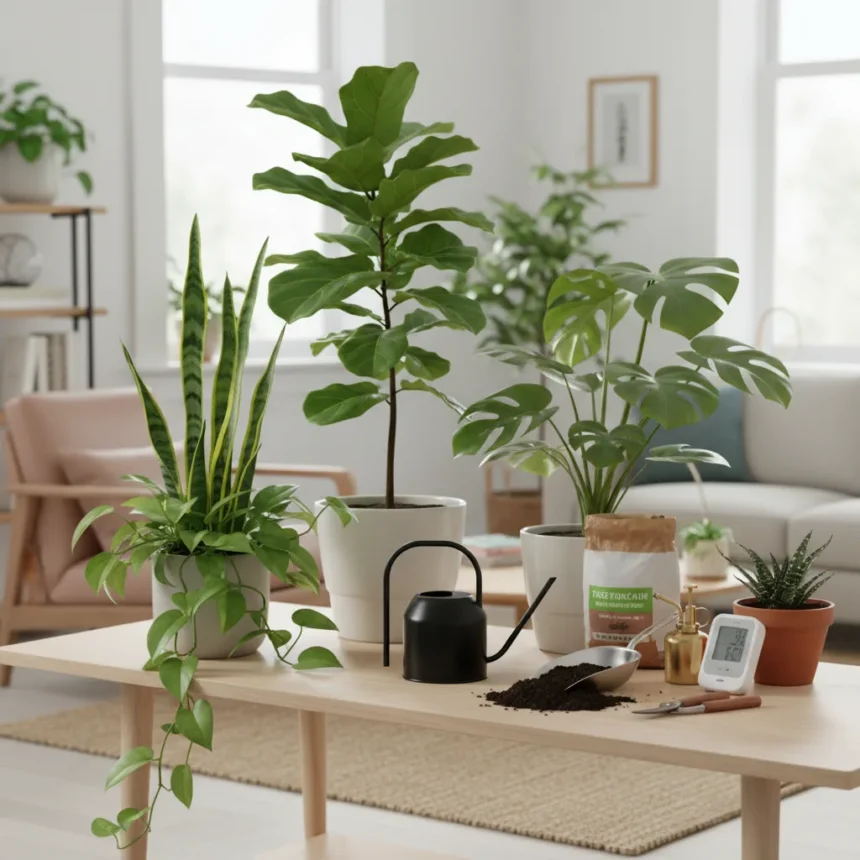
Spring indoor plant care is not optional—it is a seasonal reset your houseplants are already demanding. As temperatures rise and daylight lengthens, indoor plants shift into active growth mode, which means their water, nutrient, and light needs change dramatically from winter dormancy. Ignoring these shifts leads to yellowing leaves, stunted growth, and frustrated plant parents. The good news: five straightforward adjustments will transform your indoor garden from struggling to thriving.
Key Takeaways
- Indoor plants require increased watering and monthly fertilizing during spring and summer growth periods
- Check soil moisture 1-2 inches deep before watering; water only if dry to prevent overwatering damage
- Repot into containers 1-2 inches larger in diameter every 1-2 years using fresh, well-draining potting mix
- Rotate plants every few days and position near windows for even growth and maximum natural light
- Maintain stable temperatures away from drafts, heating vents, and AC blasts to support plant recovery
Increase Watering and Feeding During Spring Growth
Spring indoor plant care begins with understanding that your plants are waking up. Indoor plants require extra watering and food during the spring new growth period, with adjustments depending on plant species. This is not the time to stick with your winter watering schedule. Growth demands moisture, and growth demands nutrients. Chinese money plants, for example, benefit from monthly feeding with diluted 10-10-10 NPK balanced fertilizer during spring and summer to encourage healthy leaf production and offsets. Signs that your plant needs feeding include pale or yellowing leaves and slow growth.
But here is where most plant owners stumble: they confuse increased watering with constant watering. The difference matters. Check soil moisture before watering by inserting your finger 1-2 inches into the soil; water thoroughly if it is dry, but wait if it is damp. Overwatering causes yellowing leaves, falling leaves, mushy stems, and mold—problems far worse than underwatering. Spring growth means more frequent watering cycles, not constant saturation.
Reposition Plants for Seasonal Light Changes
Light availability shifts dramatically between seasons. A plant’s ideal spot in summer may have insufficient light in winter, requiring seasonal repositioning. Now that spring is here, your houseplants are ready to move. Rotate plants regularly for even growth, especially in sunny spots, to maximize natural light instead of relying on grow lights. Twirl plants every few days to prevent legginess—uneven growth toward a single light source that makes plants look sparse and weak.


This adjustment costs nothing. Simply move plants closer to windows or rotate them within their current location. The result is visibly fuller, more balanced growth. Plants positioned away from direct sun but near bright, indirect light will thrive during spring’s longer days without the risk of leaf scorch that can occur in peak summer heat.
Repot Into Fresh Soil Every 1-2 Years
Spring is prime repotting season because plants are entering growth mode and can handle the stress of being moved. Repot into a container only 1-2 inches larger in diameter than the current pot every 1-2 years, using fresh potting mix with good drainage to prevent root issues. Too many plant owners skip repotting or choose pots that are far too large. An oversized pot holds excess moisture around the roots, suffocating them. A pot 1-2 inches larger allows for healthy root expansion without waterlogging.



Use fresh, high-quality potting mix suited to your plant type. Spring repotting gives roots room to grow just as the plant is beginning its most active growth phase. This is why timing matters: repotting a dormant winter plant stresses it unnecessarily, but repotting a spring plant aligns the physical change with the plant’s biological readiness to expand.
Maintain Stable Conditions and Monitor for Pests
Spring indoor plant care also means creating a stable environment for recovery and thriving. Stable temperatures and placement away from drafts, heating vents, or AC blasts aid recovery and thriving. Rapid temperature swings stress plants exactly when they are trying to grow. Position plants away from heating vents and air conditioning units, which create temperature shocks that can stall growth or damage leaves.
Watch for pests during spring growth. Warmer temperatures and increased humidity can attract spider mites, mealybugs, and scale insects. If you spot pests, isolate the plant immediately and wipe leaves, especially undersides, with insecticidal soap or a water and dish soap solution. Catching infestations early prevents them from spreading to your other houseplants.
Why Spring Adjustments Matter More Than You Think
Ignoring spring indoor plant care is the single biggest reason houseplants decline in mid-spring. Plants enter growth mode but receive winter-level care—too little water, no fertilizer, inadequate light, and cramped pots. The mismatch between what the plant needs and what it receives causes stress that manifests as yellowing, leaf drop, and stunted growth. Five simple adjustments—increased watering and feeding, light repositioning, repotting, and stable placement—align your care routine with your plant’s actual biology.



Should I repot all my plants at once in spring?
No. Repot only plants that have outgrown their containers or are entering their second year in the same pot. Repotting every plant at once is unnecessary stress. Stagger repotting over a few weeks to spread the workload and minimize shock to your collection.
How often should I fertilize during spring?
During spring and summer, fertilize monthly with diluted houseplant fertilizer suited to your plant type. Once fall arrives, reduce feeding to every other month or stop entirely as growth slows. Follow the dilution instructions on your fertilizer—half-strength is typically safer than full strength for houseplants.
Can I use grow lights instead of repositioning plants near windows?
You can, but natural light is preferable. Repositioning plants to maximize natural light is free and encourages more balanced, compact growth than grow lights alone. Reserve grow lights for low-light spaces or plants that genuinely cannot reach a window.
Spring indoor plant care is not complicated, but it is essential. Your houseplants are ready to grow—give them the water, nutrients, light, and space they need to thrive, and they will reward you with lush, healthy foliage all season long.
Edited by the All Things Geek team.
Source: Tom's Guide




