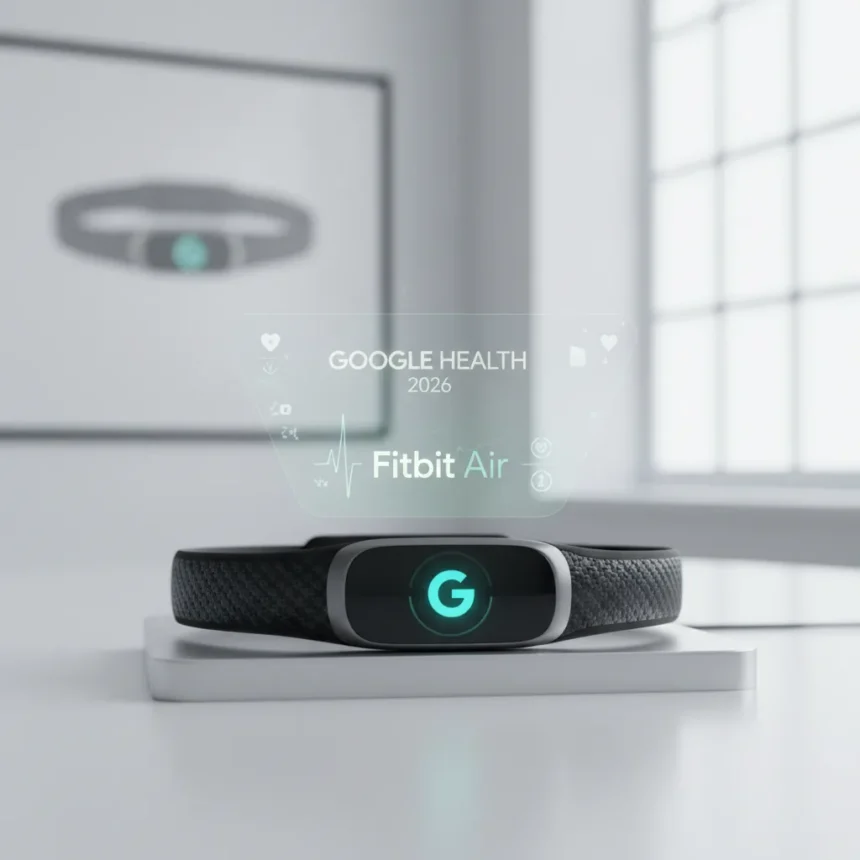
Fitbit Air rumors are circulating about a mystery tracker Google plans to launch in 2026, positioning itself as a lightweight alternative to Whoop. The device name and positioning remain unconfirmed, but the timing signals Google’s commitment to reviving Fitbit hardware after a three-year hiatus from new tracker releases.
Key Takeaways
- Google confirmed new Fitbit hardware launching in 2026, ending speculation about the brand’s future.
- Fitbit Air is rumored as a lightweight Whoop competitor, but the name and specs remain unverified.
- Fitbit Premium may rebrand to Google Health, integrating AI-powered health features.
- Last Fitbit tracker released was Fitbit Charge 6 in 2023; entry-level models like Inspire 3 may refresh in 2026.
- Google’s focus has shifted toward Pixel Watch, deprioritizing Fitbit smartwatches like Versa 4.
Why Fitbit Air rumors matter right now
Google’s wearable strategy has been muddled. After acquiring Fitbit in 2021, the company prioritized Pixel Watch over Fitbit’s smartwatch lineup, leaving many wondering if the Fitbit brand would survive. A 2026 hardware commitment changes that narrative. Google confirmed to 9to5Google that it is launching new Fitbit hardware next year, but the company provided no specifics on device types or names. That silence has created a vacuum for speculation.
The Fitbit Air name comes from rumors, not official channels. If accurate, positioning a tracker as a Whoop rival suggests Google sees an opening in the lightweight, subscription-focused fitness wearables market. Whoop dominates that niche with a minimalist band design and AI-driven recovery insights. A Fitbit competitor would need to match that simplicity while leveraging Google’s ecosystem advantages—integration with Android, Gmail, and Google Calendar. Without confirmed specs, it is impossible to assess whether Fitbit Air would actually compete or simply fill a mid-market gap.
Fitbit Premium rebranding to Google Health
Alongside new hardware, Fitbit Premium is rumored to rebrand as Google Health, tying subscription services to Google’s broader health platform. This move would align with Google’s strategy of consolidating health tools under a single brand umbrella. The Fitbit app already features AI-powered insights on Pixel Watch by default, and a rebrand would formalize that integration.


Rebranding carries risk. Fitbit Premium has brand recognition among fitness enthusiasts; Google Health is generic and competes for mindshare with dozens of health apps. The move makes sense from a corporate standpoint—simplifying product names and consolidating services—but it risks alienating existing Fitbit subscribers who chose the service specifically for Fitbit’s fitness-first philosophy. A rebrand without clear feature improvements could feel like cost-cutting rather than innovation.
What Fitbit Air rumors tell us about Google’s wearables future
The rumored Fitbit Air and Premium rebrand signal that Google is doubling down on trackers rather than smartwatches. Wearable executive Sandeep Waraich previously suggested Pixel Watches would replace Fitbit smartwatches, and new rumors reinforce that direction. Entry-level models like Fitbit Inspire 3, last refreshed in 2022, are presumed candidates for 2026 updates, though Google has not confirmed this.



This strategy makes business sense. Smartwatches are crowded—Apple Watch, Samsung Galaxy Watch, and Garmin all dominate their respective ecosystems. Lightweight trackers like Whoop have carved out a niche by focusing on recovery data and subscription revenue rather than apps and notifications. Google’s Pixel Watch is strong but cannot compete on price or simplicity. A lightweight Fitbit tracker could reach price-conscious users and generate recurring revenue through a rebranded subscription service. The question is execution: can Google deliver a tracker that feels essential rather than redundant?
How does Fitbit Air compare to Whoop?
Whoop is the market leader in lightweight fitness tracking, focusing on recovery metrics and algorithmic insights rather than traditional fitness features. The band syncs with a smartphone app and requires a subscription for full functionality. Without confirmed Fitbit Air specs, direct comparison is impossible. However, if Fitbit Air targets the same use case, it would need to offer comparable recovery tracking, a seamless app experience, and a subscription price competitive with Whoop’s roughly $30 per month model. Google’s advantage lies in ecosystem integration—a Fitbit Air could pull data from Google Fit, Android health sensors, and Pixel devices in ways Whoop cannot. Whether that integration translates to genuine user value remains to be seen.
Will Fitbit Air actually launch in 2026?
Google confirmed new Fitbit hardware is coming in 2026, but the company did not specify device names, counts, or release windows within that year. Fitbit Air could launch in January or December. It could be one of multiple new models. It could be canceled before release. Rumors are not commitments, and Google has a history of abandoning or delaying wearable projects. Until Google makes an official announcement with confirmed specs and pricing, treat Fitbit Air as plausible speculation rather than fact.
Should you wait for Fitbit Air or buy a current tracker?
If you are shopping for a fitness tracker now, do not hold out for an unconfirmed product. Current options like Fitbit Charge 6 (2023) and Fitbit Inspire 3 (2022) are available today and deliver proven functionality. If you are already a Fitbit user, waiting until 2026 for new hardware makes sense—your current tracker will continue to work, and a rebrand to Google Health will likely be automatic. If you are interested in lightweight tracking specifically, Whoop remains the established choice with a mature app and proven recovery algorithms.



Will Fitbit Premium become Google Health?
The rebrand is rumored but unconfirmed by Google. If it happens, existing Fitbit Premium subscribers would likely transition automatically to a Google Health subscription at the same price point. The main change would be branding and potentially expanded features tying into Google’s health initiatives. Without official confirmation, assume Fitbit Premium will continue under its current name until Google announces otherwise.
Google’s 2026 wearable roadmap is real, but the details remain foggy. Fitbit Air and a Google Health rebrand are plausible moves that align with Google’s ecosystem strategy, but they are rumors until officially announced. Keep an eye on Google’s announcements in late 2025 for confirmation. Until then, judge Fitbit’s future not by speculation but by Google’s track record of supporting the brand—and that record is mixed.
Where to Buy
Edited by the All Things Geek team.
Source: TechRadar