





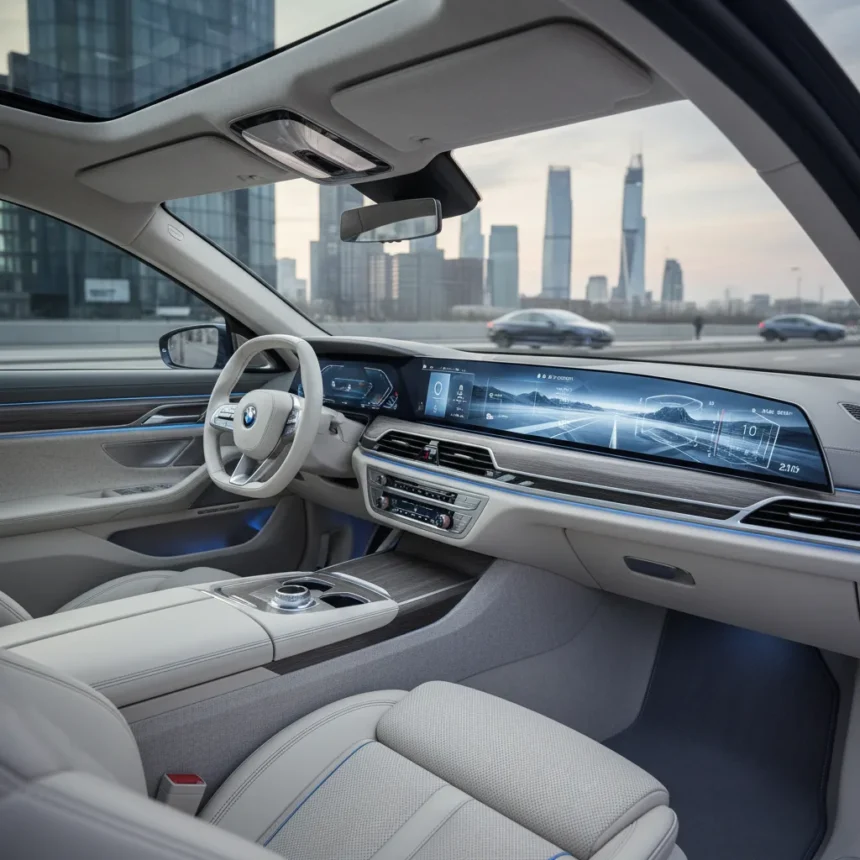
The 2027 BMW 7 Series abandons the traditional instrument cluster entirely, replacing it with a Panoramic Vision panel that stretches from A-pillar to A-pillar across the base of the windshield. This facelift of BMW’s flagship sedan borrows heavily from the brand’s Neue Klasse vehicles, including the iX3 and i3, to create what amounts to a radical reimagining of the luxury car interior.
Key Takeaways
- Panoramic Vision projects key driver information along the windshield’s base, replacing traditional gauge clusters entirely
- 17.9-inch central touchscreen with free-cut rhombus design complements the projected display
- First-ever front passenger display in 7 Series history offers 14.6 inches of dedicated screen space
- Optional 31.3-inch 8K Theater Screen drops from the ceiling with Zoom camera and gaming console ports
- Power-operated doors and crystal shifter represent dramatic departure from conventional luxury sedan design
Panoramic Vision: The End of the Traditional Dash
The 2027 BMW 7 Series Panoramic Vision display is a projected pixel strip running along the windshield base, displaying speed, navigation, customizable maps, and an AI avatar. This eliminates the need for a physical instrument cluster entirely, freeing up dashboard real estate and creating an unobstructed view across the top of the cabin. The system runs on BMW Operating System X and integrates smoothly with the 3D head-up display positioned above it. Rather than glancing downward at a traditional cluster, drivers now look straight ahead at information projected onto the windshield itself—a fundamental shift in how automotive information is presented.
The Panoramic Vision approach borrows from BMW’s Neue Klasse philosophy, which prioritizes minimalism and digital-first design. What makes this particularly bold is that BMW is implementing it in the 7 Series, the brand’s most conservative and tradition-focused model. This signals confidence that luxury buyers are ready to abandon century-old automotive conventions.
The Screen Explosion: Central Display Meets Passenger Screen
The 2027 BMW 7 Series features a 17.9-inch central touchscreen with an unconventional free-cut rhombus or parallelogram design, departing from the standard rectangular tablet aesthetic. But the real surprise is the standard 14.6-inch front passenger display—the first time a dedicated passenger screen has appeared in the 7 Series. This passenger display also uses the free-cut design language and allows rear-seat passengers to control the optional 31.3-inch Theater Screen via miniature touchscreen panels embedded in the rear armrests.


The Theater Screen itself has evolved dramatically. The optional ceiling-mounted 8K display now includes a camera for video calls and Zoom meetings, plus HDMI ports for connecting computers and gaming consoles. The screen blocks the rearview mirror when deployed, but BMW offers an optional digital rearview camera mirror to solve this problem. It’s a theater-in-a-car approach that transforms the rear seat into an entertainment hub—though it raises questions about whether a passenger screen is necessary when the central display is already this large.
Interior Reimagined: Steering Wheel to Door Panels
The 2027 BMW 7 Series steering wheel abandons traditional round design for a funky shape with spokes positioned only at 12 and 6 o’clock. BMW offers five different design variations, and the wheel features haptic controls that illuminate when activated. The center console gets a crystal shifter instead of a traditional gear stick, signaling BMW’s commitment to luxury materials and futuristic aesthetics.



Door panels have been completely reworked with organized control systems, including crystal seat adjustment units that look more like jewelry than switches. The Panoramic glass roof (called Skylounge) is standard and features over 40 embedded LEDs for dynamic illumination. Ambient lighting extends throughout the cabin, with a dashboard strip featuring an alabaster structure that shifts between static daylight appearance and dynamic color-changing modes in darkness. Front seatback sconce lights and illuminated rear door speaker covers add to the theatrical atmosphere.
Theater and Technology: The 8K Screen That Changes Everything
The optional 31.3-inch 8K Theater Screen represents the most dramatic interior upgrade available on the 2027 BMW 7 Series. Unlike previous iterations, this screen now includes a camera for video conferencing and HDMI connectivity for external devices. Rear passengers control it via miniature touchscreen panels in the armrests, making the back seat feel like a first-class airline cabin rather than a car interior. The Bowers & Wilkins surround-sound system is standard, creating an immersive audio experience that complements the visual spectacle.
This approach to rear-seat entertainment directly challenges traditional luxury sedan design, which typically prioritizes driver comfort and performance. The 2027 BMW 7 Series instead positions itself as a mobile lounge where passengers are equally valued. Whether this represents the future of luxury sedans or an over-engineered gimmick remains to be seen—the passenger experience in competing luxury vehicles like the Mercedes-Benz S-Class or Audi A8 does not yet match this level of rear-seat technology.
Design Language: Neue Klasse Meets Flagship Tradition
The 2027 BMW 7 Series is a facelift of the current generation, not a completely new platform. However, it borrows design and technology heavily from BMW’s Neue Klasse vehicles, including the iX3 and i3. The free-cut rhombus design language for displays, the Panoramic Vision system, and the minimalist interior philosophy all originate from that newer lineup. The vehicle is adapted for cylindrical battery cells on the existing CLAR platform, indicating a hybrid approach where new technology meets proven underpinnings.



Wheels start at 20 inches and go up to 22 inches. Power-folding mirrors with auto-dimming and blind-spot monitoring are standard. The optional power-operated doors close via button rather than manual pulling, adding another layer of futuristic convenience. Hand-painted elements appear on some interior components, signaling the handcrafted luxury positioning.
Does the 2027 BMW 7 Series Go Too Far?
The 2027 BMW 7 Series pushes luxury sedan design into territory that feels more like a concept car than a production vehicle. The Panoramic Vision display is genuinely innovative—it solves the problem of dashboard clutter while creating an unobstructed sightline. The Theater Screen with Zoom capability and gaming ports is undeniably ambitious. But the passenger display raises a practical question: is it useful, or is it redundant given the massive central screen and the Theater Screen above? Some coverage questions whether the passenger screen adds genuine value or simply adds cost and complexity.
The steering wheel design and crystal shifter prioritize aesthetics over ergonomic convention. The power-operated doors are convenient but add weight and complexity to a vehicle already pushing the boundaries of interior technology. The question is whether BMW customers—typically older, conservative, and focused on reliability—will embrace this radical redesign or view it as gimmickry that distracts from the core luxury sedan mission of quiet, comfortable, predictable performance.
What About Performance and Driving Dynamics?
The research available does not include detailed performance specifications, engine options, or driving dynamics for the 2027 BMW 7 Series. The focus has been almost entirely on interior technology and design language. This suggests BMW is positioning this facelift primarily as a technology and luxury showcase rather than a performance upgrade. Buyers seeking information about engine power, acceleration, handling, or fuel efficiency will need to wait for more comprehensive reviews closer to launch.
Is the Panoramic Vision display practical for everyday driving?
The Panoramic Vision display projects key information like speed and navigation directly into the driver’s line of sight along the windshield base. In theory, this reduces the need to look down at a traditional cluster. In practice, the usability depends on brightness, readability in sunlight, and whether the projected information is intuitive enough for quick glances. No hands-on driving impressions are available yet, so real-world practicality remains unproven.
Can you disable the Theater Screen if you don’t want it?
The 31.3-inch Theater Screen is optional, not standard equipment on the 2027 BMW 7 Series. Buyers can configure the vehicle without it. However, the Panoramic glass roof with embedded LEDs and the ambient lighting systems appear to be standard, so you cannot escape the theatrical interior aesthetic even on base models.
How does the 2027 BMW 7 Series compare to the current generation?
This is a facelift of the current 7 Series, not a completely new model. The major differences are interior technology—the Panoramic Vision display, the new touchscreen designs, the Theater Screen upgrades, and the overall minimalist digital-first philosophy borrowed from the Neue Klasse lineup. The platform and underlying architecture remain largely unchanged, adapted to support the new battery technology and display systems.
The 2027 BMW 7 Series represents a genuine inflection point for luxury sedans. Whether it succeeds depends on execution—whether the Panoramic Vision display is genuinely useful, whether the Theater Screen feels gimmicky or genuinely valuable, and whether traditional luxury buyers embrace this theatrical approach to the interior or resist it. BMW is betting that the future of luxury is immersive technology and minimalist design. The market will soon reveal whether that bet pays off.
This article was written with AI assistance and editorially reviewed.
Source: Tom's Guide