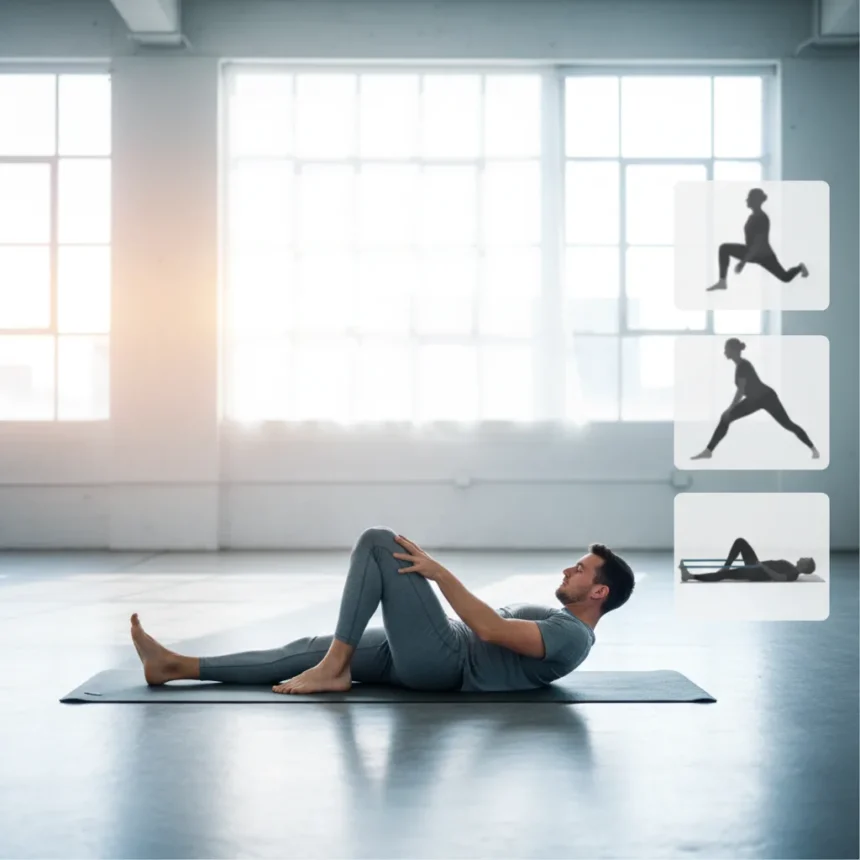
A hip flexibility test doesn’t require expensive equipment or a gym membership. One simple 4-step assessment reveals whether your hips are as mobile as they should be—and for many people, the answer is uncomfortable. Tight hips are a widespread problem, often masked by daily habits that keep us sitting for hours. A personal trial of this hip flexibility test exposed just how inflexible hips can become without targeted intervention.
Key Takeaways
- A 4-step hip flexibility test quickly identifies mobility problems most people ignore.
- Tight hips restrict movement and can worsen posture over time.
- Three specific stretching methods address hip inflexibility when practiced regularly.
- At-home testing requires no equipment and takes minutes to complete.
- Recognizing poor hip mobility is the first step toward meaningful improvement.
What the Hip Flexibility Test Actually Reveals
The hip flexibility test consists of four distinct steps designed to measure how freely your hip joints move through their full range of motion. Each step isolates different aspects of hip mobility—internal rotation, external rotation, flexion, and extension. When performed honestly without forcing movement, the test exposes gaps in flexibility that daily life has created. Many people discover they cannot achieve the full range that healthy hips should allow, a realization that often triggers genuine motivation to change.
Why does this matter? Tight hips don’t just limit your ability to touch your toes or sit comfortably on the floor. They affect your gait, your posture, and your lower back stability. Over months and years, restricted hip mobility can contribute to knee pain, lower back discomfort, and reduced athletic performance. The hip flexibility test serves as a wake-up call—a concrete measurement that proves what you might have suspected but ignored.
Three Stretching Methods That Address Hip Inflexibility
Once the hip flexibility test confirms that your hips are tight, action becomes urgent. The author of this assessment identified three specific stretching methods as the foundation of their fix. These are not exotic techniques requiring a yoga studio membership. They are straightforward, repeatable stretches that target the hip flexors, glutes, and deep external rotators—the muscles that most commonly restrict hip mobility.

The first method focuses on consistent daily stretching, holding each stretch long enough for the muscle to relax and lengthen. The second approach builds on this foundation with targeted sequences that address multiple hip movements in one session. The third method involves sustained practice over weeks, recognizing that hip flexibility improvements are gradual and require patience. None of these methods promise overnight results. Instead, they demand regular effort—the kind of commitment that separates people who improve from those who give up after a week.
The key insight is that tight hips respond to consistency, not intensity. A five-minute stretching routine performed every single day will produce better results than a brutal 30-minute session once a week. Your nervous system needs to learn that the stretched position is safe, and that learning happens through repetition and patience.



Why Recognition Matters More Than You Think
What makes this hip flexibility test valuable is not the test itself—it’s the honesty it forces. Many people know their hips feel tight but never quantify the problem. They assume it’s normal, a consequence of desk work or aging. The test removes that excuse. When you perform all four steps and recognize that you cannot achieve full range of motion, the evidence is undeniable. This moment of clarity is where real change begins.
The author’s willingness to acknowledge poor hip mobility despite prior awareness demonstrates a critical point: knowing you have a problem and accepting it are different things. The hip flexibility test bridges that gap. It converts vague discomfort into measurable limitation. That clarity drives action in a way that general knowledge never does.
How Long Does Hip Flexibility Actually Take to Improve?
Hip flexibility improvements appear gradually over weeks and months, not days. Most people begin noticing meaningful changes after three to four weeks of consistent stretching. The hip flexors and glutes are large muscle groups with deep attachments, and they resist rapid lengthening. Pushing too hard too fast triggers protective muscle tension, which defeats the purpose. Patience and steady practice work. Aggressive forcing does not.
Can You Improve Hip Flexibility at Any Age?
Yes. Hip mobility responds to stretching and movement at any age. Older adults often see significant improvements because they start from a lower baseline and even modest gains produce noticeable functional benefits. The key is consistency and avoiding the temptation to force stretches beyond comfortable range. Work within your current limits and expand them gradually over time.



What’s the Difference Between Hip Flexibility and Hip Mobility?
Hip flexibility refers to the passive range of motion available in the joint—how far your hip can stretch when you relax into a position. Hip mobility includes flexibility plus the strength and control to use that range functionally. A hip flexibility test measures one dimension. True hip health requires both flexibility and the stability to move through that range with control during daily activities and exercise.
The hip flexibility test is a practical tool that exposes a common problem most people ignore until it causes pain. The three stretching methods that follow offer a straightforward path to improvement. The real work is not in the stretching itself—it’s in the discipline to practice consistently, week after week, until tight hips finally loosen. That commitment transforms a simple test into genuine progress.
Edited by the All Things Geek team.
Source: Tom's Guide