





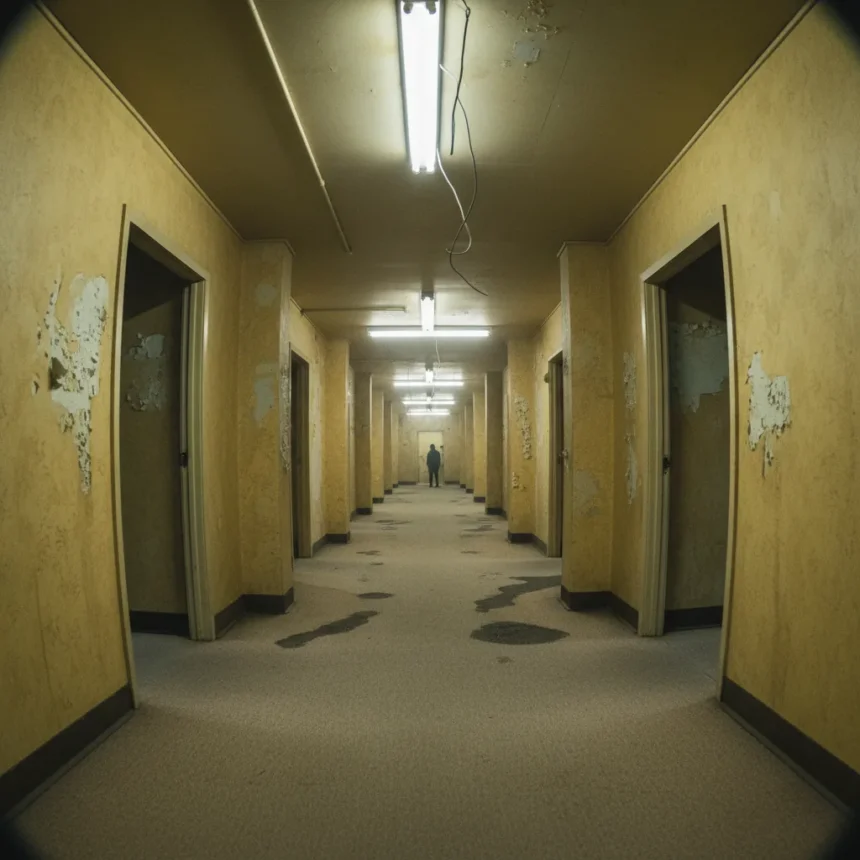
The Backrooms set design represents one of the most ambitious physical recreations of an internet horror concept ever attempted by a major studio. Director Kane Parsons, who built the Backrooms phenomenon from viral YouTube found-footage videos into an A24-backed feature film, used Blender—the free, open-source 3D modeling software—to architect a 30,000-square-foot maze of disorienting yellow corridors that defied traditional set design logic.
Key Takeaways
- Kane Parsons designed The Backrooms set using Blender, translating internet creepypasta into physical architecture.
- A24 built a 30,000-square-foot actual set that actors and crew could walk through during production.
- The physical set was so immersive and confusing that some people got lost while filming.
- The Backrooms originated as a 4chan creepypasta featuring endless yellow-tinted office rooms before becoming a viral TikTok and YouTube phenomenon.
- Parsons discussed the set-building process at CCXP, highlighting how Blender bridged indie internet horror to major studio filmmaking.
From Viral Meme to Physical Labyrinth
The Backrooms started as an internet horror story—a creepypasta concept of infinite, maze-like office spaces with a sickly yellow aesthetic. Parsons popularized the concept through found-footage videos on YouTube and TikTok, building a cult following around the unsettling premise of being trapped in a liminal space with no exit. When A24 greenlit the feature film adaptation, the studio faced an unusual challenge: how do you build a set that feels genuinely endless and psychologically disorienting without relying entirely on visual effects? Parsons’ answer was to use Blender to design every corridor, every angle, every architectural quirk before construction began. This approach allowed A24 to commit to a massive physical build rather than relying on digital trickery—a decision that would define the production’s entire aesthetic.
The scale of ambition was staggering. A24 didn’t build a modest mockup or a few key set pieces. Instead, the studio constructed 30,000 square feet of actual Backrooms that actors and crew could physically navigate. This wasn’t a green-screen stage or a collection of isolated rooms. It was a genuine labyrinth designed to disorient everyone who entered it. Parsons’ Blender model served as the blueprint for every wall, every corner, every dead-end hallway. The software allowed him to iterate on the design, test sightlines, and ensure that the physical space would feel authentically claustrophobic and maze-like once built.
When Design Becomes Too Convincing
The most telling detail about The Backrooms set design is what happened during production: people actually got lost in it. Parsons himself confirmed this phenomenon at CCXP, explaining that the immersion was so complete, so disorienting, that crew members and actors would genuinely struggle to navigate the corridors without assistance. This wasn’t a flaw in the design—it was the entire point. The goal was to create a physical environment that felt genuinely alien and impossible to map mentally. When someone watches the finished film and sees actors moving through these spaces, they’ll be watching genuine confusion and disorientation, not performance.


This level of immersion represents a fundamental shift in how indie internet horror can be translated to cinema. Rather than dismissing Backrooms as a TikTok trend unworthy of major production resources, A24 recognized that the concept’s strength lay in its psychological impact. By building the set physically and making it genuinely disorienting, Parsons and the studio ensured that actors wouldn’t be pretending to feel lost—they actually were. The Blender model became a tool not just for planning but for validating the concept before millions of dollars were committed to construction.
Blender’s Role in Bridging Indie Horror to Studio Scale
The Backrooms set design also highlights how free, open-source software like Blender has democratized cinematic pre-visualization. Parsons didn’t need expensive proprietary tools or a team of professional architects. He used the same software available to independent creators worldwide to design a set that convinced A24 to invest in a 30,000-square-foot physical build. This represents a genuine shift in how horror films—particularly those rooted in internet culture—can move from viral phenomenon to theatrical release.



Blender’s capabilities allowed Parsons to explore spatial relationships, test how light would move through corridors, and ensure that the design would feel authentically disorienting in three dimensions. The software became the bridge between his original YouTube concept and the final physical set. Without that digital prototype, A24 would have faced enormous risk in committing to such an unconventional build. With it, the studio had confidence that the design would work.
What Does The Backrooms Set Design Mean for Horror Filmmaking?
The success of The Backrooms set design suggests that future horror films rooted in internet culture might follow a similar path: use digital tools to validate the concept, then build it physically to maximize psychological impact. This approach contradicts the assumption that horror films must rely increasingly on digital effects. Instead, Parsons proved that the most disorienting, unsettling experiences come from real spaces that genuinely confuse the people moving through them. When actors are actually lost, when crew members struggle to navigate corridors, that authenticity translates to the screen in ways that no amount of post-production work can replicate.
Did people really get lost in The Backrooms set?
Yes. Director Kane Parsons confirmed at CCXP that the 30,000-square-foot physical set was so immersive and maze-like that some people were actually getting lost during production. The disorientation was intentional—the design was meant to feel genuinely impossible to navigate mentally, which made the set equally confusing for everyone who entered it.
How did Blender help design The Backrooms?
Parsons used Blender to create a complete 3D model of the Backrooms before construction began. This digital prototype allowed him to test the spatial relationships, validate the disorienting layout, and provide A24 with a detailed blueprint for the physical 30,000-square-foot build.



Is The Backrooms an A24 film?
Yes. A24 backed the feature film adaptation of The Backrooms, a concept that originated as an internet creepypasta and was popularized by Parsons through YouTube and TikTok found-footage videos. The studio committed to building the massive physical set based on Parsons’ Blender design.
The Backrooms set design represents a turning point for how internet horror concepts can scale to theatrical releases. By using Blender to validate the concept and then building 30,000 square feet of genuinely disorienting physical space, Kane Parsons and A24 proved that sometimes the most effective horror comes not from digital wizardry but from real environments that confuse everyone who enters them. The next generation of indie-to-studio horror adaptations will likely follow this blueprint: prototype in software, build in reality, and let authenticity do the heavy lifting.
Edited by the All Things Geek team.
Source: Creativebloq




