





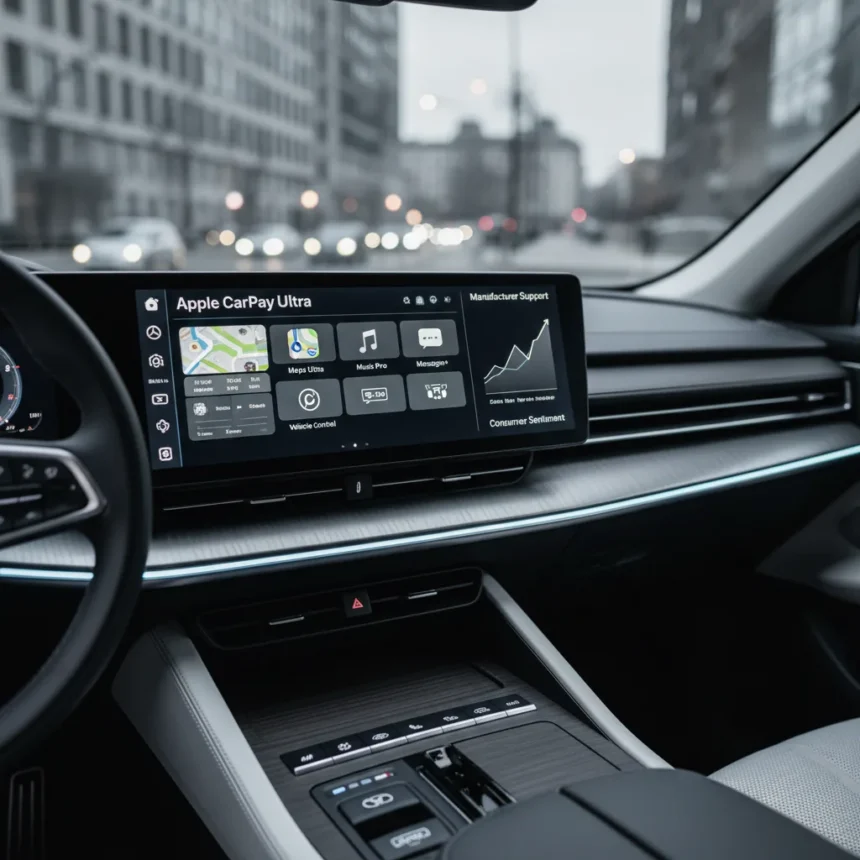
Apple CarPlay Ultra represents Apple’s ambitious vision for automotive integration, designed to take over all screens in a vehicle and provide a seamless infotainment experience. Despite receiving a lukewarm reception from consumers and critics, major car manufacturers continue committing resources to the platform, signaling confidence in its long-term potential even as questions linger about its immediate market appeal.
Key Takeaways
- Apple CarPlay Ultra is designed to take over all screens in a vehicle, not just the primary display
- The system has received lukewarm reception from the market despite manufacturer backing
- Apple CarPlay Ultra is finally appearing in more affordable vehicles this year
- Multiple manufacturers continue supporting both Apple CarPlay and Android Auto
- Apple is expanding CarPlay and Maps capabilities with iOS 26
Why Automakers Are Betting on Apple CarPlay Ultra
The automotive industry faces a critical decision: invest heavily in proprietary infotainment systems or embrace third-party platforms that integrate smoothly with smartphones. Apple CarPlay Ultra represents the latter strategy, offering manufacturers a path to modern in-car experiences without developing software from scratch. This approach appeals to legacy automakers struggling to compete with Tesla’s software sophistication and tech-native startups entering the market.
Manufacturer commitment to Apple CarPlay Ultra persists despite consumer skepticism, suggesting industry executives believe long-term adoption will follow initial hesitation. The platform’s design philosophy—taking control of all vehicle screens rather than just the central display—represents a departure from earlier CarPlay implementations that competed alongside proprietary systems. This more integrated approach may eventually feel more natural to drivers, even if current reviews suggest otherwise.
Apple CarPlay Ultra Pricing and Accessibility
A major turning point for Apple CarPlay Ultra adoption is its expansion into more affordable vehicle segments. Previously limited to premium brands and high-trim models, the system is finally appearing in mass-market vehicles this year, dramatically broadening its potential user base. This shift mirrors how smartphone operating systems achieved dominance—through availability across price points, not just luxury segments.

Making Apple CarPlay Ultra accessible to average buyers removes a significant adoption barrier. When a technology remains exclusive to expensive vehicles, consumer familiarity grows slowly. Broader distribution forces competing platforms to respond and accelerates the normalization of the interface across the automotive industry. The decision to expand downmarket signals that manufacturers believe the system has matured enough for mainstream deployment.
Apple CarPlay Ultra vs. Android Auto and Proprietary Systems
Apple CarPlay Ultra does not operate in isolation. Multiple manufacturers continue supporting both Apple CarPlay and Android Auto, creating a competitive ecosystem rather than a single dominant standard. This dual-support strategy hedges manufacturer bets while giving consumers choice—though it also fragments the in-car experience and complicates development efforts.



Android Auto remains a viable alternative, and some manufacturers maintain proprietary systems alongside both platforms. This fragmentation reflects the automotive industry’s cautious approach to technology partnerships. No single platform has achieved the dominance that iOS or Android enjoy in smartphones, meaning car buyers cannot assume their preferred interface will be available across all brands or model lines.
What’s Next for Apple CarPlay Ultra
Apple continues expanding the platform’s capabilities. iOS 26 introduces new features for CarPlay and Maps, suggesting Apple intends to differentiate the system through software innovation rather than relying on hardware alone. These incremental improvements may gradually shift market perception from skeptical to accepting, particularly as drivers spend more time with the interface.
The long-term success of Apple CarPlay Ultra depends on whether these software enhancements translate to measurable improvements in daily usability. Lukewarm reception often stems from specific friction points—slow response times, unintuitive navigation, limited customization—rather than fundamental architectural flaws. Addressing these issues through updates could convert skeptics into advocates.
Is Apple CarPlay Ultra worth the investment for automakers?
Yes, for most manufacturers. Developing proprietary infotainment systems requires massive ongoing investment in software engineering talent and infrastructure. Licensing Apple CarPlay Ultra or Android Auto reduces long-term costs while delivering a competitive feature set that consumers expect in modern vehicles.



Will Apple CarPlay Ultra eventually replace proprietary car systems?
Unlikely in the near term. Manufacturers will maintain proprietary features for brand differentiation and to protect customer data. However, third-party platforms like Apple CarPlay Ultra and Android Auto will continue capturing an increasing share of the infotainment experience, relegating proprietary systems to secondary roles.
Why is Apple CarPlay Ultra expanding to cheaper cars now?
Broad market adoption requires affordability. By making Apple CarPlay Ultra available in mass-market vehicles, manufacturers can build consumer familiarity and normalize the interface across income levels, similar to how smartphones achieved universal adoption through competitive pricing.
Apple CarPlay Ultra’s expansion into mainstream vehicles marks a maturation point for the platform. Despite initial skepticism, the industry’s continued investment suggests manufacturers believe the long-term value justifies current development costs. Whether consumers ultimately embrace the system depends on execution—and Apple’s ability to refine the experience through iOS updates suggests the company is committed to proving the doubters wrong.
Edited by the All Things Geek team.
Source: T3




