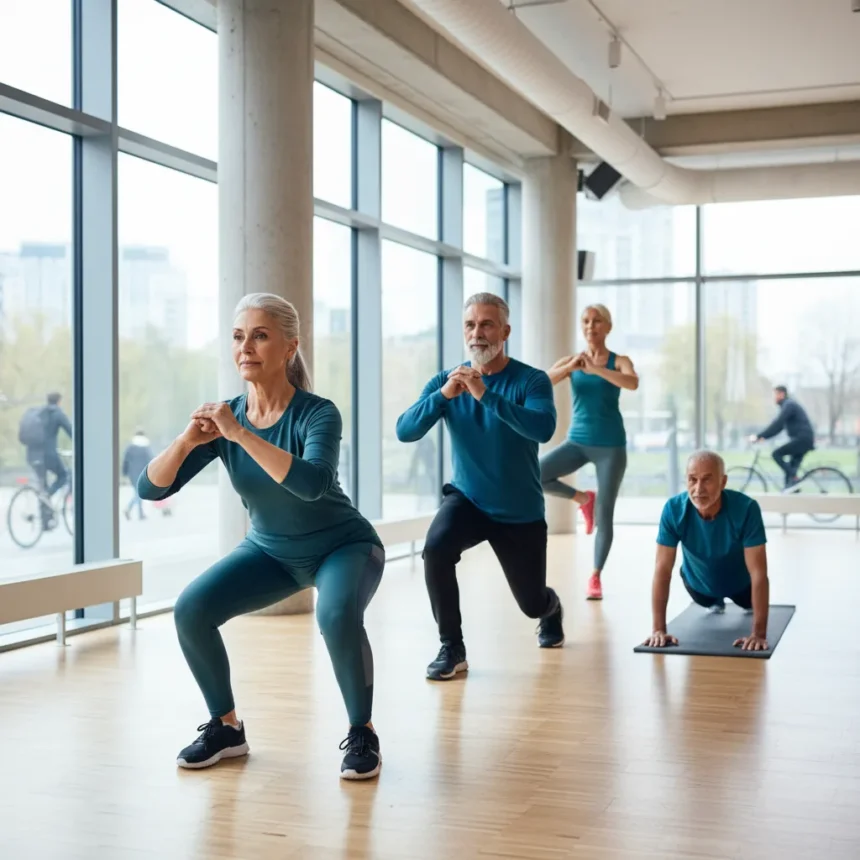
Senior strength workouts are outperforming traditional walking routines for building the muscle, bone density, and functional strength that aging bodies actually need. A physical therapist has designed a six-exercise bodyweight routine that targets the exact areas where seniors lose capability fastest: leg strength, core stability, balance, and mobility. No equipment required. No gym membership necessary. Just a chair, a wall, and 20-30 minutes, two to three times per week.
Key Takeaways
- Senior strength workouts build muscle and bone density faster than walking alone.
- Six bodyweight exercises require no equipment and take 20-30 minutes.
- Perform 2-3 times weekly with 6-8 reps per exercise, repeating the circuit 2-3 times.
- Walking improves cardiovascular fitness but does not prevent muscle loss or osteoporosis as effectively.
- Functional movements like sit-to-stand directly translate to daily independence and fall prevention.
Why Senior Strength Workouts Outperform Walking
Walking gets the credit it deserves for cardiovascular health, but it has a critical limitation: it does not build the muscle and bone density seniors need to stay independent. While walking improves heart function, it does not trigger the resistance stimulus required to prevent sarcopenia (age-related muscle loss) or maintain bone integrity. Senior strength workouts address this gap directly. By using bodyweight resistance, these exercises force muscles to contract against gravity and their own weight, stimulating the growth signals that walking cannot deliver. A physical therapist explains the distinction clearly: while walking is great for your heart, it will not build the muscle and bone density you need to stay strong and independent as you age.
The functional payoff is immediate and tangible. Seniors who perform senior strength workouts report easier transitions from sitting to standing, improved balance during daily tasks, and reduced fear of falling. These are not abstract fitness metrics—they are the movements that determine whether someone can live independently at 70, 80, or beyond.
The Six-Exercise Senior Strength Workout Routine
The routine consists of six simple movements performed in a circuit format. Complete 6-8 repetitions of each exercise, rest as needed, then repeat the entire circuit 2-3 times. Begin with a 5-8 minute warm-up of light marching in place, arm circles, and gentle torso twists to prepare your body. Before starting any new exercise program, consult a qualified healthcare professional, especially if you are returning from injury, experiencing pain, or have mobility limitations.

1. Sit-to-Stand (Chair Squats) — This exercise builds leg strength and directly mimics the movement of rising from a chair or toilet, one of the most important functional activities for independent living. Sit on the front edge of a sturdy chair with feet hip-width apart and flat on the floor, maintaining a 90-degree bend at the knees. Place your hands on your thighs, the chair sides, or across your body (the hardest variation). Lean forward slightly, shift your weight into your feet, engage your core, and push through your feet to stand. Slowly lower yourself back down, gently tap the chair, and repeat for 6-8 reps. Keep your chest upright and avoid collapsing forward at the hips.
2. Wall Push-Ups — This movement targets upper body and core strength without the difficulty of floor push-ups. Stand arm’s length away from a wall with feet shoulder-width apart. Place your hands on the wall at shoulder height and width. Bend your elbows to lower your chest toward the wall while keeping your body straight from head to heels. Push back to the starting position. Perform 6-8 reps. The farther you stand from the wall, the harder the exercise becomes.



3. Seated Leg Lifts — This exercise improves hip flexor strength, knee stability, and balance. Sit on the edge of a chair with your back straight and feet flat on the floor. Engage your core, then lift one knee toward your chest, creating a 90-degree bend at both the hip and knee. Hold for 2-3 seconds, then lower slowly. Alternate legs and complete 6-8 reps per leg. Move deliberately and avoid swinging your leg.
4. Single-Leg Balance Hold — Balance is the most underrated component of fall prevention, and this exercise directly enhances ankle, knee, and hip stability. Stand near a wall or chair for support. Shift your weight to one leg and lift the other foot 6 inches off the floor. Keep your hips level and avoid leaning. Hold for 20-30 seconds, then switch sides. Complete 6-8 reps per side. Use your fingertips on the wall or chair for light balance assistance—the goal is to challenge stability without risking a fall.
5. Bird-Dog — This builds core stability, back strength, and coordination. Start on all fours with hands directly under your shoulders and knees under your hips. Extend your right arm forward and left leg back simultaneously, keeping them level with your torso. Hold for 3-5 seconds, then return slowly. Alternate sides and complete 6-8 reps per side. Move with control and avoid arching your lower back.
6. Heel-Toe Walking — This improves balance, coordination, and proprioception (body awareness in space). Stand tall and place the heel of one foot directly in front of the toes of the other foot, creating a straight line. Walk 10-20 steps forward in this heel-to-toe pattern, then walk 10-20 steps backward. One complete forward-and-backward pass equals one rep; perform 6-8 reps total. Use a wall for support if needed. This exercise challenges your vestibular system and ankle stabilizers simultaneously.



How Often Should You Perform Senior Strength Workouts
Perform this senior strength workout routine two to three times per week, with at least one rest day between sessions. This frequency allows your muscles to recover and adapt while maintaining consistency. Many seniors find that scheduling workouts on the same days each week—Monday, Wednesday, Friday, for example—builds habit and makes adherence easier. The entire session, including warm-up and all three circuits, takes approximately 20-30 minutes. As you grow stronger over weeks and months, you can increase reps to 10-12, add an extra circuit, or extend balance holds to 45-60 seconds.
Frequently Asked Questions
Can seniors do this workout if they have arthritis or joint pain?
Yes, but modify as needed. Reduce your range of motion on sit-to-stands by not lowering all the way down, use wall push-ups instead of floor versions, and shorten balance holds if dizziness occurs. If pain persists during any movement, skip that exercise and consult a physical therapist for a modified version.
Do I need any equipment to perform senior strength workouts?
No. You need only a sturdy chair and a wall. These exercises are designed to be performed anywhere—at home, outdoors, or while traveling. No dumbbells, resistance bands, or machines required.
How long does it take to see results from senior strength workouts?
Most seniors notice improved ease of movement, better balance, and increased confidence in daily activities within 2-3 weeks of consistent practice. Measurable gains in strength and endurance typically appear within 4-6 weeks. Consistency matters far more than intensity.
Senior strength workouts succeed precisely because they are simple, accessible, and directly address the movements that matter in real life. Walking will always have a place in a senior fitness routine for cardiovascular health, but it is not enough on its own. Adding these six exercises to your weekly routine fills the gap that walking leaves behind, building the muscle, bone density, balance, and functional strength that keep you independent, capable, and confident as you age.
Edited by the All Things Geek team.
Source: Tom's Guide