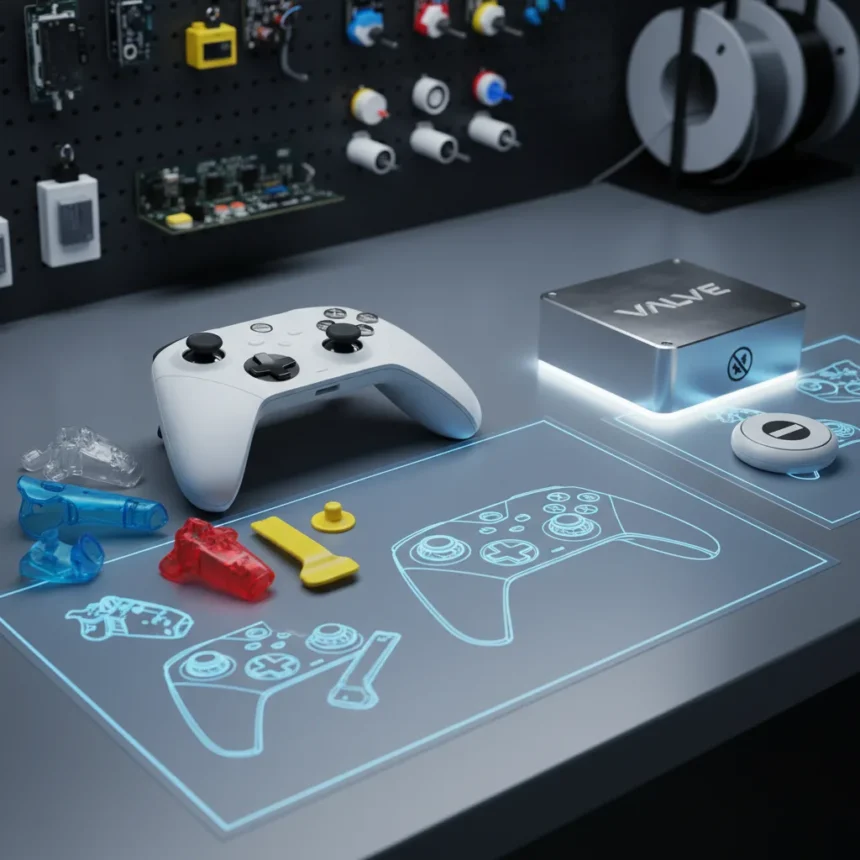
Valve released Steam Controller CAD files under a Creative Commons license, giving the modding community a blueprint for designing and 3D printing custom accessories for the aging input device. The move signals Valve’s commitment to sustaining interest in the Steam Controller even as the hardware sits out of stock, shifting from passive waiting to active community participation.
Key Takeaways
- Valve released free CAD files for Steam Controller and Puck external shells under Creative Commons CC BY-NC-SA 4.0 license.
- Files include STP models, STL models, and engineering drawings with critical features and keep-out zones for both devices.
- Interior components are not included, preventing full device replication from scratch.
- Community can now 3D print custom shells, cases, and accessories for the controllers.
- Files available for free download via Steam Community hardware group.
What Valve Actually Released
Valve made the external shell CAD files for the Steam Controller and Puck available for download under a Creative Commons license, providing modders with both STP and STL model formats alongside engineering drawings that detail critical features and keep-out zones. This is not a full blueprint for building a controller from the ground up—the files cover only the outer shell and surface topology, leaving the internal electronics, sensors, and mechanical components completely undocumented.
The distinction matters. Modders can now design replacement shells, protective cases, custom grips, and aesthetic accessories that fit the existing hardware. They cannot manufacture a functional Steam Controller or Puck from these files alone. Valve’s decision to open-source only the exterior reflects a practical compromise: enabling creative customization without revealing proprietary internals or creating liability around reproduction of complex electronics.
According to Valve’s official Steam Community announcement, the company stated: “We can’t wait to see what you all create!” The enthusiasm signals Valve’s genuine interest in letting the community extend the device’s lifespan through customization rather than waiting passively for an official restock that has no confirmed date.


Why This Matters Now
The Steam Controller has been out of stock for months, leaving loyal users with aging hardware and no official upgrade path. Rather than discontinue support or let the device fade into irrelevance, Valve chose to empower the community to breathe new life into it through modding and 3D printing. This approach contrasts sharply with how most hardware manufacturers handle discontinued products—by simply cutting them loose.
For PC gaming enthusiasts who prefer the Steam Controller’s unique touchpad design over traditional analog sticks, this release is a practical gift. Modders can now design custom shells in different colors, create ergonomic grip modifications, or even design specialized cases for travel. The STL format is particularly valuable because it is the standard for 3D printing, making these files immediately usable on consumer-level printers.



The Creative Commons license ensures the files remain open and freely shareable, preventing any single company or individual from gatekeeping derivative designs. This legal framework encourages a robust ecosystem of community-created accessories rather than limiting creativity to a single official source.
The Limits of External-Only Files
While the release is generous, it is important to understand what modders cannot do with these files. The CAD files cover only the external shell and surface topology—the visible, touchable parts of the device. Everything that makes the Steam Controller actually function remains proprietary: the haptic feedback motors, the touch-sensitive trackpad sensors, the internal PCB layout, the firmware, and the mechanical switches.
This means no one can manufacture a fully functional Steam Controller clone using only these files. Any custom shell still requires the original internal components from an existing device. Modders are essentially working with hollow shells that fit around the existing electronics—valuable for aesthetics and ergonomics, but not for true hardware replication.
This limitation is both a strength and a weakness. Strength: Valve avoids the complexity and liability of open-sourcing active electronics. Weakness: the modding community cannot innovate on the internals, improve the trackpad sensitivity, or address any of the hardware’s known quirks through full redesign. Customization is constrained to the outer form.


What Modders Can Actually Build
Despite the limitations, the CAD files unlock several practical projects. Modders can 3D print replacement shells in custom colors, designs, or materials that the original plastic shells cannot achieve. They can create protective cases that provide better grip without adding bulk. Ergonomic grip extensions, specialized thumb rest designs, or even full aesthetic overhauls are all within reach.
The engineering drawings included with the files are particularly useful because they specify critical features and keep-out zones—the areas where modders must not add material without interfering with the internal components or buttons. This guidance prevents wasted prints and failed designs.
For competitive players or accessibility-focused users, this opens possibilities for custom button layouts, texture modifications, or weight adjustments that might improve comfort or performance. The community has already proven creative with less detailed documentation—full CAD files will likely spawn a wave of innovative designs within weeks.
How This Compares to Typical Hardware Support
Most gaming hardware manufacturers do not release CAD files for discontinued products. When a controller goes out of stock, it typically stays discontinued, and users either hunt for remaining inventory on the secondhand market or migrate to newer hardware. Valve’s approach is unusual and generous by industry standards.
The Steam Deck, by contrast, has benefited from strong official support and regular restocks, so open-sourcing its CAD files would be less necessary. The Steam Controller, having been discontinued and left without an official successor, faces a different situation—open-sourcing its exterior is a way of saying “we are not replacing this, but we are not abandoning it either.”
This strategy keeps the Steam Controller relevant in the gaming peripherals conversation without requiring Valve to invest in manufacturing, marketing, or customer support for new units. It is a low-cost way to maintain goodwill with a passionate user base.
Where to Find and Use the Files
The CAD files are available for free download via Valve’s Steam Hardware Steam Community group announcement. Users can access the STP models (industry-standard CAD format) for direct editing in tools like Fusion 360 or FreeCAD, or use the STL models (stereolithography format) directly for 3D printing on consumer printers.
The engineering drawings provide critical reference information to ensure custom designs do not interfere with buttons, speakers, or internal keep-out zones. Anyone planning to 3D print a custom shell should carefully review these drawings before finalizing a design.
Can I build a full Steam Controller from these files?
No. The CAD files include only the external shell and surface topology, not the internal electronics, motors, sensors, or firmware. You would still need the internals from an existing Steam Controller or Puck to create a functional device. These files enable custom shells and accessories, not full hardware replication.
What 3D printer do I need to use these files?
Any consumer-level FDM (fused deposition modeling) 3D printer capable of handling the scale of the Steam Controller shell should work. The STL files provided are compatible with standard slicing software. Print quality and material choice will affect the final result, but no specialized or industrial-grade printer is required.
Are the files really free to use and modify?
Yes. The files are released under a Creative Commons license, which means they are free to download, modify, and share, provided derivative works also credit Valve and use the same license. You cannot use the files for commercial sale without explicit permission, but personal projects and community sharing are encouraged.
Valve’s decision to open-source the Steam Controller CAD files is a pragmatic acknowledgment that the device’s future lies with the community, not the company. By removing the barrier to customization and modification, Valve has transformed a discontinued product into a platform for creativity. The files do not enable full hardware replication, but they unlock a wealth of aesthetic, ergonomic, and functional improvements that keep the Steam Controller alive in the hands of users who genuinely care about it.
Edited by the All Things Geek team.
Source: Tom's Hardware