A class action lawsuit filed in April 2026 accuses Roku and TCL of selling defective smart TVs that become unusable after automatic software updates, then refusing to fix them. The complaint, filed by Los Angeles resident Terri Else in US District Court for the Central District of California, targets Roku Inc. and TTE Technology Inc. (operating as TCL North America), alleging they knowingly distributed tens of thousands of products with “repetitively defective” software.
Key Takeaways
- Class action lawsuit filed April 2026 alleges Roku and TCL software updates cause TVs to become entirely unusable or severely degraded.
- Affected models include Roku Select Series, Roku Plus Series, and TCL 3-Series through 6-Series running Roku OS.
- Plaintiff claims companies ignored persistent consumer complaints for at least two years and offered no recourse despite express warranties.
- Roku denies the claims as meritless; TCL declined to comment.
- Lawsuit seeks nationwide class certification, restitution, and injunctive relief requiring better update disclosure practices.
What Happened to Roku and TCL Bricked TVs
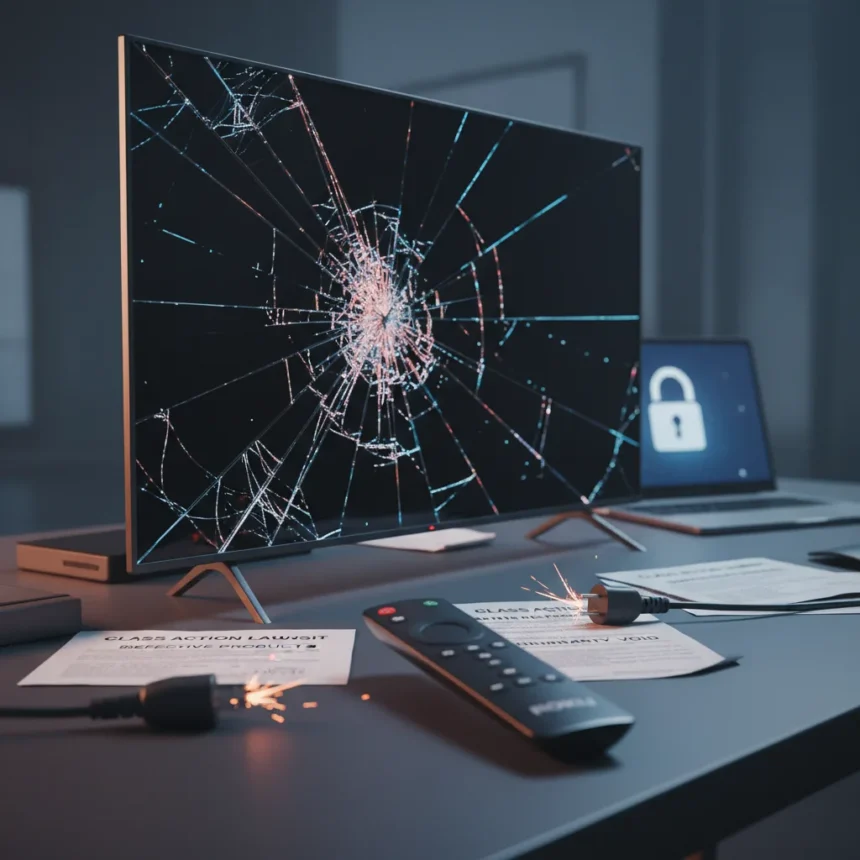
The lawsuit alleges that Roku and TCL software updates have rendered countless televisions inoperable, leaving owners with devices that won’t power on, display black screens, freeze mid-use, or enter endless boot loops. According to the complaint, “Defendants knowingly sold (and continue to sell) tens of thousands of Products that have Software Defects which corrupt user experience to the point of inoperability, including screen black outs, loss of video, the screen flashing on and off, or otherwise malfunctioning”. Consumer reports on Reddit and other forums document failures stretching back at least two years, with some users reporting multiple TVs from the same update going down simultaneously.
The core grievance is that Roku and TCL pushed automatic updates without adequate testing, then abandoned customers when things broke. “Despite consumers’ persistent complaints of repeated system failures, often leaving their TVs completely inoperable, Defendants offer no recourse,” the lawsuit states. This contradicts the express warranties both companies promised, which pledge to repair, correct, or otherwise remediate defects—commitments the plaintiff argues were hollow.
Which TV Models Are Affected
The lawsuit names specific product lines: Roku Select Series, Roku Plus Series, TCL 3-Series, TCL 4-Series, TCL 5-Series, and TCL 6-Series—all running Roku OS. These are budget to mid-range smart TVs, making them popular entry points for consumers seeking affordable streaming-capable displays. The vulnerability appears to span multiple generations and price points, suggesting the problem is systemic rather than isolated to a single manufacturing batch or firmware version.



Roku and TCL dominate the budget smart TV market, and this lawsuit threatens their reputation in a segment where price-conscious buyers have limited brand loyalty. Unlike premium TV makers that offer dedicated customer support lines, Roku and TCL rely heavily on software updates for feature additions and bug fixes—making the failure to test or respond to broken updates particularly damaging.
Roku and TCL’s Response and Legal Claims
Roku’s spokesperson told Tom’s Guide that “We believe the claims are meritless,” denying all allegations. TCL declined to comment on the lawsuit. The defendants will likely argue in court that software bugs are inherent to complex devices, that affected users represent a tiny fraction of installed base, and that free replacement or repair offers exist for warranty claims—though the plaintiff contends these remedies were inadequate or unavailable.



The lawsuit alleges violations of California’s Unfair Competition Law and Consumers Legal Remedies Act, seeking nationwide class certification, actual and statutory damages, restitution, and injunctive relief. The plaintiff also demands that courts force Roku and TCL to improve their update disclosure practices, warning users of known issues before pushing automatic firmware. If certified, this class could encompass hundreds of thousands of affected TV owners across the United States.
Why This Matters for Smart TV Owners
This lawsuit exposes a fundamental tension in the smart TV market: manufacturers push frequent software updates to add features and patch security holes, but they invest minimal resources in testing those updates before rollout. When an update breaks a TV, most owners have no recourse beyond factory resets (which often fail if the TV won’t boot) or expensive repairs outside warranty. Budget TV makers like Roku and TCL have particularly thin support infrastructure, making mass failures especially damaging to consumers who can least afford to replace a broken television.
The case also highlights how little power consumers have over devices they own. Roku and TCL push updates automatically; users cannot delay or opt out. If an update bricks your TV, you are stuck unless you can navigate a support system designed to deflect claims. The lawsuit argues this violates the basic promise of a warranty—that the product will work as sold—and seeks to force manufacturers to take update quality seriously.
What Happens Next
The lawsuit must first survive a motion to dismiss, where defendants will argue the claims lack legal merit. If it proceeds, Roku and TCL will likely move to compel arbitration (many smart TV warranties include arbitration clauses), which could narrow the scope of a class action. Settlement negotiations may follow, potentially resulting in software patches, replacement TVs, or compensation funds for affected owners. A trial could take years, and the outcome will depend on whether courts agree that the companies knowingly sold defective products or merely failed to test adequately—a crucial distinction in liability law.



Does this class action affect TVs outside the US?
The lawsuit targets US sales and was filed in US federal court, so it applies to consumers in the United States. International buyers of Roku and TCL TVs may have different warranty protections depending on their country, but they are not covered by this specific class action unless they purchased the TV in the US.
Can I join the class action if my Roku or TCL TV was bricked?
If your TV matches one of the affected models (Roku Select, Roku Plus, or TCL 3-Series through 6-Series running Roku OS) and was damaged by a software update, you may be eligible to join once the class is certified. You will need to provide proof of purchase and documentation of the failure. Watch for official class action notifications or check the lawsuit docket for updates on certification and claim deadlines.
Has Roku faced other lawsuits recently?
Yes. Roku separately faces a class action lawsuit over its removal of a key feature from Smart Home Cameras, which forced users to pay for a subscription service previously included for free. This TV bricking lawsuit is unrelated but adds to mounting legal pressure on the company over consumer-facing practices.
The Roku and TCL bricked TVs lawsuit underscores a growing problem: manufacturers treating smart devices as perpetual work-in-progress, pushing updates that break hardware and then offering no meaningful remedy. If the class is certified and plaintiffs prevail, it could force a reckoning across the entire smart TV industry, making companies test updates more rigorously and honor the warranties they advertise. For now, owners of affected models face a wait-and-see situation, hoping courts side with consumers over corporate claims that software defects are simply the cost of modern electronics.
Edited by the All Things Geek team.
Source: What Hi-Fi?