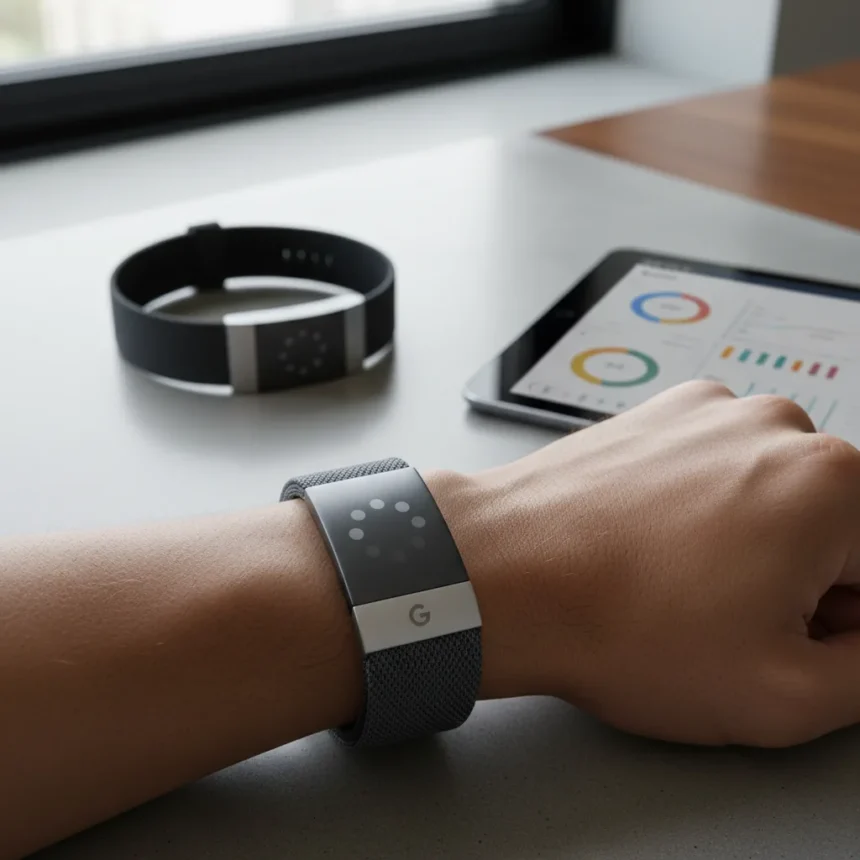
Fitbit Air screen-free band is Google’s new fitness-focused wearable that abandons the display entirely to compete directly with Whoop, marking the brand’s return to dedicated fitness hardware after years focused on smartwatches. The device represents a strategic shift: Google is doubling down on Fitbit’s band legacy while relegating premium smartwatch duties to Pixel Watch, signaling confidence that fitness enthusiasts want simplicity over screens.
Key Takeaways
- Fitbit Air is a screen-free fitness band teased by Steph Curry on Instagram, arriving as the first new Fitbit band in years.
- Google’s Fitbit strategy now separates bands (Charge, Inspire, Ace, Air) from smartwatches, with Pixel Watch handling premium devices.
- The band uses a freemium model with basic features included and a paid Fitbit Premium subscription unlocking advanced functionality.
- Fitbit.com store closed in 2025; all sales moved to Google Store, with account migration to Google Accounts required by February 2, 2026.
- Upcoming Fitbit features include Sleep Need for personalized sleep schedules and enhanced Bluetooth security across the ecosystem.
Why Google Abandoned Fitbit Smartwatches for Bands
Google’s decision to exit Fitbit-branded smartwatches like Sense and Versa was not a retreat—it was a reallocation. The company recognized that Pixel Watch already dominates the premium smartwatch space within Google’s ecosystem, making a competing Fitbit smartwatch redundant. By refocusing Fitbit on bands and basic wearables, Google carved out a distinct market position: affordable, focused, fitness-first hardware. This clarity matters. Consumers confused by overlapping product lines abandon brands. Google chose focus instead.
The Fitbit Air screen-free band exemplifies this strategy. No display means lower power consumption, simpler interface, and cheaper manufacturing—a direct challenge to Whoop’s subscription-first approach. Unlike Whoop, which relies entirely on a companion app for insights, the Fitbit Air will offer basic metrics out of the box, with premium analysis locked behind Fitbit Premium. This hybrid model appeals to budget-conscious fitness enthusiasts who want core tracking without paying upfront for premium features.
Fitbit Air Screen-Free Band Specs and Features
Details remain sparse. The Fitbit Air screen-free band was visually teased by NBA star Steph Curry in an Instagram post showing a black band during a workout, but Google has not released official specifications, pricing, or a confirmed launch date. What we know: the device strips away the display entirely, focusing on motion and biometric tracking synced to a smartphone app. This mirrors Whoop’s philosophy but with Fitbit’s established ecosystem advantage.


The band will launch into a Fitbit ecosystem undergoing significant change. Fitbit.com’s store closure in 2024 consolidated all hardware sales to Google Store, streamlining distribution but signaling that Fitbit is now fully integrated into Google’s retail strategy. More critically, Google is forcing all Fitbit users to migrate to Google Accounts by February 2, 2026—a hard deadline that consolidates user data and deepens Fitbit’s integration with Google’s health platform.
Recent Fitbit software updates hint at the Air’s capabilities. Upcoming features include Sleep Need, a personalized sleep recommendation tool that calculates optimal bedtime and wake times based on individual patterns. The platform also gained Bluetooth security improvements and status indicators on screen wake, suggesting Google is prioritizing privacy and reliability as selling points against competitors like Apple and Oura.


How Fitbit Air Compares to Whoop and Alternatives
Whoop is the obvious rival. Both devices are screen-free, both rely on subscription tiers for advanced features, and both target serious fitness enthusiasts willing to pay for insights. But Fitbit Air screen-free band enters with structural advantages: Fitbit’s existing user base, integration with Google Fit, and likely lower pricing. Whoop’s premium positioning commands a higher price; Fitbit’s historical positioning suggests the Air will undercut it significantly, though Google has not confirmed pricing.
The competitive landscape extends beyond Whoop. Apple Watch dominates smartwatch fitness tracking; Samsung offers both watches and bands; Oura specializes in rings; Garmin owns the endurance sports market with devices like the Cheetah 2 Pro, which includes race prediction and AI coaching. Fitbit Air screen-free band does not compete in those premium tiers. It competes in the affordable, focused-fitness segment where simplicity and price matter more than feature density. That is a winnable position if execution is solid.
Google’s broader health strategy matters here. Pixel Watch already integrates deeply with Google Fit, Android’s native health platform. Fitbit Air screen-free band will feed into the same ecosystem, allowing users to consolidate fitness data across devices. Whoop offers no such integration with Android; it exists as a standalone app. For Android-first users, Fitbit’s ecosystem coherence is a genuine advantage.
When Will Fitbit Air Launch and What Will It Cost?
Google has not announced pricing or availability. Speculation based on Fitbit’s historical positioning suggests the Air will cost significantly less than Whoop’s premium tier, possibly in the budget-to-mid range where Fitbit’s Inspire 3 and Charge 6 live. The Inspire 3 bundles a six-month Fitbit Premium subscription, a pattern the Air may follow to reduce friction for new users.


The February 2, 2026 account migration deadline creates urgency. Google is clearly preparing for a major product push aligned with that consolidation date. Expect the Fitbit Air screen-free band announcement and launch window to cluster around that timeline, though nothing is confirmed. The teaser via Steph Curry suggests marketing momentum is building, but official details remain locked away.
Should You Wait for Fitbit Air Screen-Free Band?
If you own a Fitbit device, the February 2026 migration deadline is non-negotiable—you must move to a Google Account regardless. If you are shopping for a fitness band now, Fitbit Air screen-free band is worth waiting for if you prefer Google’s ecosystem and want to avoid Whoop’s higher subscription cost. If you need a device immediately, Fitbit’s existing Charge and Inspire lines deliver solid fitness tracking today.
The real question is whether Google executes on the promise. Fitbit has stumbled before—the brand lost momentum during the Sense and Versa years as users questioned whether they needed a Fitbit smartwatch or just an Apple Watch. Fitbit Air screen-free band must prove that simplicity and affordability resonate more than feature bloat. If it does, Google has a genuine competitor to Whoop. If it does not, Fitbit remains a legacy brand coasting on past reputation.
What features will Fitbit Air screen-free band include at launch?
Google has not detailed the full feature set. The device will track basic fitness metrics out of the box, with advanced analytics unlocked via Fitbit Premium subscription. Upcoming Sleep Need functionality will likely ship with or shortly after launch, given its prominence in recent Fitbit software updates.
Is Fitbit Air screen-free band compatible with iPhones?
Fitbit apps work on both Android and iOS, so the Fitbit Air screen-free band should support iPhones through the Fitbit app. However, Google’s ecosystem advantages—like deep Google Fit integration—are Android-native benefits. iPhone users will get basic tracking and notifications but may miss some platform-specific features.
When is the Fitbit account migration to Google Accounts deadline?
February 2, 2026 is the hard deadline for migrating all Fitbit accounts to Google Accounts. If you use Fitbit devices, you must complete this migration by that date or lose access to your account and data. This deadline coincides with Fitbit’s broader restructuring and likely product announcements.
Fitbit Air screen-free band represents Google’s bet that fitness enthusiasts are tired of smartwatch bloat and ready for focused, affordable hardware. Whether the execution matches the vision remains to be seen, but the strategy is sound. Whoop should be watching closely.
Edited by the All Things Geek team.
Source: T3