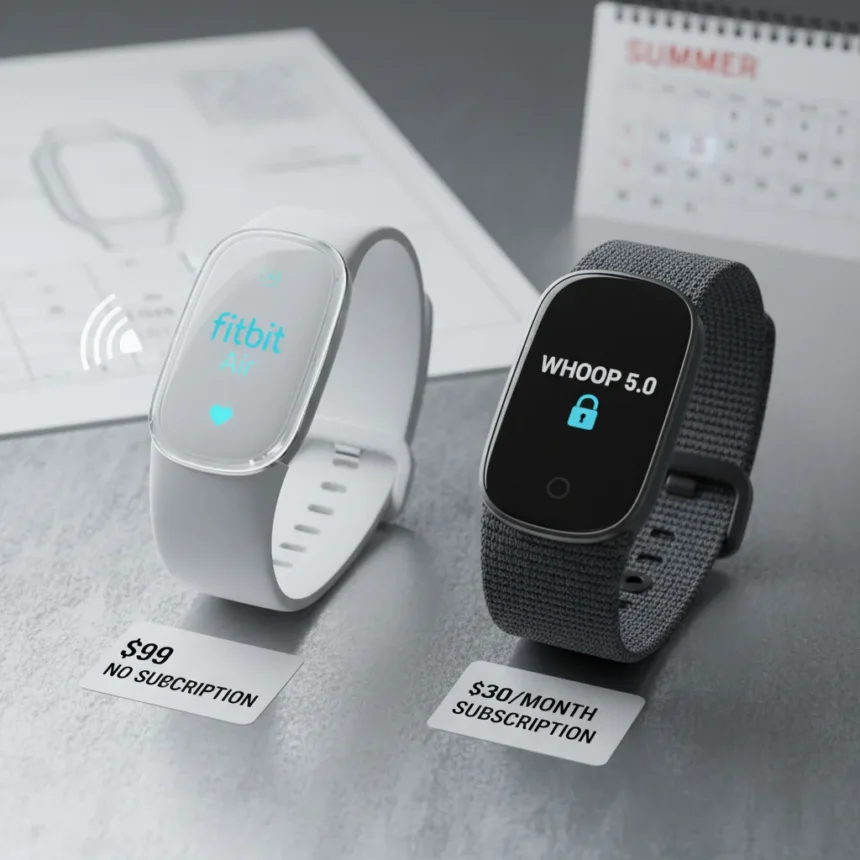
Fitbit Air is rumored to be Google’s first major fitness tracker release in nearly three years, and it could reshape the screenless wearable market. The device is positioned as a direct competitor to Whoop 5.0, but with a critical difference: no subscription required. At an estimated $99 price point, Fitbit Air targets users who want comprehensive health insights without ongoing monthly fees.
Key Takeaways
- Fitbit Air is rumored to launch summer 2026 at $99 with no subscription fees
- Screenless design offers holistic health metrics without a display
- Battery life reaches up to one week per charge
- Direct competitor to Whoop 5.0, which requires paid membership tiers
- First new Fitbit tracker in nearly three years fills market gap
Why Fitbit Air Matters Right Now
The screenless fitness tracker category has been dominated by Whoop 5.0, which charges users for access to core features through subscription tiers. Whoop 5.0 requires a membership—starting at the entry-level One tier—to unlock resting heart rate, heart rate variability (HRV), and skin temperature monitoring. Higher tiers add medical-grade features like ECG readings and blood pressure tracking. For budget-conscious users, this subscription model creates friction. Fitbit Air removes that barrier entirely, offering what the rumors describe as loads of holistic insights without requiring a paid subscription to access core functionality.
Google‘s timing is strategic. The fitness tracker market has grown increasingly competitive, with consumers demanding affordable options that still deliver meaningful health data. A screenless design keeps costs down while maintaining the lightweight, minimalist aesthetic that appeals to users who find smartwatches too bulky or distracting. The rumored one-week battery life positions Fitbit Air as a practical alternative to devices requiring daily charging.
Fitbit Air vs. Whoop 5.0: The Key Differences
Whoop 5.0 is smaller and lighter than its predecessors, making it genuinely pocket-sized. It excels in providing medical-grade data—particularly the higher-tier models that offer ECG readings and blood pressure monitoring. But that power comes at a cost: users must commit to a subscription to access even basic metrics. Fitbit Air takes the opposite approach. By eliminating the subscription requirement, it sacrifices some premium features but becomes accessible to the mass market.


The comparison is not just about price. Whoop 5.0 caters to serious athletes and health enthusiasts willing to pay for detailed biometric analysis. Fitbit Air targets everyday users who want to understand their health trends without committing to a membership. The screenless form factor is shared, but the business model is fundamentally different. One asks users to invest in an ecosystem; the other offers a standalone tool. For consumers tired of subscription fatigue, Fitbit Air’s model is refreshing.
What We Still Don’t Know About Fitbit Air
All details about Fitbit Air remain unconfirmed rumors and leaks. Google has not officially announced the device, its exact specifications, or its launch date. The $99 price, screenless design, one-week battery life, and summer 2026 launch window are all based on leaks rather than official statements. This uncertainty matters because specs can change between rumor and release, and pricing is often adjusted based on manufacturing costs and market positioning.



What remains clear is the strategic intent: Google wants to compete in the affordable fitness tracker space with a subscription-free model. Whether Fitbit Air delivers the promised features at the rumored price will determine whether it genuinely disrupts Whoop’s dominance or becomes another forgotten wearable. The device’s tiny form factor and lack of a screen are deliberate choices to keep costs low while maintaining the minimalist appeal that drives screenless tracker adoption.
Should You Wait for Fitbit Air or Buy Now?
If you have been considering Whoop 5.0 but hesitated over the subscription cost, waiting for Fitbit Air’s rumored summer launch makes sense. The $99 price point is substantially lower than Whoop 5.0’s entry-level tier, and avoiding subscription fees saves money long-term. However, Whoop 5.0 remains the more feature-rich option for users who want medical-grade data and are willing to pay for it.
For casual fitness enthusiasts and general health monitoring, Fitbit Air’s rumored specs align well with typical use cases. One-week battery life eliminates the daily charging hassle that plagues many smartwatches. The screenless design appeals to users who prefer minimal notifications and distraction. The no-subscription model removes friction that has turned many users away from Whoop.
Will Fitbit Air Actually Launch This Summer?
The summer 2026 launch window is based on leaked information, not official confirmation. Product timelines shift frequently—manufacturing delays, regulatory approval, or market strategy changes can push launch dates. Google may also decide to announce Fitbit Air at a major event like Google I/O, which would align with their typical product reveal schedule. Until Google makes an official announcement, the launch date remains speculative.



How does Fitbit Air compare to other screenless trackers?
Fitbit Air’s main competitor is Whoop 5.0, which offers more advanced medical features but requires a subscription. Other fitness trackers typically include screens, making Fitbit Air’s screenless approach less common. The $99 price point and no-subscription model position Fitbit Air as the most accessible option in the premium fitness tracking category, assuming the rumors prove accurate.
Is Fitbit Air available for pre-order yet?
No. Fitbit Air has not been officially announced by Google, so pre-orders are not available. The device remains in rumor stage based on leaks. Once Google makes an official announcement—likely closer to the rumored summer launch—pre-orders or direct availability will follow through standard retail channels.
Fitbit Air represents a bet that consumers value simplicity and affordability over premium features. If Google executes on the rumored specs and pricing, it could force Whoop to reconsider its subscription-dependent business model. For now, the fitness tracker market waits to see whether this screenless underdog can challenge an entrenched competitor. The real test arrives when—and if—Fitbit Air actually ships.
Edited by the All Things Geek team.
Source: Tom's Guide