





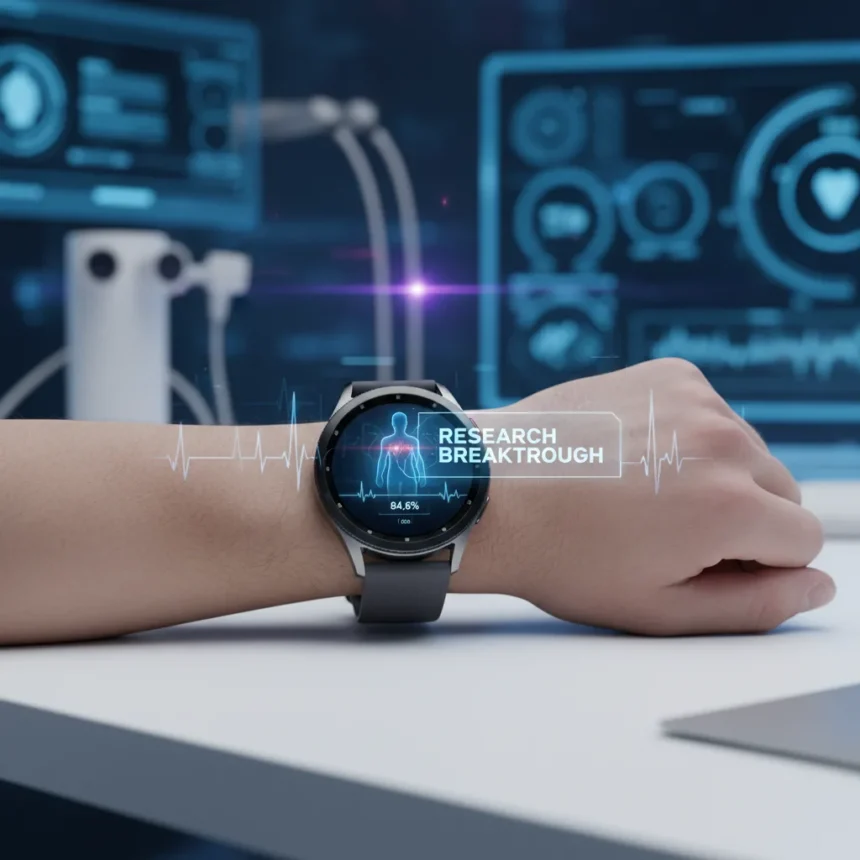
Samsung Galaxy Watch fainting prediction has moved from concept to validated clinical research. In May 2026, Samsung Electronics announced results from a joint study with Chung-Ang University Gwangmyeong Hospital demonstrating that the Galaxy Watch6 can predict vasovagal syncope (VVS)—the most common type of fainting—up to five minutes in advance.
Key Takeaways
- Samsung’s study achieved 84.6% accuracy predicting fainting episodes five minutes before they occur.
- Research evaluated 132 patients with suspected VVS symptoms during induced fainting tests.
- The Galaxy Watch6 used PPG sensor data and heart rate variability analysis with an AI algorithm.
- Fainting prediction is not currently available on any Galaxy Watch model—it remains research-only.
- Up to 40% of people may experience vasovagal syncope episodes in their lifetime.
What the Samsung Galaxy Watch Fainting Prediction Study Actually Proved
The Samsung Galaxy Watch fainting prediction research analyzed 132 patients suspected of having VVS during controlled fainting tests. Using the photoplethysmography (PPG) sensor built into the Galaxy Watch6, researchers collected heart rate variability (HRV) data and fed it into an AI algorithm trained to recognize the physiological patterns that precede a fainting episode. The model predicted impending syncope with 84.6% accuracy, achieving 90% sensitivity and 64% specificity—metrics that measure how reliably the algorithm catches real events versus false alarms.
Professor Jun Hwan Cho, who led the research, noted that vasovagal syncope affects roughly 40% of the population at some point in their lives. These episodes occur when the heart rate and blood pressure drop suddenly, often triggered by emotional distress, the sight of blood, or prolonged standing. A five-minute warning could prevent falls, head injuries, and concussions—injuries that become more serious with age. The findings were published in Volume 7, Issue 4 of the European Heart Journal – Digital Health, positioning this as the first peer-reviewed validation of fainting prediction on a commercial smartwatch.
Samsung Galaxy Watch Fainting Prediction vs. Current Health Features
The Galaxy Watch6 already monitors sleep apnea detection, blood oxygen levels, heart rate irregularities, and other cardiovascular metrics. Fainting prediction would represent a step beyond passive monitoring into active intervention—alerting users to an imminent event rather than logging data after the fact. However, the current Galaxy Watch lineup does not include this capability. Samsung has announced plans to expand medical collaborations and accelerate personalized preventive health solutions, but the company has not disclosed a timeline for bringing fainting prediction to consumer devices.


The research remains a proof-of-concept. Samsung is aware of regulatory and legal considerations around health predictions—claiming a smartwatch can predict fainting carries liability implications that require careful navigation through medical device approval processes in multiple countries.
Why the 84.6% Accuracy Number Matters—And Why It Doesn’t Tell the Whole Story
Samsung’s 84.6% accuracy figure comes with important context. Sensitivity of 90% means the algorithm correctly identifies nine out of ten actual fainting episodes—strong for a preventive alert. Specificity of 64% is lower, meaning the watch would generate false alarms roughly one-third of the time. For a wearable device worn by millions, false alarms could lead to alarm fatigue, where users stop trusting alerts. That trade-off matters more than the headline accuracy number.


The study also used induced fainting tests in a clinical setting with patients already suspected of VVS. Real-world performance—where people are walking, exercising, sleeping, or going about daily life—remains untested. The gap between controlled research and production reality is where many health-monitoring features stumble.
When Will Samsung Galaxy Watch Fainting Prediction Actually Launch?
Samsung has not announced a launch date, availability timeline, or which Galaxy Watch models will receive the feature. The company’s statement indicates intention to expand wearable health monitoring and pursue additional medical collaborations, but those are strategic goals, not product roadmaps. Regulatory approval for a medical prediction feature could take months or years depending on regional requirements—the FDA in the US, the European Medicines Agency in Europe, and local health authorities in other markets all have different standards.
Until Samsung publicly commits to a launch window and a specific device, Samsung Galaxy Watch fainting prediction remains a research achievement rather than a consumer feature. That distinction matters for anyone considering a Galaxy Watch purchase based on this announcement.
Could Samsung Galaxy Watch fainting prediction prevent injuries?
Yes, potentially. A five-minute warning before a fainting episode could allow users to sit down, move to a safe location, or alert someone nearby. For elderly users and people with cardiovascular conditions, preventing a fall could mean avoiding serious head injury or fracture. The preventive value depends on whether users act on the alert and whether the watch correctly predicts episodes in everyday life, not just in clinical tests.

Is Samsung Galaxy Watch fainting prediction available now?
No. The feature is research-only and not available on any current Galaxy Watch model, including the Galaxy Watch6 used in the study. Samsung has not announced when or if it will become a consumer feature.
How accurate is the Samsung Galaxy Watch fainting prediction?
The study reported 84.6% accuracy with 90% sensitivity and 64% specificity in a controlled clinical setting with 132 patients. Real-world accuracy on millions of users during daily activity remains unknown. The 64% specificity means roughly one-third of alerts would be false alarms.
Samsung’s fainting prediction research is genuinely significant—it proves a smartwatch can detect physiological precursors to syncope with useful accuracy. But significance in research does not equal readiness for market. Until Samsung announces a launch date and regulatory approval pathway, this remains a labs-to-consumer promise rather than a product you can buy.
Edited by the All Things Geek team.
Source: Android Central




