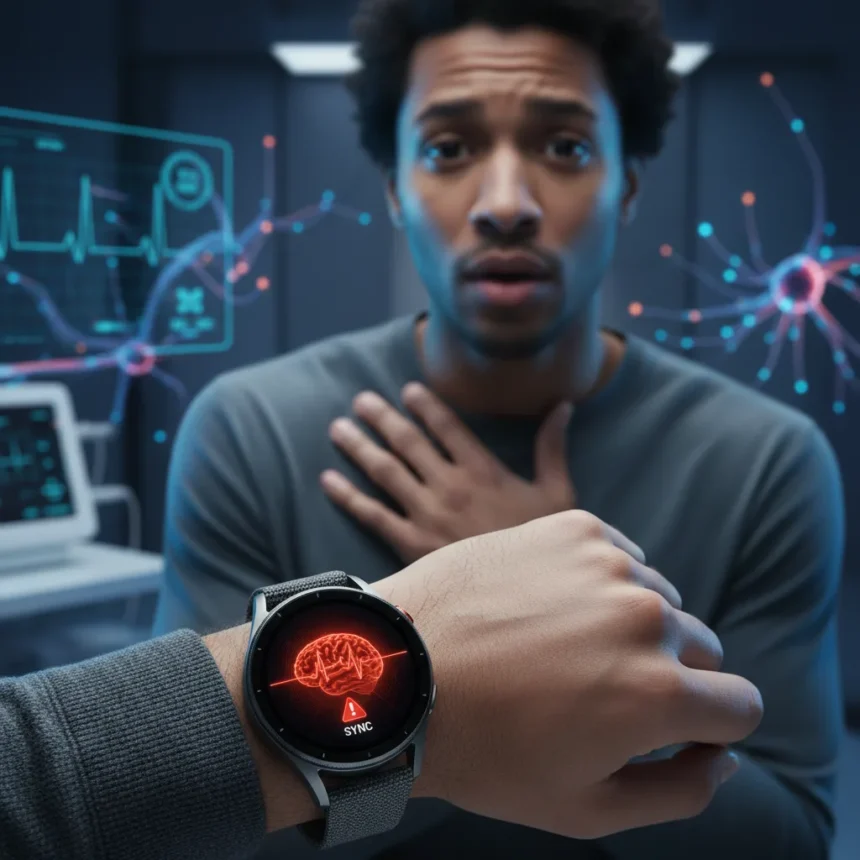
Samsung Galaxy Watch 6 fainting prediction represents a significant leap in wearable health monitoring, using artificial intelligence to detect syncope episodes up to five minutes before they occur. The feature emerged from a joint clinical study conducted with Chung-Ang University Gwangmyeong Hospital in South Korea, announced in May 2026, and achieved 84.6% accuracy in predicting fainting events.
Key Takeaways
- Samsung Galaxy Watch 6 fainting prediction achieved 84.6% accuracy in clinical trials with 132 patients.
- The system provides up to 5 minutes advance warning before syncope episodes using PPG sensors and AI.
- Feature combines photoplethysmography, heart rate variability data, and machine learning algorithms.
- Public release timeline remains unconfirmed; feature currently under development.
- Complements existing Galaxy Watch health features including AFib detection and blood oxygen monitoring.
How Samsung Galaxy Watch 6 Fainting Prediction Works
The Samsung Galaxy Watch 6 fainting prediction system relies on three core components: photoplethysmography (PPG) sensors that measure volumetric changes in blood circulation, heart rate variability (HRV) data that tracks beat-to-beat variations, and an AI algorithm trained to recognize pre-syncope patterns. This combination allows the watch to identify physiological signatures that precede fainting episodes, giving wearers a critical window to sit down or move to safety.
The clinical validation involved 132 patients undergoing controlled fainting tests, providing real-world data on how the algorithm performs under actual syncope conditions. Achieving 84.6% accuracy in this setting suggests the feature could reliably alert users in everyday situations, though real-world performance outside laboratory conditions remains to be seen. Samsung has not yet specified when the feature will roll out to consumers or whether it will require a software update or remain exclusive to future watch models.
Why Fainting Prediction Matters for At-Risk Users
For elderly individuals, people with vasovagal syncope, and those with cardiac arrhythmias, sudden fainting poses serious injury risks—falls can cause head trauma, fractures, and internal bleeding. A five-minute warning fundamentally changes the equation, allowing users to sit, lie down, or alert emergency contacts before losing consciousness. This is not a diagnostic tool and Samsung explicitly positions the feature as a wellness aid rather than medical treatment, but the potential to prevent fall-related injuries is substantial.


The Samsung Galaxy Watch 6 fainting prediction sits alongside other existing health features on the device, including heart rate monitoring, blood oxygen tracking, sleep analysis, and atrial fibrillation (AFib) detection for irregular heart rhythms. Unlike Hard Fall Detection, which uses accelerometers to identify falls after they happen and initiates emergency protocols, the fainting prediction system works proactively—it attempts to stop the fall before it occurs.
Samsung Galaxy Watch 6 Fainting Prediction vs. Fall Detection
Samsung’s existing Hard Fall Detection on the Galaxy Watch 6 detects when a user has already fallen and sends an alert after 60 seconds, automatically triggering an SOS with location data if the user does not respond. The fainting prediction feature inverts this logic entirely. Rather than reacting to a fall, it warns the wearer before syncope strikes, giving them time to take preventive action. Hard Fall Detection requires network connectivity and phone pairing to function fully, whereas the fainting prediction system operates on the watch’s onboard sensors and AI.



This represents a meaningful shift in how wearables approach health emergencies—from damage control to prevention. For users prone to fainting, a five-minute warning is exponentially more valuable than a post-fall alert, even one that automatically calls for help. The two systems are complementary: fainting prediction prevents injury when it works, and Hard Fall Detection catches situations where prevention fails.
When Will Samsung Galaxy Watch 6 Fainting Prediction Launch?
Samsung has not announced a public release date for the fainting prediction feature. The company indicated it plans to refine the health-monitoring capability and expand partnerships with medical institutions before bringing it to market. This development timeline is typical for wearable health features that require regulatory review and additional real-world validation beyond clinical trials.
The feature will likely arrive as a software update to existing Galaxy Watch 6 owners, though Samsung may also reserve it for newer models depending on hardware capabilities. Until an official launch date is confirmed, interested users cannot access the technology on current devices.
Does Samsung Galaxy Watch 6 fainting prediction work outside the lab?
The 84.6% accuracy figure comes from controlled clinical trials with induced fainting in a hospital setting. Real-world performance may differ due to variables like individual physiology differences, activity levels, stress, and environmental factors. Samsung has not published data on how the algorithm performs during everyday use, so current accuracy claims should be viewed as a promising baseline rather than a guarantee.



Can fainting prediction replace medical diagnosis?
No. Samsung explicitly positions the fainting prediction feature as a wellness tool, not a medical device for diagnosis or treatment. Users experiencing frequent fainting should consult a cardiologist or neurologist to identify underlying causes. The watch can complement medical care by providing data and alerts, but it cannot replace professional evaluation and treatment.
Which Samsung watches will get fainting prediction?
Samsung has not specified which models will receive the feature. The clinical study used the Galaxy Watch 6, but availability across the Galaxy Watch lineup—including older models or future releases—remains unconfirmed. Check Samsung’s official announcements for model-specific details when the feature launches.
The Samsung Galaxy Watch 6 fainting prediction feature demonstrates how wearables are evolving from fitness trackers into genuine health-monitoring devices. A five-minute warning before syncope could meaningfully reduce injuries for vulnerable populations, but the technology remains in development. Until Samsung releases the feature publicly and publishes real-world performance data, the clinical trial results represent the best available evidence of its potential. For now, existing Galaxy Watch 6 owners should continue relying on Hard Fall Detection and traditional medical care—but keep watching for updates on this promising capability.
Where to Buy
Samsung Galaxy Watch6 | 100 Amazon customer reviews
Edited by the All Things Geek team.
Source: T3