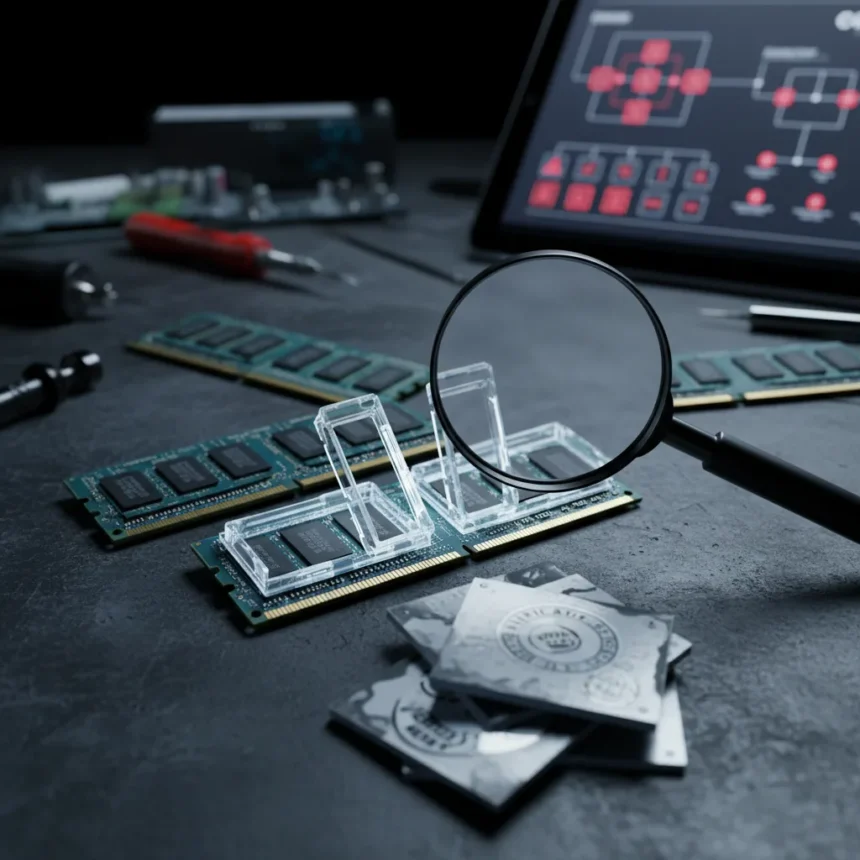
The fake DDR5 RAM scam represents a troubling escalation in hardware counterfeiting, with scammers mounting empty plastic chips onto printed circuit boards and relabeling them as legitimate memory modules. This sophisticated fraud taps into elevated DDR5 pricing, creating financial incentive for criminals to manufacture convincing counterfeits that pass initial inspection.
Key Takeaways
- Counterfeit DDR5 modules use empty plastic chips relabeled to appear as genuine components
- Fake components are mounted directly onto PCBs to increase authenticity perception
- A Japanese buyer documented and exposed the scam methodology
- Elevated DDR5 pricing creates financial motivation for counterfeit production
- The scam signals a broader “RAMpocalypse” trend affecting memory component authenticity
How the Fake DDR5 RAM Scam Works
The fake DDR5 RAM scam operates with deliberate sophistication. Scammers source empty plastic chip housings—the exterior casing that normally contains silicon—and relabel them with legitimate manufacturer markings. These empty shells are then mounted directly onto printed circuit boards, creating modules that look genuine at first glance. A buyer from Japan documented this exact methodology, exposing how the counterfeits are constructed to fool visual inspection and initial testing.
The key to the scam’s effectiveness lies in targeting the supply chain’s trust vulnerabilities. Buyers purchasing from unofficial channels or third-party resellers face heightened risk, as do those buying in bulk without proper verification. The counterfeits will fail under any actual memory test, but they may pass cursory visual checks or be sold before testing occurs.
Why DDR5 Became a Target for Counterfeiters
DDR5 pricing remains elevated compared to older DDR4 standards, creating a profit margin that justifies the effort and risk of counterfeiting. Criminals exploit the price differential and the relative newness of DDR5 adoption—many buyers are still unfamiliar with authentic component appearance and verification methods. The complexity of modern PCB assembly also means counterfeiters can produce modules that appear superficially legitimate without actually containing functional memory chips.


This scam is part of a larger “RAMpocalypse” trend affecting memory component authenticity across the industry. As demand for DDR5 continues to climb and supply chains remain complex, the incentive for fraud grows proportionally. Buyers who rush purchases or rely on unofficial distributors face the highest risk of encountering these counterfeits.
How to Protect Yourself From the Fake DDR5 RAM Scam
Verification starts with purchasing from authorized retailers and established resellers with reputation to protect. Legitimate vendors conduct quality checks and offer return policies that counterfeiters cannot match. When receiving DDR5 modules, inspect the packaging, labels, and physical components carefully—authentic modules will have consistent printing, proper serial numbers, and professional packaging.



Before installing new memory, use diagnostic tools like MemTest86 or your motherboard’s built-in memory test to verify capacity and stability. This step catches counterfeits immediately, as empty plastic chips will fail any functional test within seconds. If you suspect a counterfeit module, document the purchase details, take photos, and report the seller to the platform where you bought it—this helps prevent others from falling victim to the same scam.
For high-value purchases or bulk orders, consider requesting certificates of authenticity or batch verification from the manufacturer directly. Some retailers offer this service for enterprise buyers, and it provides legal recourse if counterfeits slip through.
What This Means for the Hardware Market
The fake DDR5 RAM scam highlights a critical weakness in hardware authentication. Unlike software, which can be cryptographically verified, physical components rely on visual inspection, packaging integrity, and functional testing—all of which counterfeiters can partially replicate. As memory prices remain high and adoption accelerates, the fake DDR5 RAM scam will likely inspire similar attacks on other premium components like SSDs and graphics memory modules.
Manufacturers and retailers must respond by implementing stronger chain-of-custody tracking, tamper-evident packaging, and rapid response protocols for suspected counterfeits. Buyers, meanwhile, should shift purchasing behavior toward verified channels and always run diagnostic tests on new hardware before critical use.



Can I test DDR5 RAM to detect counterfeits?
Yes. Run MemTest86 or use your motherboard’s built-in memory diagnostic tool immediately after installation. Counterfeit modules with empty plastic chips will fail within seconds, showing capacity mismatches or read/write errors. If a module fails any memory test, it is almost certainly counterfeit and should be returned immediately.
Where should I buy DDR5 RAM to avoid the fake DDR5 RAM scam?
Purchase from authorized retailers, major electronics retailers with verified seller status, and direct manufacturer channels. Avoid third-party marketplaces with unverified sellers, especially those offering prices significantly below market rates. Check seller ratings, return policies, and warranty terms before completing any purchase.
What should I do if I bought counterfeit DDR5 RAM?
Document the purchase with photos and receipts, then contact the seller immediately with evidence. Report the counterfeit to the marketplace platform if applicable. If you paid by credit card, dispute the charge. File a report with your local consumer protection agency and, if the seller is international, consider notifying customs authorities. This helps law enforcement track counterfeiting operations and prevents future victims.
The fake DDR5 RAM scam is a wake-up call for buyers to verify hardware purchases before installation and for the industry to strengthen authentication mechanisms. As DDR5 adoption spreads and prices remain elevated, vigilance is not optional—it is essential. Protect yourself by buying smart, testing immediately, and reporting counterfeits to shut down the criminals profiting from this fraud.
Edited by the All Things Geek team.
Source: Tom's Hardware