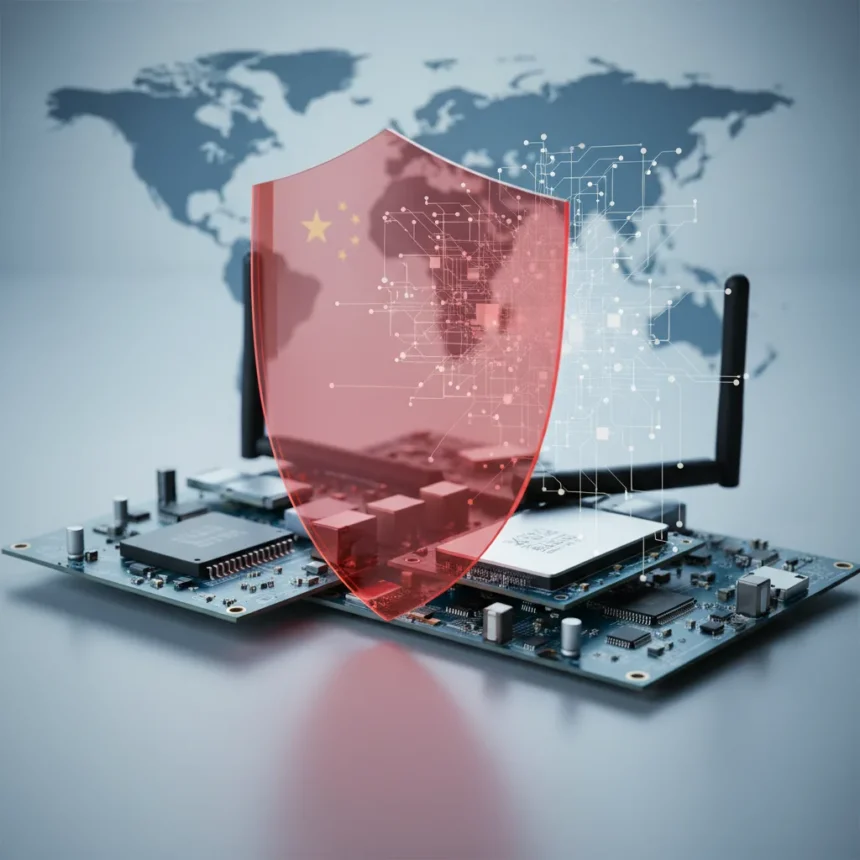
Chinese cellular modules are small embedded components that enable 4G and 5G connectivity in devices without requiring Wi-Fi, and they are now at the center of a major US national security debate. The Trump administration is reportedly weighing a ban on these components as part of a broader Federal Communications Commission crackdown on Chinese communications technology, according to reporting by the Financial Times. The move would add Chinese module makers to the FCC’s “Covered List,” which bars products posing national security risks from US sales authorization.
Key Takeaways
- Chinese firms control over 70% of the global cellular module market, with Quectel and Fibocom alone commanding nearly 50%.
- Chinese cellular modules are embedded in smart home devices, industrial sensors, routers, drones, medical systems, connected cars, and logistics trackers.
- The FCC voted in April 2026 to ban Chinese testing labs from certifying US consumer electronics, affecting roughly 40,000 devices annually.
- Cellular modules can receive over-the-air firmware updates, creating potential pathways for remote surveillance, malware delivery, or device shutdowns.
- A ban could force global manufacturers to redesign products and rebuild supply chains at massive scale.
Why Chinese Cellular Modules Matter to US Security
Chinese cellular modules are far more than niche components. They power the connectivity layer in everything from baby monitors and Bluetooth speakers to industrial sensors controlling factory equipment and logistics trackers managing supply chains. The real concern isn’t the modules themselves—it’s what they can do. Because these components require over-the-air firmware and software updates to function, they create potential remote access pathways. In theory, an adversary could exploit these channels to deliver malware, shut down devices remotely, or tamper with critical systems. For connected cars, medical devices, or industrial infrastructure like pipelines and payment terminals, such vulnerabilities could have cascading consequences.
The FCC’s security concerns are not speculative. In April 2026, the commission unanimously advanced a ban on Chinese testing labs from certifying US electronics, citing what commissioners described as “serious security and privacy risks” with “profound implications for the security and privacy of both consumers and their neighbors”. This earlier vote signals how seriously regulators view the Chinese technology supply chain. The proposed cellular module ban is the logical next step—addressing the components themselves, not just where they are tested.
The Market Dominance Problem
Here’s the strategic challenge: Chinese manufacturers control the cellular module market almost entirely. Quectel, Fibocom, China Mobile, Sunsea, and MeiG collectively control more than 70% of global market share, with Quectel and Fibocom alone commanding nearly half. There are no obvious US or allied alternatives waiting to fill that gap. This market concentration means a ban would not be a simple regulatory tweak—it would be a forced, industry-wide redesign.

Global manufacturers relying on these modules would face immediate pressure to find alternatives, redesign products, and rebuild certification and sourcing networks. A smartphone maker, a connected car manufacturer, or an industrial IoT company would need to source new modules, test them, obtain FCC approval, and retool production lines. The timeline alone would be disruptive. For companies that have optimized entire product lines around Chinese modules, the cost of switching could be substantial.
What a Ban Would Actually Change
The FCC’s April 2026 vote on Chinese testing labs already offers a preview. Roughly 75% of the approximately 40,000 devices the FCC certifies annually are currently tested in China. That single restriction will force a massive shift in where devices are tested and certified. A cellular module ban would go further, forcing manufacturers to actually change the components inside their products rather than just where those products are validated.



The debate within the Trump administration reflects a broader shift in US technology policy: treating supply chain security as a national security issue, not just a trade issue. Congress is reportedly considering a parallel recommendation that the Department of Defense ban the procurement of Chinese cellular modules entirely, which would create a two-tier system—one set of standards for military and critical infrastructure, another for consumer electronics.
What Happens to Connected Devices?
A ban on Chinese cellular modules would ripple across multiple industries. Smart home devices—thermostats, security cameras, door locks—would need redesigned connectivity. Industrial IoT systems managing factories and supply chains would face component shortages or forced redesigns. Connected cars, which increasingly rely on embedded cellular modules for diagnostics and remote services, would need alternative solutions. Medical devices with remote monitoring capabilities would be affected. Even logistics companies tracking shipments would need to source new hardware.
The constraint is not theoretical innovation—it is practical alternatives. If no US or allied manufacturers can quickly scale production of competitive cellular modules, the short-term result will be product delays, higher costs, or reduced functionality. Some manufacturers might choose to exit the US market rather than absorb the redesign and certification costs.
Why This Matters Right Now
The timing is deliberate. The Trump administration is acting while Chinese dominance in cellular modules is consolidating. Waiting another year or two would only deepen the dependency. The FCC’s April 2026 actions on testing labs and the current debate on module restrictions suggest a coordinated strategy: cut off Chinese involvement in US electronics supply chains before the dependency becomes irreversible. For manufacturers, the message is clear—diversify your supply chain or prepare for disruption.



Could a ban actually happen?
The FCC has already voted to ban Chinese testing labs, and that vote is moving toward finalization. A cellular module ban would face more resistance because it directly impacts product costs and timelines, but the regulatory momentum is clearly in that direction. Whether the restriction becomes law depends on Congressional action and FCC rule-making, both of which are still in motion as of April 2026.
What are the alternatives to Chinese cellular modules?
The brief does not name specific US or allied manufacturers offering competitive cellular modules at scale. This is precisely the problem—the alternatives do not yet exist in sufficient volume to replace Chinese dominance. The FCC’s strategy appears to be restricting Chinese modules first, then forcing the market to develop alternatives. That approach creates short-term pain but long-term supply chain resilience.
How would this affect consumer electronics prices?
Redesigning products, qualifying new components, and rebuilding supply chains costs money. Those costs will likely be passed to consumers through higher device prices or reduced features. Manufacturers will also face delays bringing products to market while they navigate new certification requirements. The full economic impact depends on how quickly alternative suppliers can scale production.
The debate over Chinese cellular modules is not really about the components themselves—it is about whether the US can afford to depend on Chinese technology for critical infrastructure and consumer devices. The FCC’s April 2026 actions suggest the regulatory answer is no. Manufacturers should prepare now for a supply chain shift that could reshape the connected device industry for years to come.
Edited by the All Things Geek team.
Source: TechRadar