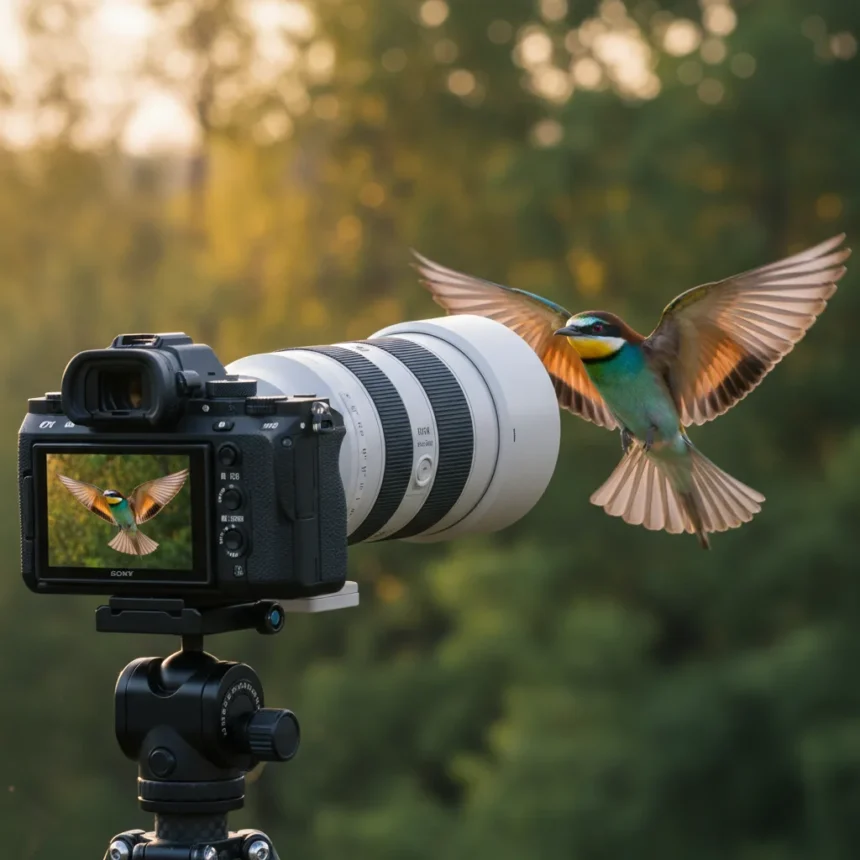
Sony A7R VI bird photography reached a new level during a field test at a local nature reserve, where the camera’s 66.8MP sensor and intelligent autofocus system made capturing distant, small birds straightforward and reliable.
Key Takeaways
- The A7R VI’s bird-detection autofocus proved super reliable even on tiny subjects occupying small frame portions.
- The 400-800mm F6.3-8 lens is Sony’s longest telephoto zoom, offering extreme reach for wildlife work.
- Dynamic range improved from 15 stops to 16 stops compared to the A7R V predecessor.
- Dedicated subject-tracking modes for birds, humans, animals, and vehicles enable faster focus lock.
- 66.8MP resolution allows aggressive cropping without losing detail on distant subjects.
Why the A7R VI Changes Bird Photography
The A7R VI represents a meaningful step forward for wildlife photographers who need both extreme reach and resolution. Sony‘s latest processor incorporates the previously separate AI chip directly into the body, enabling smarter autofocus decisions in real time. When photographing birds at a nature reserve, the camera’s bird-detection mode locked onto subjects instantly, even when they occupied only a small portion of the frame. This is where the A7R VI separates itself from its A7R V predecessor—speed and intelligence working together rather than as trade-offs.
The expanded spot focusing options now include XL and XS settings, giving photographers precision control over focus area size. For bird work, where a subject might be distant and small, the XS option tightens focus to the exact part of the bird that matters most—typically the head or eye. The camera also recognizes human pose, head position, eye location, and body shape, allowing it to decide intelligently where to place focus across multiple subject types. During the field test, this flexibility meant fewer missed shots and faster repositioning between different birds in the frame.
The 400-800mm Lens and Extreme Reach
Sony’s 400-800mm F6.3-8 G OSS lens is the company’s longest telephoto zoom, and its reach is the real story for bird photographers. Tiny, distant birds that appear as specs to the naked eye become detailed subjects in the frame. The combination of this lens with the A7R VI’s 66.8MP sensor creates a practical advantage: you can crop aggressively from the center of the frame and still retain plenty of detail for printing or publication. During the nature reserve shoot, this meant photographing birds that would have been too small to work with on older systems, even when cropped. The lens’s optical stabilization helps manage the inevitable shake that comes with extreme magnification, though a tripod remains essential for serious work.

Compared to the A7R V, the A7R VI’s improved autofocus speed means the camera tracks moving birds more reliably, even as they shift position or angle. The burst shooting performance—tested in both mechanical and electronic shutter modes—allows photographers to capture rapid sequences before the buffer fills, increasing the odds of nailing the perfect moment when a bird spreads its wings or turns its head.
Dynamic Range and Image Quality for Wildlife
The A7R VI’s dynamic range expanded to 16 stops, up from the A7R V’s 15 stops. In practical terms, this means more shadow detail in backlit birds and better highlight retention in bright plumage. Bird photography often involves challenging lighting—subjects perched against bright skies or hidden in dappled shade—so the extra stop of dynamic range translates directly to more usable shots in the field. The stacked sensor design and latest processor work together to minimize read noise, which becomes critical when pushing shadow recovery in post-production.



The camera’s high resolution also serves a secondary purpose: flexibility in composition. If a bird lands slightly off-center or you misjudge framing, the 66.8MP file gives you room to recompose in post-processing without significant quality loss. For wildlife work, where you often have one chance at a shot before the subject flies away, this safety margin is invaluable.
Subject Detection Across Multiple Categories
The A7R VI includes dedicated subject-tracking modes for humans, birds, animals, and vehicles. During the field test, the bird mode proved the most relevant, but the camera’s ability to switch between modes without menu diving matters for photographers who work across multiple genres. A wildlife photographer might shoot birds in the morning, move to landscape photography at midday, then return to animal tracking in the afternoon. The ability to toggle subject detection modes quickly keeps the camera responsive to changing conditions.
Is the Sony A7R VI worth upgrading from the A7R V for bird photography?
Yes, if you shoot birds regularly and value faster autofocus, improved burst performance, and the extra stop of dynamic range. The A7R V remains capable, but the A7R VI’s smarter AI processing and expanded focus options make it noticeably faster in the field, especially with subjects that are small, distant, or moving unpredictably.
How much does the Sony 400-800mm lens cost?
Specific pricing was not detailed in the field test, though the lens is positioned as a premium telephoto option for serious wildlife photographers. Check current retailer listings for regional pricing and availability.



Can you use the A7R VI with older Sony lenses?
Yes, the A7R VI maintains full compatibility with Sony’s E-mount lens ecosystem, including older telephoto lenses. The 400-800mm is the newest and longest option, but photographers can pair the A7R VI with any existing Sony E-mount glass and benefit from the improved autofocus and processor intelligence.
The Sony A7R VI paired with the 400-800mm F6.3-8 lens proves that Sony’s latest high-end ecosystem is genuinely competitive for serious bird and wildlife photographers. The combination of extreme reach, high resolution, and intelligent autofocus addresses the core challenges of capturing distant, small, moving subjects. If you need long telephoto work and can justify the investment, this pairing delivers the sharpness and reliability that professional wildlife photography demands.
Where to Buy
Edited by the All Things Geek team.
Source: TechRadar