






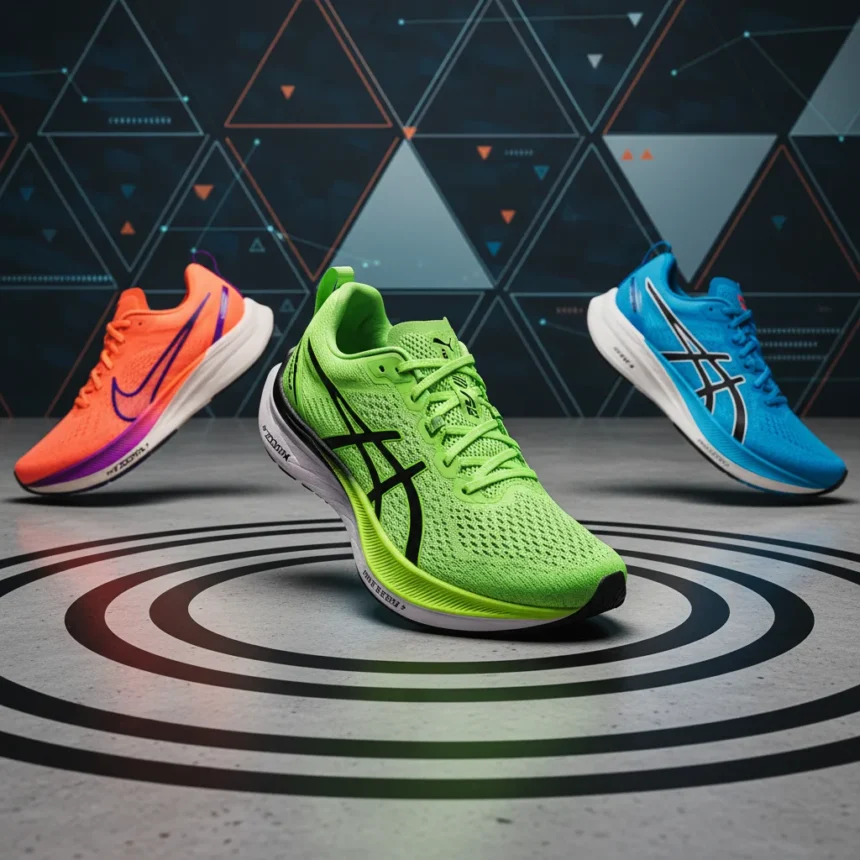
The Puma Deviate Pure Nitro is a stripped-back super trainer made by Puma that removes the carbon plate while preserving the speed-focused DNA of the Deviate franchise. This move signals a deliberate strategy to compete directly with ASICS and Nike in a market increasingly crowded with rigid, plate-heavy performance shoes.
Key Takeaways
- The Deviate Pure Nitro drops the carbon plate entirely while maintaining speed-focused design.
- Puma positions the shoe as a competitor to ASICS and Nike super trainers.
- The shoe is part of Puma’s established Deviate franchise.
- The stripped-back approach suggests a shift toward less rigid, potentially more accessible speed shoes.
- This model represents a strategic refinement of Puma’s super-trainer formula.
What Makes the Deviate Pure Nitro Different
The Puma Deviate Pure Nitro takes a contrarian approach in the super-trainer market. While competitors like Nike and ASICS have leaned heavily into carbon-plated construction, Puma has chosen to strip away the plate entirely. This is not a cost-cutting move—it is a deliberate architectural decision that challenges the assumption that speed shoes must be rigid to be fast.
By removing the carbon plate, Puma is betting that runners value responsiveness and ground feel over the locked-in sensation a plate provides. The shoe retains the speed-focused ethos of the Deviate line, but with a more flexible, adaptable construction. This approach opens the shoe to runners who find traditional carbon-plated trainers uncomfortable or who prefer a more natural stride.
The competitive landscape matters here. ASICS dominates the plate-heavy segment with models designed for maximum propulsion, while Nike has built its reputation on carbon-plate innovation. Puma’s stripped-back strategy suggests the brand sees an opportunity to capture runners tired of the rigid super-trainer formula.



How It Compares to Competitors
Nike’s carbon-plated trainers emphasize stiffness and forward propulsion, locking the foot into a specific running pattern. ASICS takes a similar approach, with their super trainers engineered for maximum efficiency through plate rigidity. The Puma Deviate Pure Nitro rejects this philosophy entirely.
By dropping the plate, the Deviate Pure Nitro offers flexibility that carbon-plated competitors cannot match. This makes it a fundamentally different product—not better or worse, but aimed at a different runner. Where Nike and ASICS optimize for the runner who wants maximum mechanical advantage, Puma is targeting the runner who wants speed without sacrificing feel and adaptability.



The shoe still inherits the Deviate franchise’s performance DNA, meaning it is built for pace and efficiency. But it achieves this through materials and design rather than through rigid engineering. This distinction matters for runners who have felt locked into other super trainers and want an alternative that still delivers competitive performance.
Why Puma Is Taking This Risk
The running shoe market has become increasingly polarized. Runners either embrace the plate-heavy super trainer or reject it entirely in favor of traditional trainers. The Puma Deviate Pure Nitro occupies a middle ground—a speed shoe for runners who want performance without the constraints of rigid plate construction.
This is a calculated bet on market fragmentation. Puma recognizes that not every runner fits the mold that Nike and ASICS have defined. By offering a stripped-back alternative within the super-trainer category, Puma can appeal to runners fatigued by the carbon-plate arms race and looking for a different kind of speed shoe.
The move also positions Puma as the thinking runner’s brand—one willing to challenge industry consensus. In a market dominated by two giants, differentiation through philosophy rather than just specs is a smart play. Whether the market rewards this approach will determine whether other brands follow suit or whether carbon plates remain the standard for super trainers.



Should You Buy the Puma Deviate Pure Nitro?
If you have tried Nike or ASICS super trainers and found them too rigid, the Puma Deviate Pure Nitro deserves serious consideration. The shoe is designed for runners who prioritize feel and flexibility alongside speed—a niche that has been underserved by competitors focused on plate stiffness.
If you thrive in locked-in, plate-driven shoes, stick with Nike or ASICS. The Deviate Pure Nitro is not trying to outdo those brands at their own game. Instead, it offers a genuine alternative for a different type of runner. The question is whether you are that runner.
Is the Puma Deviate Pure Nitro right for competitive racing?
The shoe is built for pace and efficiency, making it suitable for competitive running. However, whether it matches the performance of carbon-plated competitors depends on your running style and preference for rigidity versus flexibility. Try both approaches to see which suits your stride.
How does removing the carbon plate affect durability?
Without a rigid plate limiting flex, the midsole materials work harder. This could affect long-term durability compared to plate-protected shoes, though the Deviate Pure Nitro’s design suggests Puma has engineered the midsole to handle this demand. Real-world durability data will emerge as the shoe reaches runners.
Can the Deviate Pure Nitro compete with Nike and ASICS?
It competes in a different way. Rather than matching Nike and ASICS on plate stiffness and propulsion mechanics, the Deviate Pure Nitro offers flexibility and feel. For runners who value those qualities, it is genuinely competitive. For runners who demand maximum plate rigidity, no—it is not the same product.
The Puma Deviate Pure Nitro represents a rare moment in running shoe design: a major brand willing to swim against the current. Whether that courage translates to market success depends on whether enough runners are ready to question whether carbon plates are actually what they want. For runners fatigued by the rigid super-trainer formula, this shoe offers a genuine escape route.
Edited by the All Things Geek team.
Source: T3