





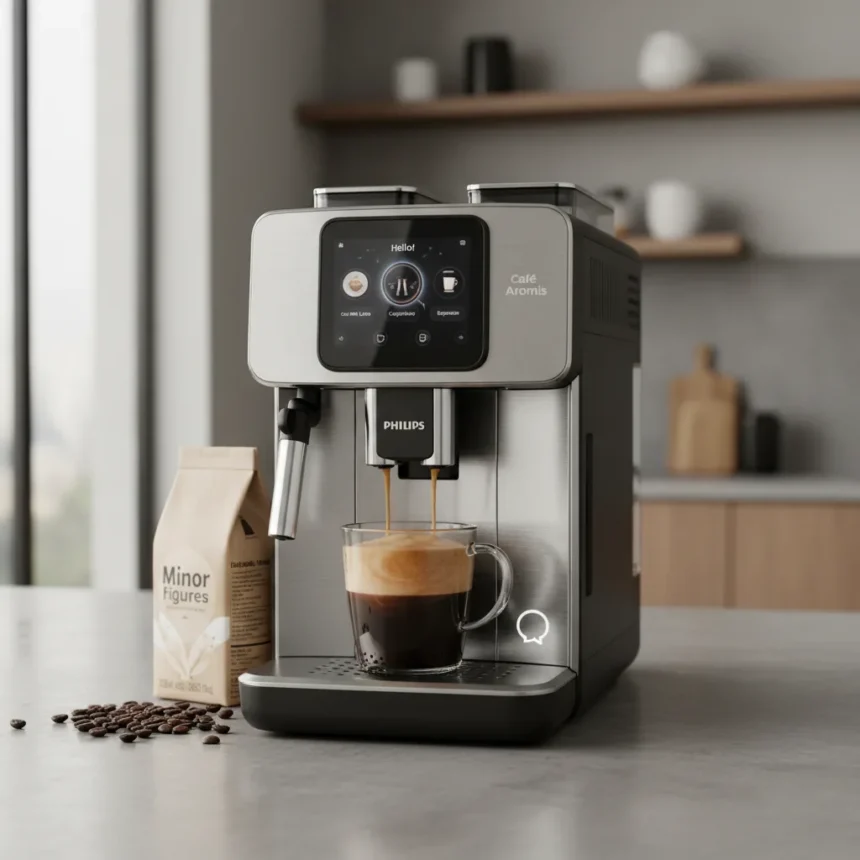
The Philips Café Aromis is a premium bean-to-cup coffee maker that combines conversational guidance with plant-based milk frothing to deliver café-quality drinks at home. What sets this machine apart isn’t just its ability to pull espresso shots—it’s how it talks you through the entire process, transforming oat milk into thick, creamy foam in seconds.
Key Takeaways
- The Philips Café Aromis produces thick, creamy foam from plant-based milk in seconds, ideal for oat milk drinkers.
- A conversational interface guides users through drink selection and customization, reducing guesswork on settings.
- The machine features 50 drink presets, offering variety without requiring manual recipe memorization.
- It accommodates larger coffee doses than previous Philips bean-to-cup models, enhancing espresso strength.
- Premium design and performance target serious home coffee enthusiasts rather than casual users.
What Makes the Philips Café Aromis Stand Out
Most bean-to-cup machines dump you in front of a screen with cryptic buttons and vague icons. The Philips Café Aromis takes a different approach: it talks to you. The conversational interface walks through drink selection step by step, asking what you want to make and adjusting settings based on your answers. This removes the intimidation factor that keeps many people from experimenting with their machines.
The real story here is plant-based milk performance. Oat milk has a reputation for being finicky in automatic frothing systems—too thin, too watery, lacks the silky texture that makes a latte genuinely satisfying. The Café Aromis handles this challenge by transforming oat milk into the kind of thick, creamy foam you’d expect from a skilled barista. That’s not hyperbole; it’s the core reason this machine deserves attention from anyone serious about plant-based coffee drinks at home.
50 Drink Presets and Customization Without Complexity
The machine ships with 50 drink presets covering espresso, cappuccino, latte, flat white, and countless variations. Rather than feeling like bloat, these presets function as starting points. The conversational system lets you tweak variables—milk temperature, foam thickness, coffee strength—without forcing you to memorize technical jargon or decode a manual.


This matters because it bridges the gap between entry-level automatic machines and professional-grade equipment. Entry-level machines offer simplicity but limited control. Professional machines offer control but demand expertise. The Philips Café Aromis gives you both. You can dial in exactly what you want, or let the machine suggest settings based on your drink choice.
Design That Justifies Counter Space
A premium coffee machine that looks like a utilitarian appliance is a wasted opportunity. The Philips Café Aromis recognizes this. The industrial-clean design, solid build quality, and thoughtful interface placement make this machine something you’d actually want visible on your kitchen counter rather than hidden in a cabinet. Form follows function here—the design supports the user experience rather than fighting against it.



How It Compares to Previous Philips Models
Earlier Philips bean-to-cup machines were capable, but the Café Aromis represents a meaningful step forward. It accommodates larger coffee doses than previous Philips models, giving you stronger, more concentrated espresso shots if you want them. The conversational guidance system is entirely new, making the machine more approachable for users intimidated by traditional espresso machine interfaces. Combined with superior plant-based milk handling, the Café Aromis isn’t just an incremental update—it’s a platform redesign.
Is the Philips Café Aromis Worth the Premium Price?
Premium bean-to-cup machines occupy an awkward space. They cost significantly more than basic drip coffee makers but less than semi-professional espresso machines. The Philips Café Aromis justifies its position by excelling at what matters most: consistency, ease of use, and drink quality. If you drink oat milk lattes regularly, this machine will pay for itself in coffee shop savings within a year or two. If you want a machine that doesn’t require a PhD in espresso extraction, the conversational guidance alone is worth the investment.
Can the Philips Café Aromis make other plant-based milks besides oat milk?
Yes. The machine’s milk frothing system works with various plant-based options including almond, soy, and coconut milk. However, the Café Aromis excels specifically with oat milk, transforming it into the thick, silky texture that makes oat milk lattes exceptional.
How many drink options does the Philips Café Aromis offer?
The machine includes 50 drink presets covering espresso, cappuccino, latte, flat white, and numerous variations. You can also create custom drinks by adjusting coffee strength, milk temperature, and foam thickness through the conversational interface.



Does the conversational interface make the Philips Café Aromis easier to use than traditional machines?
Significantly easier. The conversational guidance system walks you through drink selection and customization without requiring manual setting adjustments or technical knowledge. This makes the Café Aromis more approachable for users intimidated by traditional espresso machine controls while still offering advanced customization for experienced coffee enthusiasts.
The Philips Café Aromis succeeds where many premium machines fail: it doesn’t force you to choose between simplicity and quality. You get both. For anyone serious about plant-based coffee drinks at home, this machine delivers barista-level results without the barista-level learning curve.
Where to Buy
Edited by the All Things Geek team.
Source: TechRadar




