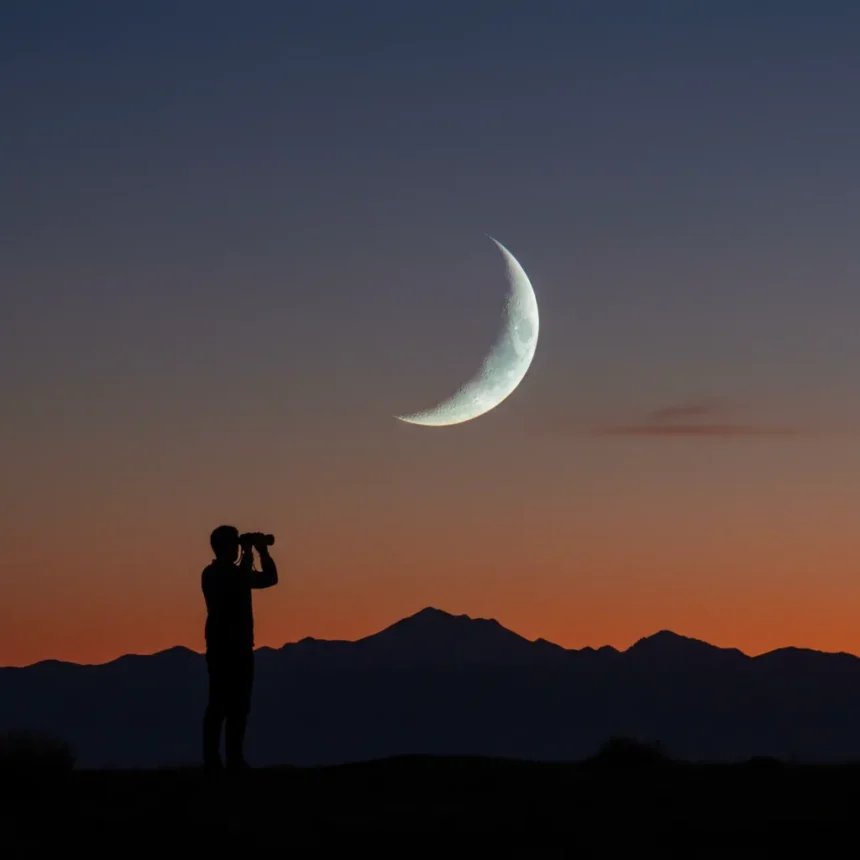
The Da Vinci glow earthshine is a rare optical effect that lights up the Moon’s dark side with faint reflected sunlight from Earth. Visible only during specific lunar phases and seasons, this phenomenon offers a brief window for observation. This week presents one of those windows, making now the time to look up if you want to witness it.
Key Takeaways
- Da Vinci glow is another name for Earthshine, the faint illumination of the Moon’s dark side by sunlight bouncing off Earth.
- The phenomenon is most noticeable during crescent Moon phases when the bright crescent contrasts with the dimly lit rest of the lunar disk.
- Spring offers optimal conditions for viewing the Da Vinci glow earthshine due to the geometric alignment of the Sun, Earth, and Moon.
- Observation requires darker skies and a clear horizon for the best visibility of the faint glow.
- The viewing window is limited this week, so timing is critical for catching this effect.
What is the Da Vinci glow earthshine exactly?
The Da Vinci glow earthshine occurs when sunlight reflects off Earth’s oceans and clouds, bounces back to the Moon’s dark side, and becomes visible to observers on Earth. The effect is named after Leonardo da Vinci, who described the phenomenon centuries ago. It appears as a faint, ghostly illumination on the portion of the Moon not directly lit by the Sun. Unlike the bright lunar crescent, this glow is subtle and requires careful observation to detect.
The physics behind the Da Vinci glow earthshine is straightforward: Earth acts as a giant mirror, reflecting sunlight toward the Moon. The darker the sky at your observation location, the more visible this reflected light becomes. The phenomenon demonstrates how light travels between celestial bodies and how Earth’s reflective properties influence what we see in the night sky.
When to observe the Da Vinci glow earthshine this week
The Da Vinci glow earthshine is most prominent during the crescent Moon phase, when the thin bright crescent is vivid enough to make the faintly illuminated remainder of the lunar disk visible by contrast. The best viewing occurs around dusk or shortly after sunset, when the crescent Moon sits above the western horizon. This timing allows you to observe the Moon while the sky still retains some twilight, which paradoxically helps the earthshine appear more distinct against the darkening backdrop.

Spring is the season when this phenomenon shines brightest, due to the orbital geometry of the Earth-Moon-Sun system at that time of year. The viewing window this week is narrow, so check Moon phase calendars to confirm the exact crescent dates in your region. Timing matters—missing the crescent phase means missing the optimal contrast needed to spot the glow.
How to spot the Da Vinci glow earthshine yourself
Finding the Da Vinci glow earthshine requires patience and the right conditions. First, identify when the Moon reaches its crescent phase this week. Travel to a location with minimal light pollution and a clear view of the western horizon where the Moon sets. Bring binoculars if you have them, though the glow can be visible to the naked eye under dark skies.



Look at the dark portion of the Moon—the side not illuminated by direct sunlight. You should see a faint, grayish glow across that dark region. This is the Da Vinci glow earthshine in action. The effect is subtle, so avoid looking directly at the bright crescent, which will overwhelm your night vision. Instead, focus your gaze slightly to the side of the crescent, allowing your peripheral vision to detect the dimmer earthshine. Darker skies and a clear horizon dramatically improve your chances of success.
Why this week matters for viewing
The Da Vinci glow earthshine is not visible every night. The phenomenon depends on the Moon’s phase and the season, making the current viewing window time-sensitive. Once the Moon moves past the crescent phase or spring conditions shift, the opportunity vanishes until the next favorable alignment occurs. This week represents a rare chance to observe a phenomenon that Leonardo da Vinci himself documented centuries ago.
Missing this week’s viewing window does not mean you will never see earthshine again, but the next favorable window may be weeks or months away. The combination of spring conditions and this week’s crescent phase creates an ideal moment for amateur astronomers and casual stargazers alike. Seize the opportunity while conditions align.
Does the Da Vinci glow earthshine require special equipment?
No special equipment is required to observe the Da Vinci glow earthshine. Your eyes alone are sufficient under dark skies. Binoculars can enhance visibility by magnifying the faint glow, but they are optional. Avoid telescopes, which narrow your field of view and make it harder to locate the phenomenon. A clear night with minimal clouds and a location away from city lights gives you the best chance of success.



Why is the Da Vinci glow earthshine harder to spot than the regular Moon?
The Da Vinci glow earthshine is dimmer than the directly sunlit crescent because it relies on reflected light bouncing twice—first from Earth to the Moon, then from the Moon to your eyes. This double reflection reduces the intensity significantly. The bright crescent, by contrast, receives direct sunlight and appears vivid. Your eyes must adapt to detect the fainter earthshine, which is why darker skies and avoiding the glare of the crescent are essential strategies.
The Da Vinci glow earthshine represents one of astronomy’s most elegant demonstrations of how light travels through space and reflects between worlds. This week, if you venture outside with clear skies and a crescent Moon overhead, you can witness the same phenomenon that fascinated Leonardo da Vinci centuries ago. The viewing window is brief, but the reward—seeing Earth’s light paint the Moon’s dark face—makes the effort worthwhile.
Edited by the All Things Geek team.
Source: Tom's Guide