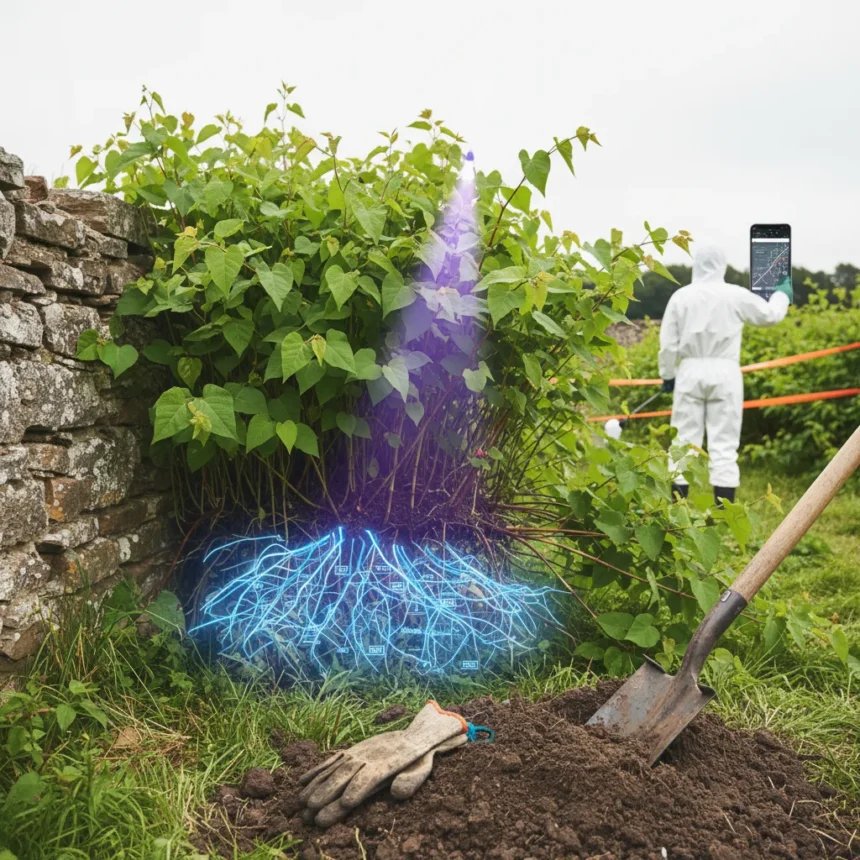
Japanese knotweed removal is harder than most homeowners expect, and the reason is simple: this invasive plant doesn’t follow normal weed rules. It’s a shrub-like perennial that reaches 9 feet tall and grows at 4 inches per day, spreading through underground rhizomes rather than seeds. Once established, it can crack foundations, damage pipes, and tank your property value. The real problem? Most removal attempts fail because people don’t understand how the plant actually spreads.
Key Takeaways
- Japanese knotweed grows 4 inches daily and can reach 9 feet in height.
- The plant spreads via underground rhizomes, not seeds, making soil disturbance dangerous.
- Repeated herbicide application is more effective than digging or cutting alone.
- Never compost Japanese knotweed; dispose of it as yard waste.
- Professional identification is essential if you’re unsure what plant you’re dealing with.
Why Japanese knotweed removal fails for most homeowners
Japanese knotweed removal attempts typically collapse because people treat it like a regular weed. They dig, they cut, they pull. None of this works reliably. The plant’s rhizome system—a network of underground stems—can extend several feet in all directions. A single fragment left behind will regrow. Worse, disturbing the soil around knotweed spreads those fragments, actually accelerating the problem. This is why brute-force removal often makes the situation worse, not better.
The plant also thrives in almost any climate, from hot to cold regions, though it grows fastest in damp conditions. That means if you have moisture in your yard, Japanese knotweed will find it and exploit it. The invasive nature of this plant means it competes aggressively with native vegetation, and once it takes hold, it’s genuinely difficult to eradicate without a systematic approach.
Herbicide treatment: the most reliable Japanese knotweed removal method
Repeated application of a dedicated non-selective herbicide is the most effective approach to Japanese knotweed removal. This isn’t a one-shot fix. You’ll need multiple applications over time, and patience is non-negotiable. The herbicide kills the visible plant, but the rhizomes survive the first treatment. Subsequent applications target regrowth and gradually exhaust the root system’s energy reserves.


Non-selective herbicides work because they attack the plant’s entire system, not just the leaves. The chemical travels down through the stems into the rhizomes, which is where the real battle happens. This method beats digging because you’re not fragmenting the roots and accidentally spreading them. It beats cutting because you’re not just removing the above-ground growth—you’re poisoning the engine underneath.
Alternative Japanese knotweed removal approaches
If herbicides don’t appeal to you, three other methods exist, though each has drawbacks. Repeated cutting back can work, but only if you’re willing to cut the plant down every few weeks for months or years. Each cutting weakens the rhizome slightly, but this is a marathon, not a sprint. You’ll need persistence and a high tolerance for the plant returning again and again.



Smothering the plant with a thick tarp until it dies naturally is passive but slow. The tarp blocks sunlight and prevents the plant from photosynthesizing. This can take months or longer depending on how thick the tarp is and how established the plant is. It’s less labor-intensive than repeated cutting, but it requires patience and space you might not have.
Digging up the entire rhizome system is theoretically the most permanent solution, but it’s also the most dangerous if done incorrectly. You must remove every fragment of root, or the plant will regrow from what you left behind. Incomplete digging is worse than not digging at all because you’ve fragmented the roots and scattered them through the soil. If you attempt this method, be thorough or don’t bother.
What not to do with Japanese knotweed removal waste
Never compost Japanese knotweed. This is non-negotiable. The plant fragments survive composting temperatures, and you’ll simply be creating a contaminated pile that spreads the problem elsewhere. Dispose of all plant material as yard waste through your municipal waste system or a licensed disposal facility. Some regions have specific protocols for invasive plant disposal, so check local guidelines before dumping anything.
When to call a professional for Japanese knotweed removal
If you’re unsure whether you actually have Japanese knotweed or another invasive species, don’t guess. Get in touch with an experienced gardener or local invasive species expert. Misidentifying the plant means you’ll waste time and money on the wrong removal strategy. Professionals can also assess how established the infestation is and recommend the most efficient removal path for your specific situation.



Is Japanese knotweed removal worth the effort?
Yes, absolutely. The plant damages structures, spreads aggressively, and can reduce property value if you’re trying to sell. Ignoring it guarantees the problem gets worse. Starting removal early, even with herbicides that require patience, is far cheaper than dealing with structural damage or a property that won’t sell because of a known invasive infestation.
How long does Japanese knotweed removal actually take?
There’s no fixed timeline. Herbicide treatments may require multiple applications over several months or longer. Repeated cutting could take a year or more. Smothering with a tarp might take months. The key variable is how large and established the plant is when you start. A small, newly discovered patch responds faster than a mature stand that’s been spreading for years.
Can you prevent Japanese knotweed from coming back after removal?
After successful removal, monitor the area for regrowth. If you used herbicides, watch for new shoots and treat them immediately. If you dug up the rhizomes, check the soil occasionally for signs of return. The plant can survive in dormant rhizome fragments for years, so ongoing vigilance is cheaper than a full reinfestation later.
Japanese knotweed removal is winnable, but only if you commit to a method and stick with it. Herbicides take time but work reliably. Digging works if you’re thorough. Cutting and smothering work if you’re patient. The worst approach is half-hearted effort—that just frustrates you while the plant keeps spreading. Pick a strategy, commit to it, and remember that persistence beats panic every time.
Where to Buy
17% OFFFelco F2 Pruning Shears$71$86shop now | Amazing StuffGarden Gloves$9.99shop now | 39% OFFAmazonGreenworks 48v (24v X 2) 17" Cordless (push) Lawn Mower$229.99$379.99shop now | 11% OFFGrampa's Weeder$39$44shop now
Edited by the All Things Geek team.
Source: Tom's Guide