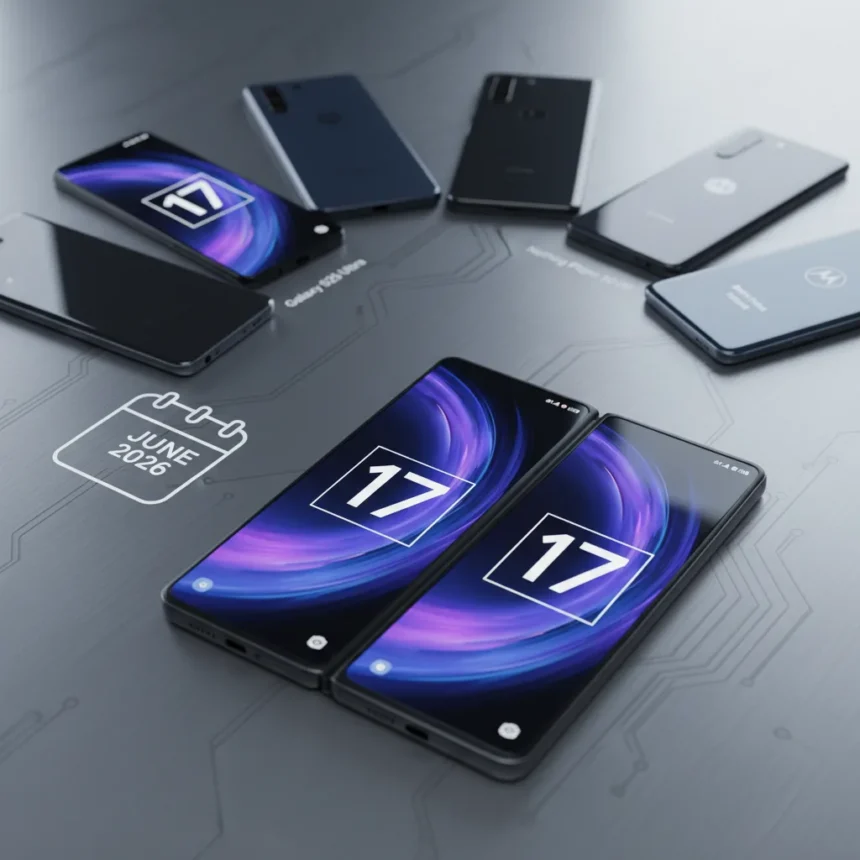
Android 17 phones are heading to your device sooner than you might expect. Google’s stable Android 17 build is scheduled to roll out in June 2026, marking a significant shift in how the company times its major OS releases. The Galaxy Z Fold 8 and Pixel 11 will be the first Android 17 phones shipping with the update preinstalled, arriving in what Google expects to be a major upgrade cycle for later this year.
Key Takeaways
- Android 17 stable release launches June 2026, with a minor update following in Q4 2026
- Pixel 11 and Galaxy Z Fold 8 will be the first devices running Android 17 out of the box
- Google moved its release schedule earlier to ensure fall flagships debut with the latest build
- Non-Google phones from Samsung, Honor, OPPO, Xiaomi, OnePlus, and Vivo can join the Android 17 beta now
- Android 17 brings AI tools, 3D emojis, and cross-platform sharing improvements
Android 17 phones release timeline explained
Google changed its Android release strategy starting with Android 16, and Android 17 phones follow the same pattern. The stable build arrives in Q2—specifically June 2026—rather than the traditional late Q3 or early Q4 window. A minor release with additional features and stability improvements will follow in Q4 2026. This timing shift exists for one reason: ensuring that fall flagship launches, including the Pixel 10 and Galaxy Z Fold 7, ship with the latest Android build already installed instead of receiving it as an update weeks or months later.
The strategy represents a fundamental rethinking of how Google synchronizes its software and hardware roadmaps. By pushing the stable release earlier in the year, the company guarantees that premium devices launching in August or September arrive with current software. For manufacturers, this eliminates the awkward scenario where a new phone debuts with outdated Android code.
Which Android 17 phones launch with it preinstalled
Two devices will debut with Android 17 already running: the Pixel 11 and Galaxy Z Fold 8. Both are expected to arrive in the fall 2026 window, aligning with Google’s new release cadence. The Pixel 11 represents Google’s flagship smartphone, while Samsung’s Galaxy Z Fold 8 continues the foldable line that has driven innovation in form factor design. These two devices will give early adopters the cleanest Android 17 experience from day one.


Beyond these launch partners, other manufacturers will receive Android 17 through standard update cycles. Samsung, in particular, has a strong track record of rolling out major Android updates to its Galaxy S and Galaxy Z series within months of release. The Galaxy S26 series, expected to launch around the same timeframe as the Pixel 11, may also ship with Android 17 or receive it immediately post-launch.
Android 17 beta: which phones can test it now
Google rolled out the initial Android 17 beta in February, with subsequent builds arriving in March (Beta 3), April (Beta 4), and May (QPR1 Beta 2). Non-Google devices are now eligible to install the Android 17 beta, expanding early access beyond Pixel phones. Manufacturers participating in the beta program include Samsung, Honor, OPPO, Xiaomi, OnePlus, and Vivo. If your phone comes from one of these brands, you can opt into the beta and test Android 17 features months before the stable release.



Beta testing carries risk—expect bugs, battery drain, and app incompatibilities. However, for users who want to experience Android 17 phones’ new capabilities early and provide feedback to Google, the beta is the only path available until June 2026. Samsung devices, in particular, may see faster beta availability given the company’s tight partnership with Google on Android development.
What Android 17 brings to your phone
Google is preparing a major Android 17 update for later this year, with most new features expected to arrive around the Pixel 11 launch window in August or September, or through a later Android 17 QPR release. The update includes new AI tools, 3D emojis, and security enhancements. One standout feature is Gemini’s on-screen automation, which can already perform tasks like ordering food or calling a cab on devices like the Galaxy S26 series and Pixel 10 lineup. Samsung introduced this capability on the Galaxy S26 and has expanded it to the Galaxy S25 lineup and some older devices.
Cross-platform sharing is another highlight. Google says devices from partners like Oppo, OnePlus, Vivo, Xiaomi, and Honor will gain support for Quick Share to AirDrop transfers. This interoperability closes a long-standing gap between Android and iOS ecosystems, allowing seamless file sharing regardless of platform. For Android 17 phones across the ecosystem, this represents a meaningful quality-of-life improvement that benefits users who juggle multiple devices.
How Android 17 phones compare to Android 16
Android 17 follows a similar release pattern to Android 16, but with one key difference: the feature set appears more ambitious. While Android 16 introduced the earlier Q2 release window, Android 17 phones are expected to debut with more polished AI integration and broader OEM support for advanced features like on-screen automation and cross-platform sharing. Google showed off new features for Android at The Android Show ahead of I/O, signaling that the company views this cycle as a significant step forward rather than an incremental refinement.



The competitive landscape matters here. Apple’s iOS updates typically arrive in September, aligned with new iPhone launches. By moving Android 17 phones to a June stable release, Google ensures that fall flagship announcements can tout current software rather than software that will arrive later. This timing advantage gives Android 17 phones a credibility boost at launch events.
When will older phones get Android 17?
Most flagship Android phones from Samsung, Google, and other major manufacturers receive major OS updates for three to four years after release. Your phone’s eligibility depends on its age and manufacturer. Samsung’s Galaxy S25 lineup and Pixel 10 series will almost certainly receive Android 17 updates in the months following the June stable release. Mid-range and budget devices may see delays or may not receive the update at all, depending on the manufacturer’s update policy.
Google typically prioritizes Pixel devices, rolling out updates to its own phones first. Samsung follows closely, usually within two to three months. Other manufacturers like OnePlus, Xiaomi, and Oppo have variable timelines—some push updates quickly, while others take longer to integrate Android 17 with their custom interfaces. Checking your manufacturer’s official support page is the most reliable way to confirm your device’s eligibility and expected update window.
Can I install Android 17 beta on my phone right now?
If your phone is from Samsung, Honor, OPPO, Xiaomi, OnePlus, or Vivo, you can enroll in the Android 17 beta program now. Visit Google’s beta enrollment page, sign in with your Google account, and opt your device into the program. The beta is available immediately, though availability may vary by region and device model. Expect the beta to include bugs and stability issues—use it only on a secondary device or if you are comfortable troubleshooting problems.
Will my phone definitely get Android 17?
Not all phones will receive Android 17. Older devices, budget models, and phones from manufacturers with poor update records may never see the update. Google guarantees updates for Pixel devices for several years. Samsung typically supports Galaxy flagships for three to four years. Smaller manufacturers or regional brands may offer shorter support windows. If your phone is more than four years old, Android 17 is unlikely unless you own a premium flagship. Check your manufacturer’s official support page or contact customer service for a definitive answer about your specific device.
Android 17 phones arriving in 2026 represent a turning point in how Google synchronizes software and hardware. By shipping the stable build in June rather than waiting until fall, the company ensures that new flagships debut with current software instead of inheriting outdated code. For most users, the question is not whether to upgrade to Android 17, but when their device will receive it. Patience and checking your manufacturer’s official timeline are your best tools for knowing exactly when Android 17 arrives on your phone.
Edited by the All Things Geek team.
Source: Android Central