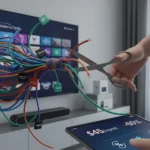
Roku is stepping beyond its core streaming-stick and TV business to launch two new projectors and a free software update for existing devices, all timed to arrive before the World Cup kicks off. The move signals Roku’s ambition to become a full-screen entertainment platform, not just a software layer on someone else’s hardware.
Key Takeaways
- Roku is launching two new projectors to expand beyond streaming sticks and TVs.
- A free software update arrives for existing Roku devices to enhance World Cup viewing.
- The timing targets a global sports event when viewers actively seek larger screens.
- The update is designed to make sports viewing easier across the Roku ecosystem.
- Roku is broadening its hardware portfolio to compete in the home entertainment space.
Roku projectors World Cup launch marks hardware expansion
Roku is making a significant hardware play by introducing two new projectors designed to capture the World Cup audience. Rather than limiting itself to streaming devices and TV partnerships, Roku is now offering its own projection hardware, allowing the company to control the entire viewing experience from software to display. This move positions Roku directly against dedicated projector makers and streaming rivals who have experimented with projection technology.
The timing is deliberate. World Cup viewership spikes demand for large-screen experiences, and Roku wants its ecosystem to be the obvious choice for fans seeking immersive sports viewing. By launching both hardware and a free software update simultaneously, Roku creates a unified ecosystem advantage—existing users get better World Cup features without paying extra, while new projector buyers inherit a proven streaming platform.
Free software update enhances World Cup viewing for all Roku devices
Roku is rolling out a free update to all existing Roku devices that focuses on making World Cup viewing easier. The update targets sports fans who already own Roku hardware, giving them no reason to switch platforms during the tournament. This strategy keeps users locked into the ecosystem while demonstrating that Roku values its installed base.



The free update contrasts sharply with how some competitors handle major sporting events—charging for premium features or locking enhanced viewing modes behind subscription tiers. Roku’s approach is simpler: improve the experience for everyone, regardless of device age or price point. This philosophy extends Roku’s reach to budget-conscious viewers who may own older hardware but still want a polished World Cup experience.
Why projectors matter for live sports
Projectors offer a viewing advantage that traditional screens cannot match—screen size without furniture constraints. A projector can turn any wall into a 100-inch display, while a TV of that size requires dedicated wall space and costs significantly more. For World Cup viewing, where group gatherings are common, projectors create a theater-like experience that matches the scale of the event.



Roku’s entry into projectors signals confidence that its software ecosystem can compete on quality, not just price. The company is betting that viewers care more about seamless streaming, app availability, and user interface than about the projector hardware itself. By controlling both the software and hardware, Roku can optimize the experience in ways that software-only companies cannot.
Roku’s expanding hardware strategy
This projector launch is part of a broader shift at Roku toward vertical integration. Rather than relying solely on TV manufacturers and streaming-device retailers to carry its platform, Roku is building its own hardware line. Two new projectors represent a meaningful expansion of this strategy, moving beyond the streaming sticks and media players Roku has traditionally made.
The risk is clear: hardware manufacturing requires supply chains, quality control, and customer support that Roku has not previously managed at scale. Streaming sticks are simple devices; projectors are more complex, with cooling systems, lenses, and brightness specifications that demand precision. If Roku’s projectors underperform or fail to ship on time, the entire World Cup marketing campaign becomes a liability rather than a win.
Does Roku’s World Cup timing make sense?
Yes. The World Cup is one of the few global events that drives hardware purchasing decisions. Fans without a large screen will buy or upgrade specifically to watch the tournament, making it an ideal launch window. Roku’s dual strategy—new hardware for upgrade-seekers and a free update for loyal users—maximizes appeal across price segments.



Will existing Roku devices get World Cup features?
Yes, the free software update applies to existing Roku devices, not just the new projectors. Roku is using this update to retain users during a high-interest viewing period, ensuring that fans with older hardware still have an optimized experience for World Cup matches.
How do Roku projectors compare to other options?
Roku’s projectors enter a market where dedicated projector manufacturers have deep expertise in optics and image quality, while streaming platforms like Apple TV have begun supporting projector features in software. Roku’s advantage lies in its proven streaming ecosystem and affordable pricing strategy, though the research brief does not specify projector specifications or pricing details needed for a full competitive analysis.
Roku’s World Cup push is a calculated bet that viewers care more about streaming convenience than projector pedigree. If the projectors deliver solid image quality and integrate smoothly with Roku’s software, the company has a real shot at capturing the sports-viewing crowd. The free update sweetens the deal for existing users, turning World Cup season into a Roku ecosystem moment rather than a reason to jump to a competitor.
Edited by the All Things Geek team.
Source: TechRadar