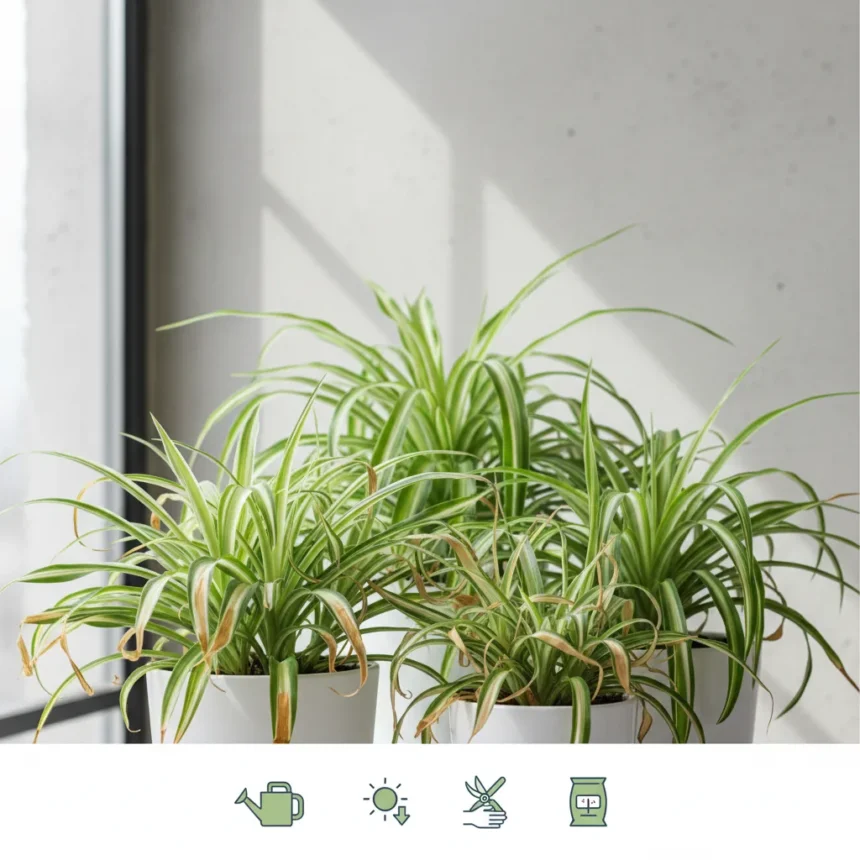
Spider plant brown leaves aren’t a death sentence—they’re a stress signal. Brown tips and discolored foliage tell you something in the plant’s environment needs adjustment. Unlike a specific disease, spider plant brown leaves can stem from multiple care issues, each fixable with targeted action. The good news: your plant can bounce back to vibrant green within weeks if you address the root cause.
Key Takeaways
- Brown tips often indicate water quality issues—fluoride and chlorine in tap water are common culprits.
- Spider plants need soil that’s moist but not soggy; check moisture before watering weekly.
- Ideal growing temperatures range from 55–80°F (13–27°C) with occasional misting for humidity.
- Prune dead or brown leaves from the base using clean scissors or pruners.
- Distilled or rainwater prevents chemical buildup that causes browning.
Step 1: Fix Your Watering Routine
Watering mistakes are the leading cause of spider plant brown leaves. The problem isn’t always too much water—it’s inconsistent watering combined with poor water quality. Start by checking soil moisture with your finger before watering. If the top inch feels moist, wait a day or two. Aim to water about once a week, but let the soil’s dryness guide your schedule, not a rigid calendar.
Keep the soil moist but never soggy. Waterlogged soil invites root rot, which manifests as brown, mushy foliage that eventually drops. On the flip side, if tap water contains fluoride or chlorine, these chemicals accumulate in the soil and leaf tips, causing the browning you see. Switch to distilled water or rainwater to eliminate this source entirely. If you only have tap water available, let it sit in an open container overnight to allow some chlorine to evaporate before using it.
Step 2: Adjust Temperature and Humidity
Spider plants thrive in specific climate conditions, and deviations trigger stress responses like browning. Maintain temperatures between 55–80°F (13–27°C). Temperatures below 55°F or above 80°F stress the plant and slow recovery. Most homes naturally fall within this range, but check if your plant sits near a cold window draft, heating vent, or direct sun that could push it outside the ideal zone.


Humidity matters equally. Spider plants prefer humid environments, and dry indoor air—especially in winter or arid climates—causes leaf tips to brown and curl. Mist the plant occasionally with distilled water to raise humidity around the foliage. This simple step prevents drying and browning while mimicking the plant’s natural tropical habitat. If you live in a very dry climate, group your spider plant with other houseplants to create a microclimate of shared humidity, or place it on a pebble tray with shallow water beneath the pot.
Step 3: Prune Away Damaged Foliage
Once you’ve addressed watering, temperature, and humidity, remove the existing brown or dead leaves. This step serves two purposes: it improves the plant’s appearance immediately, and it redirects energy toward new healthy growth. Use clean scissors or pruners to cut damaged leaves from the base of the plant, where they attach to the main stem. Make clean cuts—jagged tears can invite pest or disease entry.



Don’t wait for brown leaves to fall naturally. Leaving them attached signals the plant to keep investing resources in damaged tissue rather than producing fresh green growth. Removing them is an act of care that accelerates recovery. If only the tips are brown but the leaf base is green, you can trim just the brown portion with a clean knife, angling the cut to match the leaf’s natural shape.
Step 4: Monitor and Maintain
After implementing these fixes, spider plant brown leaves should stop appearing within 7–10 days, and new green growth should emerge within 2–4 weeks. Continue checking soil moisture before each watering, use distilled or rainwater, and maintain consistent temperature and humidity. Your plant will gradually restore its lush appearance as long as these conditions remain stable.
The recovery timeline depends on how severe the browning was. Mild brown tips fade fastest. Heavily damaged leaves won’t regain their green color, but new foliage will grow in healthy. Be patient—houseplants recover at their own pace, and rushing the process by overwatering or fertilizing won’t speed results.
Why does tap water cause spider plant brown leaves?
Tap water often contains fluoride and chlorine added for human consumption. Spider plants are sensitive to these chemicals, which accumulate in the soil and leaf tips over time, causing browning. Distilled or rainwater avoids this issue entirely.


How often should I water a spider plant?
Water about once a week, but always check soil moisture first. If the top inch of soil is still moist, delay watering for a day or two. The goal is consistently moist soil without waterlogging, which prevents both brown tips and root rot.
Can spider plant brown leaves turn green again?
Once a leaf tip browns, that specific tissue won’t return to green. However, pruning the brown portion and providing proper care will produce new healthy green growth. New leaves will emerge without browning if you maintain correct watering, humidity, temperature, and water quality.
Spider plant brown leaves are reversible. The key is diagnosing which care factor triggered the browning—water quality, moisture consistency, temperature, or humidity—and correcting it. Most spider plants bounce back remarkably fast once their environment stabilizes, rewarding your attention with the vibrant green foliage that makes them such popular houseplants.
Where to Buy
17% OFFFelco F2 Pruning Shears$71.52$86.35shop now | Amazing StuffGarden Gloves$9.90shop now | 11% OFFGrampa's Weeder$39$44shop now
Edited by the All Things Geek team.
Source: Tom's Guide