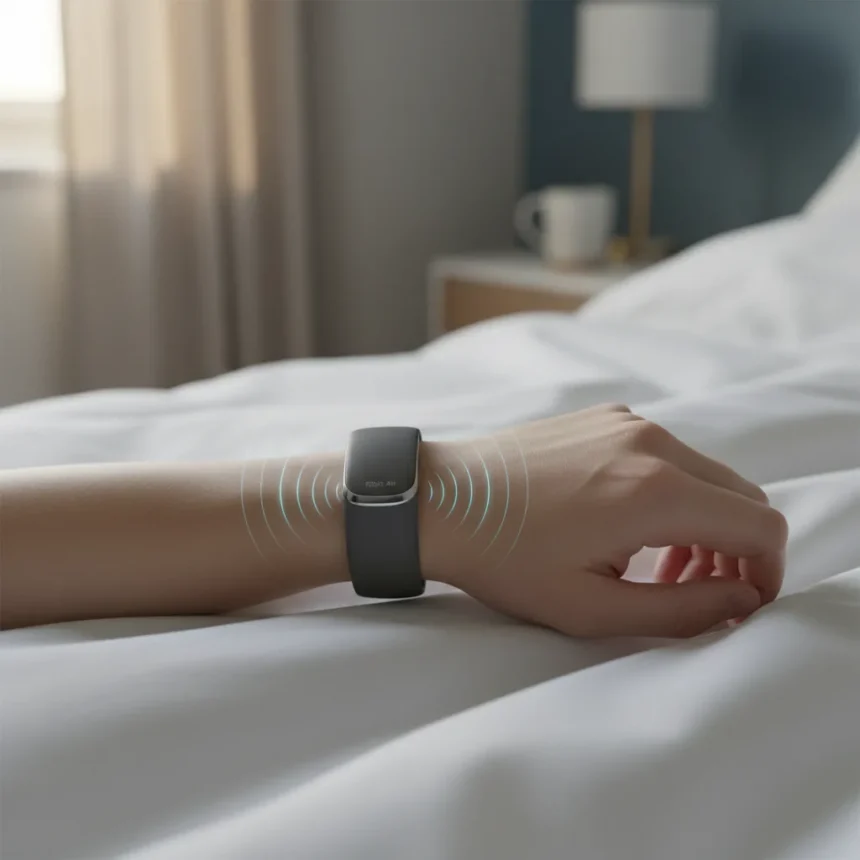
The Fitbit Air smart alarm is the only smart feature that matters on this screen-free fitness tracker, and it’s oddly transformative. Priced at $99, Google’s latest Fitbit-branded device abandons the smartwatch playbook entirely—no notifications, no buttons, no screen. What remains is a minimalist health tracker designed to be set-it-and-forget-it, with one exception: a silent vibration wake-up that actually works.
Key Takeaways
- The Fitbit Air costs $99 and has zero buttons or screens, making it ultra-discreet.
- Google’s Smart Alarm function gently wakes you via vibration without sound or light.
- 24/7 heart rate monitoring, sleep tracking, and body temperature sensing are included.
- Some premium features like AI sleep analysis require Google Health Premium subscription.
- The device competes with Whoop by prioritizing simplicity over notification overload.
What Makes the Fitbit Air Different From Other Trackers
The Fitbit Air strips away everything that makes smartwatches complicated. No display. No buttons. No vibrations for incoming texts or calls. This isn’t minimalism for its own sake—it’s a deliberate rejection of notification fatigue. While competitors like Whoop also target users who want health data without constant interruptions, the Fitbit Air goes further by eliminating the screen entirely.
The device is smaller and lighter than most fitness trackers on the market, which means it genuinely disappears on your wrist. You wear it, forget about it, and let it collect data. That simplicity is the entire pitch.
The Fitbit Air Smart Alarm Actually Works
Google’s Smart Alarm function is the device’s single smart feature worth discussing. Instead of a loud alarm or a screen flashing at 6 a.m., the Fitbit Air gently and silently wakes you up by vibration. The motor knows when you’re in a lighter sleep stage and triggers the vibration at that moment, not at a fixed time. This matters more than it sounds. Waking during lighter sleep feels less jarring than being jolted awake mid-deep-sleep cycle.


The reviewer found this changed the way they start their day—less groggy, more natural. It’s the kind of feature that seems small until you use it for a week and realize you’ve stopped dreading your alarm. That’s the entire smart feature set. The device cannot vibrate to alert you to texts, calls, or any other notifications.
Health Tracking Without the Premium Paywall
The Fitbit Air includes 24/7 heart rate monitoring, blood oxygen saturation (SpO2) tracking, and an onboard body temperature sensor. It logs heart rate variability trends, breath rate, cardio load, and a daily readiness score out of 100. Sleep reports show duration, time spent in each sleep cycle, restlessness, and a daily sleep quality rating.



Automatic workout tracking covers walks, bike rides, sports, and other activities—but only if they last at least 15 consecutive minutes. This is stripped-down compared to smartwatches that detect every activity, but it aligns with the device’s philosophy: track the big picture, ignore the noise.
Some features do require a Google Health Premium subscription, including AI-analyzed sleep trend recommendations via Google Coach. The free tier gives you the core data; the paid tier adds interpretation. This is a reasonable trade-off for users who want to avoid subscription creep.
How the Fitbit Air Compares to Sleep-Focused Competitors
Tom’s Guide tested the Fitbit Air against the Oura Ring 4, a ring-based sleep tracker that costs significantly more. The results were surprisingly close—both devices captured similar sleep architecture and quality insights. The Fitbit Air achieves comparable accuracy at a fraction of the price, which is the real story here. You don’t need a $349 ring to understand your sleep.
The device also positions itself against Whoop, another minimalist tracker designed for athletes and health-conscious users. Where Whoop focuses on recovery metrics, the Fitbit Air balances sleep, fitness, and general wellness. The Fitbit Air’s vibration-only interface mirrors Whoop’s notification philosophy—health data without distraction.



Strap Options and Comfort
At launch, the Fitbit Air comes with silicone and textile band options. The variety matters because a screenless tracker lives on your wrist full-time. If the band is uncomfortable, you’ll notice. Multiple material choices let different users find what works for their skin and lifestyle.
Is the Fitbit Air worth buying at $99?
Yes, if you want health tracking without notification overload. The Smart Alarm alone justifies the price for anyone who struggles with jarring mornings. The broader health metrics are solid, and the screen-free design genuinely reduces daily friction. The only catch: some features require a premium subscription, so factor that in if you want AI-powered sleep analysis.
Does the Fitbit Air track workouts automatically?
It tracks walks, bike rides, sports, and other activities automatically, but only if they last at least 15 consecutive minutes. This is more limited than smartwatches, but it prevents false positives and aligns with the device’s minimalist approach.
Can the Fitbit Air vibrate for notifications?
No. The Fitbit Air cannot vibrate to alert you to incoming texts, calls, or other smartphone notifications. Its haptic motor is reserved for the Smart Alarm function. This is intentional—the device is designed to reduce notification fatigue, not add to it.
The Fitbit Air succeeds because it commits to a single idea: health tracking should be invisible, and the only smart feature you actually need is a gentle wake-up. Everything else is noise. At $99, it’s the most honest fitness tracker Google has made in years.
Edited by the All Things Geek team.
Source: Tom's Guide