





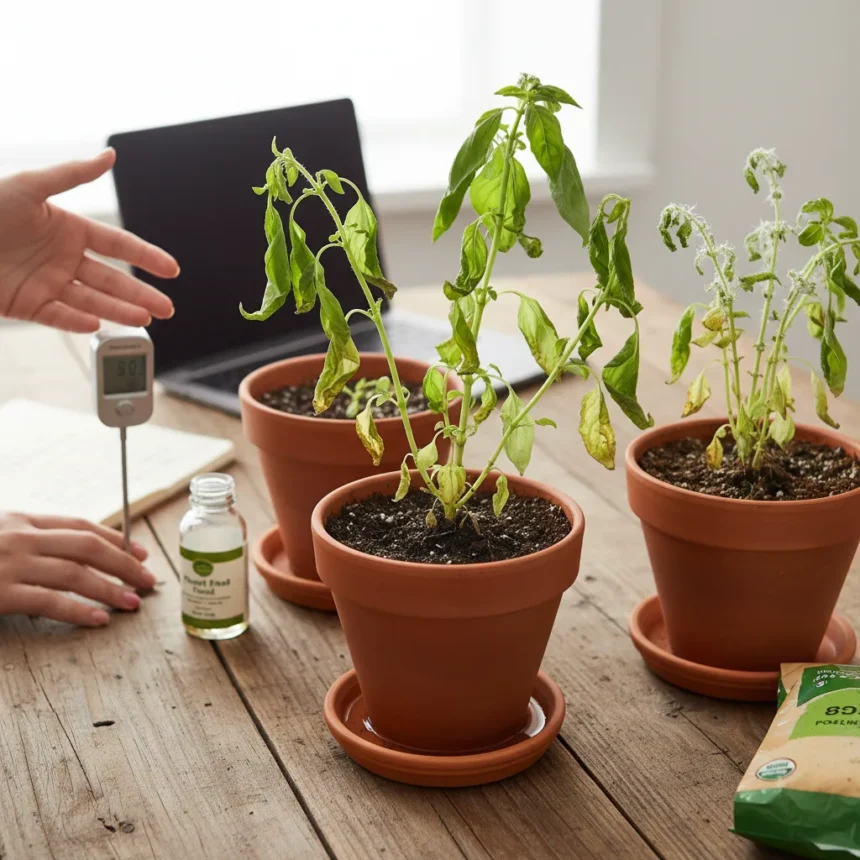
Basil plant wilting is one of the most frustrating problems for home gardeners and kitchen herb enthusiasts. Your once-vibrant basil goes limp, leaves yellow, and suddenly you’re questioning whether you can save it. The good news: most wilting basil can be revived if you act quickly and identify the root cause.
Key Takeaways
- Overwatering and root rot are the leading causes of basil plant wilting and leaf loss.
- Basil needs regular watering but hates excess water or overly saturated soil.
- Underwatering causes soil to pull away from pot sides and leaves to curl or yellow.
- Nutrient deficiency weakens the plant; fresh soil or liquid fertilizer can help restore vigor.
- Fungal diseases like fusarium often require removing and replacing the plant entirely.
Overwatering and Root Rot: The Silent Killer
Overwatering is the number one culprit behind basil plant wilting. Basil needs regular watering but it hates excess water or overly saturated soil. When the soil stays waterlogged, the roots cannot access oxygen. Fungal growth takes hold, and root rot sets in—a condition that can kill your plant within days if left unchecked.
Poor drainage compounds the problem. Compacted soil or a pot without drainage holes traps water around the roots, creating the perfect environment for rot. Check your pot immediately: does water sit on top after watering? Does the soil smell sour or musty? These are red flags. If root rot is present, cut away the diseased parts and replant in fresh soil if the damage is not too extensive. Honest assessment matters here—if the rot has spread throughout the root system, the plant may already be too far gone.
Underwatering: The Opposite Problem
Basil plant wilting can also result from the opposite extreme—not enough water. The signs differ subtly from overwatering: look for soil that has started to pull away from the sides of the pot and leaves that are yellowing or curling. This happens because the plant cannot absorb nutrients when the soil is too dry.


Basil plants typically need irrigation at least once a week, and those in direct sunlight may need watering more often. The key is consistency. Water the plant before it is completely dried out, using a little-and-often approach so the soil drains thoroughly each time. This prevents both waterlogging and desiccation—the sweet spot for healthy basil.
Nutrient Deficiency and Weak Growth
If your basil plant wilting is accompanied by yellowing leaves and overall weakness, nutrient deficiency may be the culprit. Old soil loses its nutrient profile over time, especially in potted plants that do not receive fresh amendments.



Two remedies work here. First, add fresh soil to your existing container to boost the nutrient profile. If transplanting is not an option, use a liquid fertilizer that supplies the key nutrients without being too strong. Either approach can restore vigor, though patience is required—improvement takes weeks, not days.
Fungal Disease: When Basil Plant Wilting Signals Infection
Fungal diseases like fusarium cause basil plant wilting that resists standard watering fixes. If the basil is infected, the best course of action is often to remove the affected plant and replace it with a new one in fresh soil. Fungal infections spread quickly in humid conditions and are difficult to reverse once established.
Prevention is the most effective method for fungal disease. For future plantings, choose disease-resistant plants or seeds tested for fusarium. Additionally, avoid splashing water on the leaves when watering, since moisture on foliage encourages fungal growth. Maintain proper soil moisture levels—neither too wet nor too dry—to help prevent disease from taking hold in the first place.
Preventing Basil Plant Wilting Through Better Drainage
The foundation of healthy basil is proper drainage. Ensure your pot has drainage holes at the bottom. Standing water is the enemy. After watering, excess moisture should drain freely within minutes. If your pot lacks holes, repot immediately into one that does.



Monitor soil moisture regularly. Stick your finger an inch into the soil; it should feel slightly moist but not soggy. Adjust your watering schedule based on season and light conditions. In winter, basil needs less water. In summer, especially on sunny windowsills, it may need water more frequently. Consistency and observation beat rigid schedules every time.
Can You Save Basil with Root Rot?
Saving basil with root rot depends on how far the disease has progressed. If caught early—soft, brown roots but some white healthy tissue remaining—you can cut away the diseased portions and replant in fresh soil with a chance of recovery. If the entire root system is mushy and black, the plant is likely beyond saving. In that case, start fresh with new seed or a healthy transplant.
How Often Should You Water Basil?
Basil needs irrigation at least once a week under normal conditions, though plants in direct sunlight may require watering more frequently. The best approach is to water little and often, allowing the soil to drain thoroughly between waterings. This prevents both the saturation that causes root rot and the dryness that stresses the plant.
What Should You Do If Your Basil Has Fusarium?
If your basil is infected with fusarium or another fungal disease, remove the affected plant entirely and replace it with a new one in fresh soil. Do not attempt to save it—fungal infections are nearly impossible to reverse in home settings. For prevention, choose disease-resistant seeds or plants tested for fusarium resistance when replanting.
Basil plant wilting does not have to mean the end of your herb garden. Most problems—overwatering, underwatering, nutrient gaps—are fixable with quick diagnosis and corrective action. Fungal disease is the exception; prevention through good drainage, proper watering, and disease-resistant varieties is far easier than cure. Start with these five fixes, and your basil should bounce back within days or weeks.
Where to Buy
Edited by the All Things Geek team.
Source: Tom's Guide




