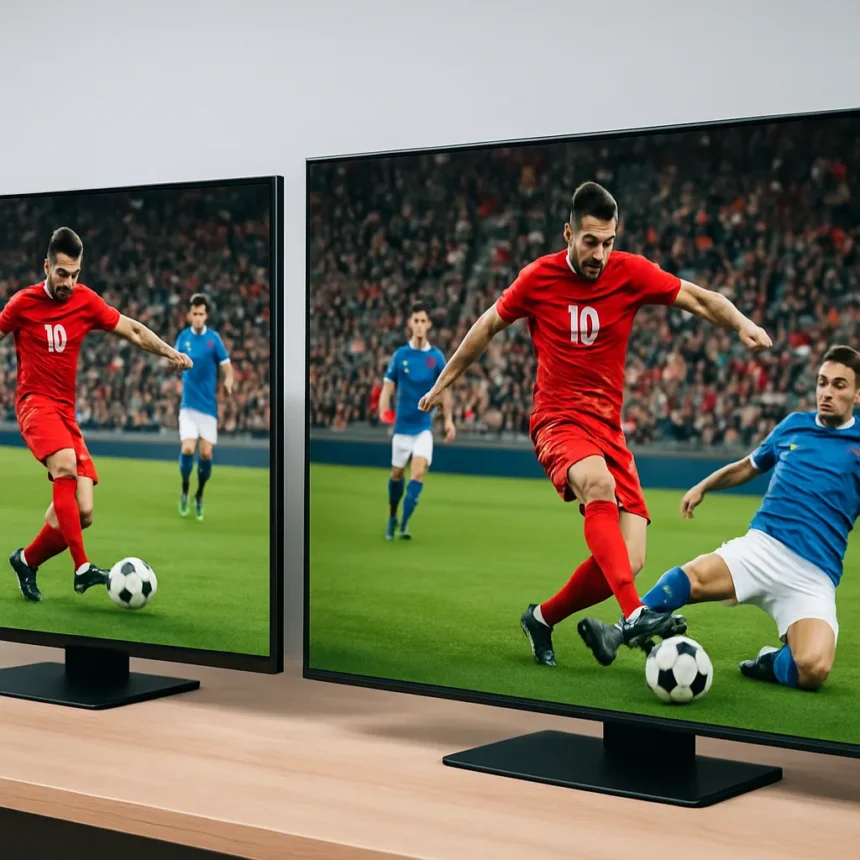
The Samsung mini-LED TV market is heating up as the World Cup approaches, and timing could not be better for buyers eyeing a flagship upgrade. With Prime Day on the horizon, now represents an opportune moment to evaluate Samsung’s 2025 mini-LED offerings and determine whether the investment makes sense for your viewing needs.
Key Takeaways
- Samsung’s 2025 mini-LED TVs deliver flagship performance suitable for sports and cinematic content
- Prime Day timing creates a favorable purchasing window for premium Samsung models
- Side-by-side testing reveals meaningful differences between Samsung mini-LED and Neo QLED variants
- World Cup viewing demands specific performance characteristics in brightness and contrast
- The Samsung QN90F benchmark demonstrates the quality bar for current-generation flagships
Why the Samsung mini-LED TV Matters for 2025 Buyers
A Samsung mini-LED TV represents a significant step forward in display technology, combining precision backlighting with quantum dot color science to deliver exceptional contrast and brightness. The 2025 flagship models specifically address the demands of sports broadcasting, where fast motion, vibrant field colors, and sharp detail separation matter enormously. For World Cup viewers, this performance translates to clearer ball tracking, more vivid grass rendering, and better visibility during low-light stadium scenes.
The appeal extends beyond sports. Mini-LED backlighting allows Samsung to achieve deeper blacks than edge-lit alternatives while maintaining the brightness needed for bright room viewing. This balance has historically been the weakness of premium displays, but Samsung’s current generation addresses it more effectively than previous iterations.
Samsung Mini-LED TV vs. Neo QLED: Which Flagship Wins?
Testing Samsung’s M80H mini-LED and QN80H Neo QLED side-by-side reveals the practical differences between these flagship approaches. The mini-LED model excels in contrast precision and localized dimming responsiveness, creating more dramatic lighting separation in complex scenes. The Neo QLED variant emphasizes color volume and brightness uniformity across the entire screen, which some viewers prefer for well-lit rooms and bright content.



Neither model is objectively superior—the choice depends on your room conditions and content preferences. The mini-LED suits darker viewing environments where contrast precision shines, while the Neo QLED performs better in bright spaces where peak brightness and color consistency matter more. Both represent the quality threshold established by the Samsung QN90F, which set a high bar for what flagship performance should deliver.
Performance differences in motion handling are subtle but noticeable during fast sports action. The mini-LED’s localized dimming creates slightly sharper edge definition during quick pans, while the Neo QLED maintains more consistent brightness during the same sequences. For World Cup matches with rapid ball movement and camera cuts, both handle the demand competently.



Prime Day Timing: Is Now the Right Moment to Buy?
The convergence of Samsung’s 2025 flagship launch and Prime Day creates a rare opportunity. Flagship mini-LED TVs typically maintain premium pricing for months after release, making discount windows infrequent. Prime Day historically brings meaningful reductions on current-generation Samsung models, often in the 10-15 percent range for flagship sets.
The World Cup schedule amplifies the urgency. If you are planning to watch the tournament on a new display, purchasing before the tournament begins ensures you have time to calibrate settings, adjust to the new picture quality, and avoid the rush of last-minute buyers. Waiting until after Prime Day risks missing the discount window and dealing with inventory constraints as the tournament date approaches.
What Makes Samsung’s Mini-LED Approach Different
Samsung’s mini-LED implementation uses thousands of individually controlled backlight zones, far exceeding the handful of zones in older LED TVs. This precision allows the display to brighten one area while keeping another dark, creating the contrast separation that makes sports and movies more engaging. The technology sits between basic LED and full OLED, offering OLED-like contrast without OLED’s burn-in risk or brightness limitations.
The Samsung mini-LED TV’s quantum dot layer adds another performance dimension. Quantum dots are microscopic crystals that convert backlight into pure, saturated colors. Combined with mini-LED’s precision dimming, this creates a color and contrast combination that neither technology alone can match. For World Cup broadcasting, where color accuracy and brightness matter equally, this dual-technology approach delivers measurable advantages.



Comparing to Previous Generations
The jump from older Samsung flagships to the 2025 mini-LED models is more substantial than incremental year-to-year improvements suggest. Processing power, AI upscaling, and motion handling all show noticeable gains. The QN90F, while still excellent, lacks the backlighting precision and processing sophistication of the current generation. If you own a model older than 2023, the upgrade path to a Samsung mini-LED TV justifies the investment for serious viewers.
Viewers with 2024 models face a tougher decision. The 2025 improvements are real but not revolutionary. If your current set performs adequately, waiting another year may make more sense financially. However, if you are in the market regardless, the 2025 generation’s enhanced sports performance and brighter peak output provide genuine reasons to choose the newer model.
Should You Buy a Samsung Mini-LED TV Before Prime Day?
Waiting for Prime Day makes financial sense if you have flexibility. Purchasing a Samsung mini-LED TV after a Prime Day discount can save hundreds, making the upgrade more accessible. However, if you want the display calibrated and ready before the World Cup begins, buying now ensures you have several weeks to optimize settings and adjust to the new picture quality.
Is the Samsung mini-LED TV worth the premium over standard Neo QLED?
The Samsung mini-LED TV commands a price premium over non-mini-LED Neo QLED models, typically 15-20 percent higher. The premium is justified if you watch in a darker room or prioritize contrast precision. In bright rooms or for general viewing, the standard Neo QLED delivers 85-90 percent of the performance at lower cost. Evaluate your specific room conditions before committing to the mini-LED premium.
How does the Samsung mini-LED TV perform for sports compared to OLED?
The Samsung mini-LED TV handles sports motion and brightness differently than OLED. Mini-LED delivers higher peak brightness, making it better for bright rooms and daytime viewing. OLED offers superior contrast and response time but cannot match mini-LED’s brightness in well-lit spaces. For World Cup viewing in varied lighting conditions, the mini-LED’s brightness flexibility gives it a practical edge.
The decision between a Samsung mini-LED TV and OLED ultimately depends on your room and budget. Mini-LED offers better brightness flexibility and lower burn-in risk, making it the safer choice for sports-heavy viewing. OLED delivers superior contrast and motion handling but requires darker rooms and careful content management. For World Cup preparation, the Samsung mini-LED TV represents the more versatile flagship option, especially with Prime Day pricing approaching.
Where to Buy
Edited by the All Things Geek team.
Source: TechRadar