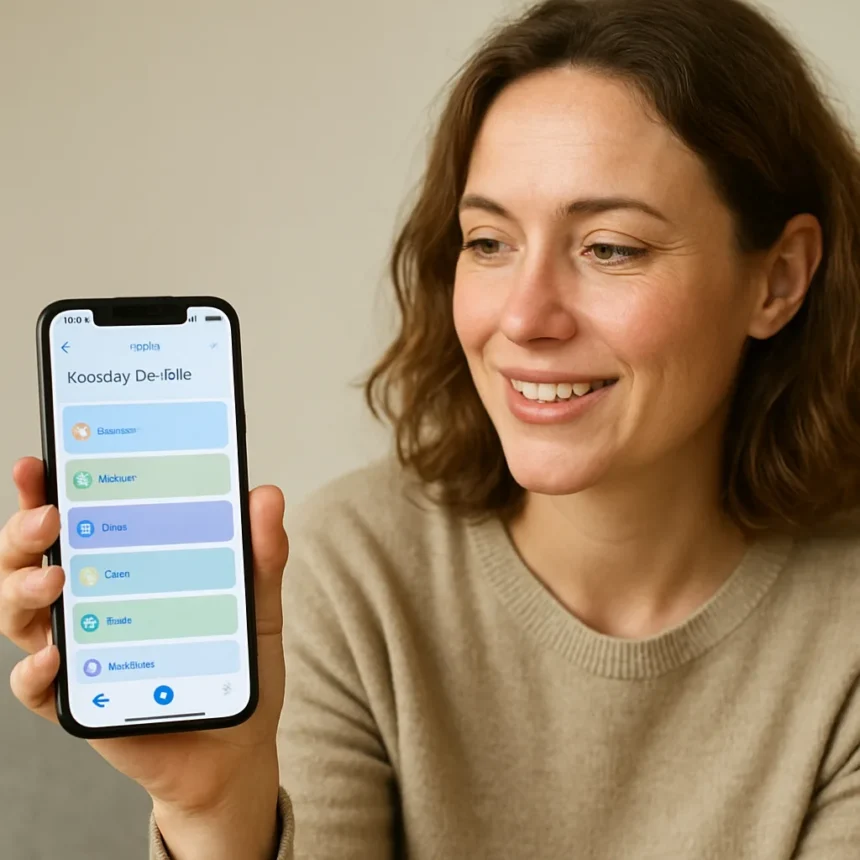
Tiimo is a visual planner app built for neurodivergent users — people with ADHD, autism, or anyone who struggles to translate intention into action — made by Tiimo, named Apple’s iPhone App of the Year in 2025, available free to download on the App Store worldwide with a premium tier at $10 per month. In a productivity app market flooded with minimalist to-do lists and aggressive notification systems, Tiimo takes a genuinely different approach: it replaces the anxiety of an open-ended task list with a calm, color-coded visual timeline that tells you exactly what comes next and when.
What Makes Tiimo a Different Kind of visual planner app
Most productivity apps treat your day as a flat list of items to check off. Tiimo structures your day into four distinct zones — morning, day, evening, and anytime — so tasks sit in the context of when they actually need to happen. Each task gets a start time, an end time, themed emojis, and a color, turning an abstract obligation into something that feels manageable and even a little fun. A countdown to your next task runs persistently, which sounds like it could add pressure but in practice does the opposite: it removes the cognitive load of constantly asking yourself what you should be doing right now.
The AI chatbot assistant, accessible via a floating icon, lets you create tasks and to-dos by typing or speaking naturally. Ask it to schedule your dog walks twice daily or set a medication reminder and it handles the setup, auto-matching relevant emojis and generating lockscreen notifications. This is not a gimmick — for users with task initiation difficulties, the difference between opening a blank form and having a conversation is enormous. Completing a task triggers a confetti animation and a satisfying slide-out effect, which sounds trivial but consistently reinforces the habit loop.
How Tiimo Compares to Apple Reminders and Standard To-Do Apps
Apple Reminders is a capable app, but it is built around hierarchy — lists, sub-lists, tags — which demands executive function that neurodivergent users often find depleted. Tiimo links back to Apple Reminders but does not replicate its structure. Everything in Tiimo is visual and personal: colors, emojis, timers, and mood tracking that syncs with Apple Health. Where generic to-do apps ask you to manage your tasks, Tiimo acts more like a co-planner, nudging you through the day rather than waiting for you to remember to check in. Users who previously relied on mental tracking or Notes app lists report a meaningful shift in how consistently they follow through.


The mood tracking feature deserves specific mention because no mainstream to-do app includes it. Logging how you feel each day and having that data feed into Apple Health creates a feedback loop that helps users — and their support networks — understand which routines are sustainable and which are draining. One parent reviewing the app noted that since adopting Tiimo, family strain reduced significantly because their child with ADHD could see exactly what was happening and when, without needing constant verbal reminders.
Tiimo’s Real Weaknesses You Should Know Before Subscribing
Apple’s App of the Year designation raises expectations, and on a few fronts Tiimo does not quite meet them. The onboarding process is long and repetitive, with a chatbot-style flow that some users find tedious before they have even created their first task. The animations — confetti, slide-ins, pop-ins — are functional but visually pixelated and simplistic for a flagship-awarded app. More practically frustrating is the inability to reorder tasks manually: if a task like baking cookies ends up slotted after a bedtime routine due to the order you created them, you cannot drag it earlier, which can genuinely spike anxiety for users who rely on the app’s structure to feel in control.


Theme customization on iPhone is described as limited and minimalist, and on iPadOS 26 themes are reportedly broken entirely. Given that visual calm is Tiimo’s core value proposition, a broken theme layer on iPad is a significant issue for users who work across devices. The premium subscription at $10 per month is reasonable for a daily-use assistive tool, and the yearly option works out more affordably, but the free tier is functional enough to evaluate before committing.
Is Tiimo the right visual planner app for ADHD users?
If you have ADHD or autism and have cycled through standard productivity apps without finding one that sticks, Tiimo is the most credible option currently on the market for iPhone. Its 4.6 out of 5 rating from over 14,000 App Store reviews is not the result of novelty hype — it reflects a tool that genuinely helps people maintain momentum on tasks they would otherwise avoid. Tiimo describes itself as an assistive app designed to improve routines and increase focus and independence, and the user evidence backs that claim. That said, it is not a finished product. The reordering limitation, the onboarding friction, and the iPad bugs are real problems that Tiimo needs to address to justify the App of the Year badge long-term.
Does Tiimo work for adults or just children with ADHD?
Tiimo is designed for users of all ages. While it has been widely adopted by families supporting children with ADHD and autism, adult users — including professionals managing complex daily schedules — also report meaningful benefits. The app’s profile feature supports multiple users on a shared device, making it practical for households with both adults and children using it simultaneously.
What does Tiimo’s premium subscription include?
The premium tier, priced at $10 per month with a more affordable yearly option, unlocks the full feature set including the AI chatbot assistant, advanced visual timers, focus sessions, and mood tracking with Apple Health sync. The free version is available to download and use with core functionality, making it possible to assess whether the app suits your needs before paying.


Tiimo winning Apple’s iPhone App of the Year in 2025 is not just a feel-good story about an underserved audience finally getting attention — it is a signal that assistive design and AI-powered routine building are moving into the mainstream. The app has genuine flaws, but its core promise holds: for users who have struggled with every other planner on the market, this visual planner app offers a calmer, more structured way to get through the day. Fix the iPad bugs and the task reordering, and it becomes genuinely hard to argue against.
Edited by the All Things Geek team.
Source: TechRadar