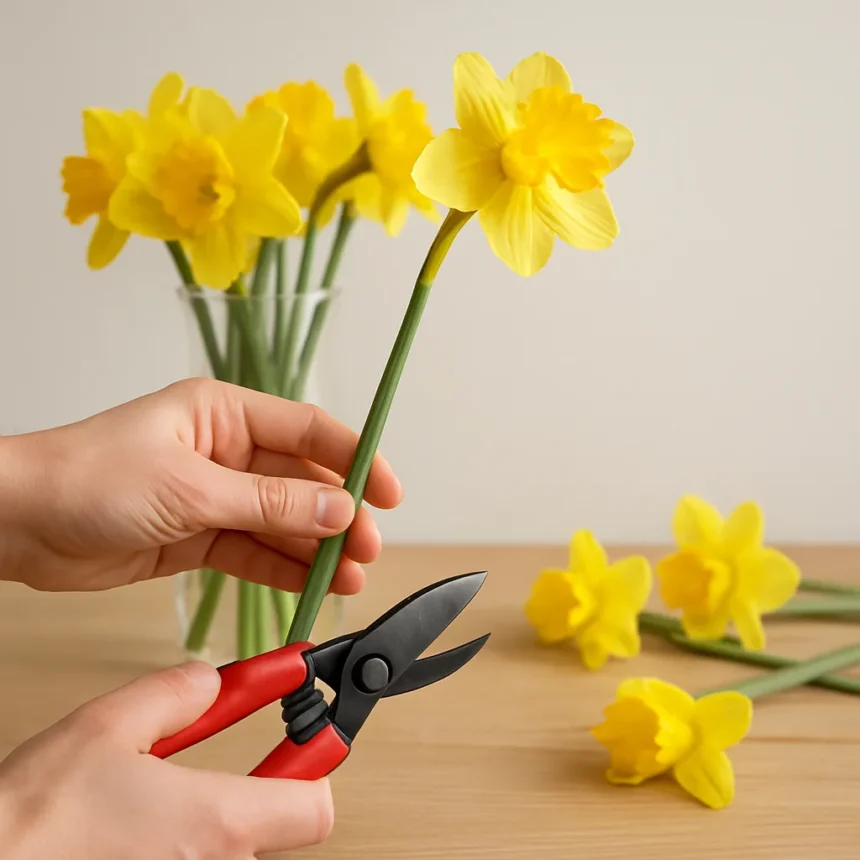
How to cut daffodils properly is one of the most misunderstood flower-care tasks, yet the difference between a three-day wilted mess and blooms that last nearly three weeks comes down to one critical mistake: cutting at the wrong angle and at the wrong time. Daffodils produce a clear, sticky, poisonous sap—often called “goo”—that seals flat cuts and prevents water from reaching the flower head. Most people cut their daffodils at an angle thinking they’re maximizing water uptake. They’re actually locking out moisture entirely.
Key Takeaways
- Daffodil stems exude toxic sap that seals flat cuts and blocks water absorption.
- Harvest at gooseneck stage: buds fully colored with bloom head drooping downward.
- Cut near the base initially, then condition in cool water for three hours to drain sap.
- Apply 45-degree angle cut only after conditioning, never before.
- Change water every 2-3 days and recut stems at an angle each time.
Why daffodils are different from other cut flowers
Daffodils behave nothing like roses or tulips because of that viscous, toxic sap coating the inside of their stems. “This clear sap is important and inflates the stems keeping the flower heads upright. It’s also kinda sticky, messy, and poisonous”. When you make a flat cut across a daffodil stem, that sap dries and hardens within minutes, creating a watertight seal that prevents the flower from drinking anything. The stem literally glues itself to the vase bottom or sits uselessly in water, unable to absorb moisture. Pulling daffodils from the ground instead of cutting them with scissors reduces initial sap flow, which is why florists often recommend this method when possible. If you must cut, do it close to the base and leave the foliage intact—those leaves feed the bulb for next year’s blooms.
Harvest at the gooseneck stage for maximum vase life
Timing your daffodil harvest matters as much as the cutting technique. The ideal moment is the “gooseneck” or “goose neck” stage, when the bud is fully colored and the bloom head has dropped or nodded downward, with the papery sheath beginning to peel back. At this stage, the flower is ready to open but hasn’t yet—meaning you get the longest possible vase life ahead. For double or fancy daffodil varieties with multiple layers of petals, pick when the blooms are half-open and the poofy, colored buds are visible. Harvest in the morning or early evening when stems are most turgid and full of water; avoid cutting during midday heat when flowers are stressed.
The three-hour conditioning step that most people skip
This is where most home arrangers fail. After cutting, place daffodils immediately in cool water—don’t let the sap dry on the stem. The sap must drain out completely, which takes roughly three hours of sitting in clean, cool water. During this time, the toxic goo leaches into the water, and the stem becomes safe to mix with other flowers. After three hours, dump the water, wash the vase thoroughly, and refill with fresh water. Only now is the daffodil ready for the vase cut. This conditioning step is non-negotiable if you want to extend vase life—skipping it means the sap will seal your stems again the moment you make your final cut.


The 45-degree angle cut comes last, not first
Here’s the counterintuitive part: cut at a 45-degree angle—but only after conditioning. The angled cut increases the surface area available for water uptake, which is exactly what you want once the sap has drained away. If possible, make this cut under running water so the stem absorbs moisture immediately. Place the flower in fresh water right away. The flat or straight cut near the base during harvest is correct; the 45-degree angle during vase arrangement is also correct. The mistake is doing the angle cut first, before conditioning, which seals the sap and defeats the entire purpose.
Maintenance: recut and recondition every 2-3 days
Daffodils can last 5-7 days with basic care, but with proper maintenance they can stretch to nearly double that lifespan. Every 2-3 days, change the water completely and recut the stems at a 45-degree angle with clean, sharp, sanitized scissors or shears. Recutting triggers a fresh flow of sap, so if you’re mixing daffodils with other flowers, recondition them separately for another hour before returning them to the arrangement. This cycle of recutting, conditioning, and fresh water is what separates a mediocre arrangement from one that stays vibrant for weeks.



Common mistakes that shorten vase life
Crimped or bent stems—often caused by improper harvesting or careless handling—block water flow even if you cut them correctly. If you notice a crimp, cut above it or carefully straighten the stem; otherwise, water simply won’t reach the flower head. Leaving daffodils in the same water for more than 3 days allows bacteria to multiply and sap residue to accumulate, both of which shorten vase life. Don’t assume one conditioning session is enough; each recut requires reconditioning if the flower is sitting in a mixed bouquet. And never, ever let the sap dry on the stem before the initial conditioning period—once it hardens, no amount of recutting will fix it.
Can you condition daffodils with other flowers from the start?
No. The toxic sap will harm other flowers if they’re exposed to it before the three-hour conditioning period. Always condition daffodils separately in cool water, then wash the vase and refresh the water before adding them to a mixed arrangement. After that, they’re safe to sit alongside roses, tulips, or any other blooms.
Why do daffodils last longer when you follow these steps?
Proper technique extends vase life because it keeps stems hydrated and free of bacterial growth. The 45-degree angle cut maximizes water uptake; the conditioning period removes the sap seal; regular water changes prevent bacterial buildup; and recutting every few days ensures the stem stays open and drinking. Together, these steps can extend a daffodil’s vase life from 5-7 days to nearly twice that duration.
What’s the difference between pulling and cutting daffodils?
Pulling daffodils from the ground by grasping the flower with your thumb down toward the soil yields a longer stem and less initial sap drainage compared to cutting with scissors. However, both methods work if you condition properly afterward. Pulling is ideal for maximum stem length; cutting is practical when you want to control the final length before conditioning.



The next time you cut daffodils, remember: flat cut first, angle cut after conditioning. That simple shift in order transforms a wilted bouquet into blooms that last for weeks. Spring daffodils deserve better than three days in a vase—and now you know exactly how to give them the care they need.
Edited by the All Things Geek team.
Source: Tom's Guide