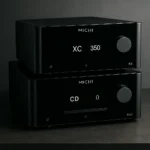

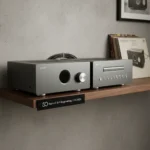


Rotel Michi Prestige amplifiers represent the company’s latest push into ultra-premium audio, expanding its high-end Michi sub-brand with the X430 integrated amplifier and Q430 preamplifier. These new models arrive as Rotel doubles down on what made the legendary X3 series a benchmark: obsessive build quality, no-compromise engineering, and a sonic character that refuses to punish listeners for demanding more from their music.
Key Takeaways
- Michi Prestige X430 and Q430 expand Rotel’s high-end amplifier lineup beyond the acclaimed X3 series.
- Michi is Rotel’s cost-no-object sub-brand, distinct from mainstream Rotel products with premium component focus.
- The X3 predecessor delivers 200W per channel into 8 ohms, 350W into 4 ohms with Class AB amplification.
- Michi amplifiers are known for muscular yet refined sound, deep bass, and airy soundstages across analog and digital inputs.
- Build quality across Michi components reflects exceptional internal construction and obsessive detailing.
What Makes Michi Different From Standard Rotel
Michi is not Rotel’s mainstream brand. Since the 1990s, Michi has operated as Rotel’s high-end sub-brand, prioritizing premium components and engineering without the cost constraints that govern standard Rotel products. This distinction matters. Where regular Rotel amplifiers balance performance with affordability, Michi models embrace a philosophy of cost-no-object design—build what sounds best, then worry about the price tag. The Rotel Michi Prestige amplifiers inherit this DNA entirely.
The X3 integrated amplifier, which the X430 builds upon, exemplifies this approach. This chunky amplifier delivers 200 watts per channel into an 8-ohm load, climbing to 350 watts into 4 ohms. The power figures matter less than the engineering philosophy behind them: Class AB amplification tuned for musical authority rather than spec-sheet dominance. Internal construction across Michi components is obsessive—component selection, layout, and build quality reflect decisions made by engineers thinking about sound first.
The Rotel Michi Prestige Sound: Muscular Yet Forgiving
What listeners actually hear from Michi amplifiers is a paradox: muscular yet subtle, composed even when pushed hard. The X3 series earned praise for hitting harder than its smooth, accommodating character might suggest. Deep bass, airy soundstages, and detailed midrange combine with a warmer, organic presentation that sits apart from competitors like Luxman, which leans toward clarity and energy, or Rose, which presents a more holographic but forward-leaning image.

This sonic signature proves versatile across music genres and speaker pairings. The X3 works equally well with analog sources—its phono stage handles MM cartridges—and digital inputs supporting 384kHz PCM and 5.6MHz DSD via onboard DAC. Headphone amplification and preamp/power amp flexibility round out the feature set, making the X3 (and by extension, the Rotel Michi Prestige amplifiers) a genuine integrated solution rather than a component with limited utility.
Compared to separate-component systems at similar price points, Michi integrated amplifiers challenge the high-end pyramid’s assumption that separates always outperform integrated designs. The X3’s refined yet muscular performance—paired with build quality that matches or exceeds dedicated preamps and power amps—makes the case for integrated amplification in rooms where space, aesthetics, and simplicity matter as much as sound.



Build Quality and Design Practicality
The physical footprint of Michi amplifiers reflects their engineering ambition. The X3 measures 19 inches wide due to substantial heatsinks required for its Class AB output stage. This is not a compact design. It is a statement that thermal management and component stability take priority over furniture-friendly dimensions. The backlit remote and versatile input/output configuration acknowledge that serious listeners want control and flexibility.
What Hi-Fi? and other reviewers consistently highlight the second-to-none build quality and no-compromise sonic performance that position Michi integrated amplifiers as exceptional value within the high-end category. The Rotel Michi Prestige amplifiers inherit this reputation. Whether the X430 and Q430 match or exceed the X3’s engineering remains to be seen in full reviews, but Rotel’s track record with the Michi brand suggests they will maintain the standard.
Where Rotel Michi Prestige Amplifiers Fit in Your System
The X430 integrated amplifier targets listeners seeking a single-box solution with genuine high-end credentials. The Q430 preamplifier pairs with external power amplification for those who prioritize flexibility or already own quality power amps. Both models serve different workflows but share Michi‘s philosophy: premium engineering without compromise.
For listeners comparing integrated amplifiers in this category, the Rotel Michi Prestige amplifiers compete against Marantz, Luxman, and Bryceston designs. The X3’s warmer, more forgiving character distinguishes it from Marantz’s cooler, less edgy presentation and Luxman’s brighter, more energetic voice. Bryceston offers similar refined, muscular performance but at higher cost. The Rotel Michi Prestige amplifiers inherit this positioning: premium sound and build without the stratospheric pricing of ultra-luxury brands.



What We Don’t Yet Know
Rotel has not disclosed specific pricing or availability details for the X430 and Q430. The X3 sits around €5,000, suggesting the Prestige models will occupy similar or higher territory. Specifications for the new models—power output, input/output configuration, DAC capabilities, and phono stage details—remain unconfirmed. What Hi-Fi?’s preview does not include measurements or listening impressions of the Prestige models themselves, only context from the X3 lineage.
Is the Rotel Michi Prestige X430 right for me?
If you value organic, forgiving sound paired with muscular dynamics and obsessive build quality, yes. If you demand the absolute highest resolution or the brightest, most energetic presentation, you may prefer Luxman or other competitors. The Rotel Michi Prestige amplifiers suit listeners who want to enjoy music without fatigue, even during long listening sessions at high volumes.
How does the Rotel Michi Prestige compare to the X3?
The X3 remains the proven reference. The Prestige models expand the Michi lineup, offering new form factors (the Q430 preamplifier, for instance) and potentially refined engineering. Until full specifications and reviews arrive, treating the X3’s reputation as the baseline is prudent—the Prestige models will need to match or exceed its standard.
What inputs and outputs does the X430 include?
Specifications for the X430 have not been disclosed. The X3 integrated amplifier includes analog inputs, a phono stage (MM only), digital inputs supporting high-resolution PCM and DSD, a headphone amplifier, and preamp/power amp outputs. The X430 likely mirrors or expands this configuration, but confirmation awaits official product details.
The Rotel Michi Prestige amplifiers represent continuity and expansion within one of high-end audio’s most respected engineering cultures. Michi’s reputation for cost-no-object design, muscular yet refined sound, and obsessive build quality gives these new models credibility before they even ship. Serious audiophiles waiting for full reviews and specifications have every reason to pay attention.
Edited by the All Things Geek team.
Source: What Hi-Fi?