






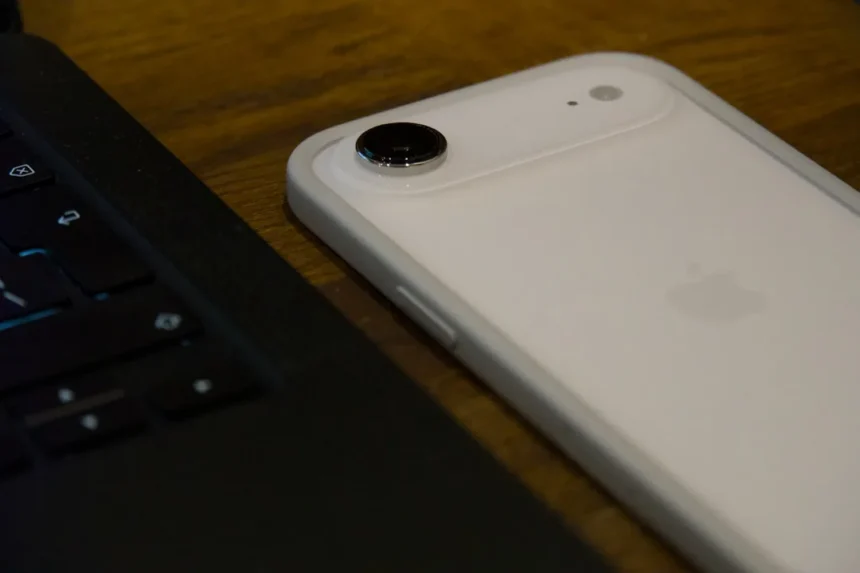
The iPhone Air is Apple’s answer to the middle market—a thinner, lighter alternative to the Pro Max that promises flagship performance without the bulk. After six months of daily use, it’s also the most conflicted I’ve ever been about a phone.
Key Takeaways
- The iPhone Air delivers impressive thinness and weight reduction compared to previous flagships.
- Design excellence masks fundamental compromises in thermal management and sustained performance.
- Camera system feels like a step backward from Pro-tier models.
- Battery life inconsistency makes all-day reliability questionable in heavy use.
- Best suited for users prioritizing portability over absolute performance.
Why the iPhone Air’s Design Works (and Why It Matters)
The iPhone Air’s defining strength is its industrial design. Apple has engineered a phone that feels genuinely different in hand—lighter, thinner, more pocket-friendly than any flagship it makes. This is not a minor achievement. For years, users have complained that premium phones became unwieldy slabs. The Air directly addresses that complaint with real engineering discipline.
That thinness comes at a cost, though. The thermal architecture is noticeably constrained. During extended gaming sessions or sustained video recording, the device gets warm faster than the Pro Max, and throttling kicks in sooner. Apple doesn’t advertise this limitation, but it’s immediately apparent if you push the phone hard. The Air is built for typical daily use, not for power users who demand sustained peak performance.
Camera Quality Falls Short of the Flagship Promise
The iPhone Air’s camera system is where the compromises become indefensible. You get a dual camera setup instead of the triple system in Pro models, and the gap is noticeable in low light and zoom performance. Portrait mode works fine for casual shots, but the lack of optical zoom beyond 2x means distant subjects get mushy fast. If photography matters to you, the Air feels like a downgrade masquerading as a lateral move.


Apple’s computational photography helps narrow the gap in good lighting, but the moment you’re shooting in dim environments or trying to capture detail at distance, the hardware limitations show. This is not a phone for anyone serious about mobile photography. It’s a phone for people who take occasional snapshots and expect them to look decent.
Battery Life Is Inconsistent and Frustrating
Six months in, battery behavior has become erratic. Some days the iPhone Air easily lasts into the evening with moderate use. Other days—same usage patterns, same apps—it hits 20 percent by mid-afternoon. There’s no obvious explanation for the variance. Background app refresh is off, location services are limited, and the display brightness is consistent. Yet the inconsistency persists.


This unpredictability is worse than a phone that simply has weak battery life. Weak battery life you can manage—you know to charge midday. Inconsistent battery life means you cannot rely on the device. You’ll find yourself at 15 percent at 4 PM on a Tuesday with no obvious cause, then watching it sail past 6 PM on Thursday under similar conditions. For a flagship device, this is unacceptable.
Should You Buy the iPhone Air?
The iPhone Air is a phone for a specific person: someone who values portability and design above raw performance, who doesn’t need a professional-grade camera, and who can accept that this device is a compromise. If you’re upgrading from an older iPhone or switching from Android, the Air is genuinely compelling. It’s lighter, faster than what you probably have, and the software experience is excellent.
But if you’re considering whether to buy the Air instead of the Pro Max, the answer depends on your actual use. Do you genuinely find the Pro Max too large and heavy? Or are you rationalizing the purchase because the Air is cheaper? If it’s the latter, save the money and buy the Air. If you actually use your phone for extended work—video editing, photography, gaming—the Air’s thermal and camera limitations will frustrate you within weeks.
How does the iPhone Air compare to the iPhone 16?
The iPhone Air sits above the standard iPhone 16 in performance and camera quality, but the gap is smaller than you’d expect. The standard iPhone 16 is thicker and heavier, but offers comparable battery life and thermal stability. The Air’s main advantage is its thinness and the slightly better camera system. For most people, the standard iPhone 16 is the smarter buy.



Does the iPhone Air have the same processor as the Pro Max?
The iPhone Air uses the same core processor as the Pro Max, but thermal constraints limit sustained performance. In benchmarks, the Air and Pro Max perform identically. In real-world sustained use—long gaming sessions, video rendering—the Air throttles sooner due to its thinner chassis and reduced thermal mass.
Is the iPhone Air worth upgrading to from an older iPhone?
If you’re upgrading from an iPhone 14 or earlier, the Air represents a meaningful jump in performance, design, and features. The thinness and weight reduction are genuinely noticeable. Battery life improvements are real compared to older models. The camera system is solid for typical use. Yes, it’s worth the upgrade if your current phone is three years old or more.
After six months with the iPhone Air, I keep reaching for it—not because it’s perfect, but because its compromises are honest. It doesn’t pretend to be a Pro phone. It’s a device that prioritizes portability and everyday usability over absolute performance and professional-grade imaging. That’s a legitimate choice for Apple to make. The question is whether it’s the right choice for you. For most people, it probably is. For power users, it definitely isn’t.
Edited by the All Things Geek team.
Source: TechRadar