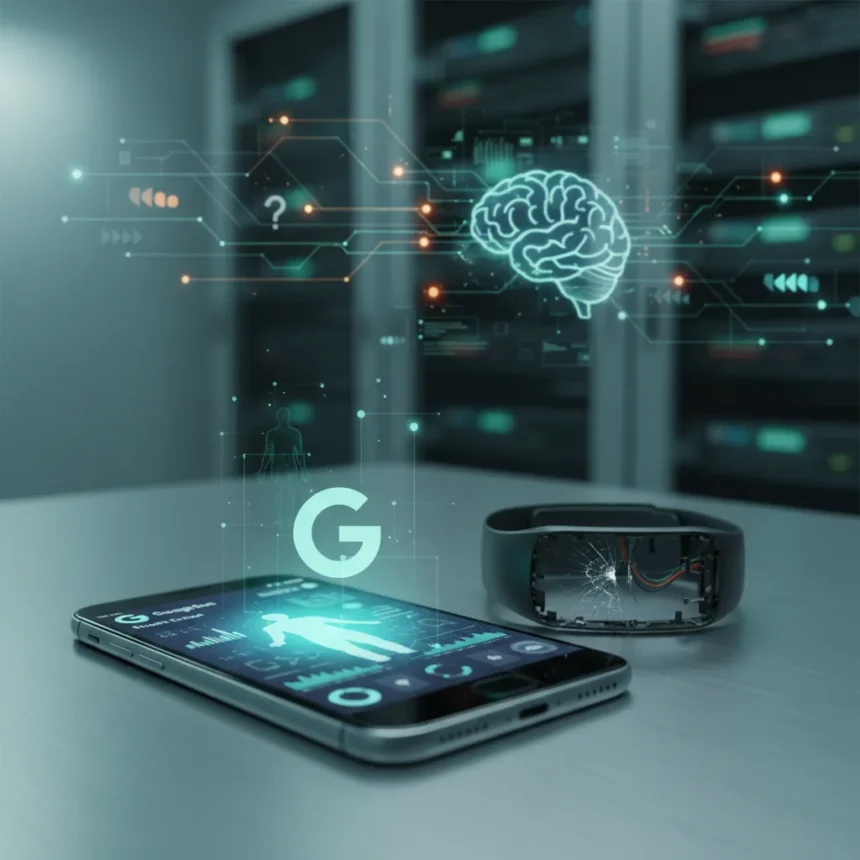
Google Health Coach is replacing Fitbit on millions of phones, but the real story isn’t about the rebrand—it’s about whether AI health coach trust has any business being in your wellness decisions at all. The shift signals Google’s pivot toward AI-centered health guidance, yet the fundamental question remains unanswered: can you actually rely on an AI system to tell you something important about your body?
Key Takeaways
- Google Health has replaced Fitbit branding, moving toward AI-powered wellness coaching.
- AI can help with diet, exercise, and understanding tests—but not diagnosis or treatment changes.
- Confident AI answers are not the same as correct ones, and that matters when health is at stake.
- Wearable trackers provide insight but are not diagnostic tools for conditions like sleep apnea.
- Bevel, an AI health companion app launched in 2024, offers an alternative approach to fitness guidance.
The Problem With Confident AI Health Advice
Here’s what experts are actually worried about: AI systems can sound absolutely certain while being completely wrong. A confident answer is not the same as a correct one, and that can delay care. When you’re dealing with health, the stakes are higher than asking an AI to write an email. Hallucinations, misattributed sources, and outdated information are real risks in AI health guidance. The system might sound authoritative—that’s what makes it dangerous.
The broader issue is that AI health coaching sits in a gray zone. It can help you understand what a medication does or suggest a reasonable workout routine. But it cannot—and should not—replace actual medical judgment. If a symptom is sudden, severe, or getting worse, that’s your body telling you to get help. No AI coach should convince you otherwise.
Where AI Health Coach Trust Actually Breaks Down
Google Health Coach is positioned as ready and waiting to improve your fitness, but fitness improvement and health guidance are not the same thing. Wearable trackers, which feed data into these systems, provide useful insight—but they are not diagnostic tools. A sleep tracker might tell you that you slept poorly, but it cannot tell you whether you have sleep apnea. That distinction matters. A gold-standard sleep study is what actually diagnoses sleep disorders, not an app analyzing your wrist movements.


The practical advice from experts is blunt: understand how the AI works before relying on it, ask better questions but stay wary, verify everything, and be mindful of privacy before sharing sensitive health data. AI can handle lower-risk tasks like suggesting stress-relief exercises or explaining what your test results mean. It should not handle diagnosis or suggest treatment changes. The moment you treat an AI health coach as a substitute for a doctor, you’ve crossed a line that no algorithm should cross.
The Competitive Landscape: Beyond Google Health
Google Health Coach is not the only player in this space. Bevel, an AI health companion app launched in 2024, syncs with Apple Watch, Oura Ring 4, Garmin watches, and Strava to offer AI-powered guidance and health insights. Unlike dedicated wearables, Bevel doesn’t require you to buy new hardware—it works with devices you likely already own. The approach is similar to Google’s strategy: aggregate data and apply AI analysis. The trust question remains identical.



The difference is in positioning. Some AI fitness apps lean harder into the coaching angle, while others frame themselves as insight tools. That distinction matters to users who are skeptical. If an app tells you it’s a coach, you might expect clinical-level accuracy. If it tells you it’s a data aggregator with AI insights, expectations shift. Google Health Coach’s rebrand from Fitbit suggests a move toward the coaching narrative, which raises the stakes for accuracy.
What You Should Actually Do With AI Health Guidance
The practical takeaway is not to avoid AI health tools entirely—it’s to use them for what they’re actually good at. Ask an AI to explain your blood pressure readings or suggest recovery strategies. Don’t ask it to diagnose chest pain or tell you to skip a doctor’s visit. Verify everything it tells you, especially if it contradicts what your body is telling you. Think of it as a research tool, not a replacement for medical judgment.
The move from Fitbit to Google Health is a corporate consolidation wrapped in AI hype. The real question is whether consumers will treat it as a helpful tool or a substitute for actual healthcare. Based on expert warnings about confident wrong answers, the smart move is treating it as the former. Your health is too important to outsource to a system that can sound certain while being dangerously incorrect.
Should I trust an AI health coach with my fitness routine?
AI can offer useful guidance on exercise and diet, but verify recommendations against your own body’s signals and your doctor’s advice. A confident AI answer is not the same as a correct one, especially in health contexts. Use it as a supplement, not a replacement.



Can wearable trackers diagnose sleep apnea?
No. Sleep trackers provide insight into sleep patterns but cannot diagnose sleep disorders. A gold-standard sleep study is required for actual diagnosis. If you suspect sleep apnea, speak to your doctor rather than relying on app analysis.
What’s the difference between Google Health Coach and Bevel?
Google Health Coach replaces Fitbit’s app experience and uses Google’s ecosystem. Bevel, launched in 2024, is a standalone AI health companion that syncs with existing devices like Apple Watch, Oura Ring 4, and Garmin watches. Both offer AI-powered insights, but Bevel doesn’t require Google hardware integration.
The shift from Fitbit to Google Health Coach represents a broader tech industry move toward AI-powered health guidance. But the underlying problem hasn’t changed: AI systems are confident, but confidence is not the same as correctness. Until that gap closes, treating any AI health coach as a primary source of health advice is a risk you shouldn’t take. Use it to understand your data, not to replace your doctor.
Where to Buy
Google Pixel 10 Pro | Samsung Galaxy S26 Ultra
Edited by the All Things Geek team.
Source: TechRadar