





The iPhone Fold is shaping up to be the most significant hardware overhaul in Apple’s smartphone history, and not because of a faster chip or a better camera. After more than a decade of development, Apple is finally ready to launch a book-style foldable iPhone in 2026 that abandons the tall, narrow design language that has defined iPhones since 2007. This is not an incremental upgrade. This is a fundamental rethinking of what an iPhone should be.
Key Takeaways
- iPhone Fold launches September 2026 alongside iPhone 18 Pro and Pro Max, with possible December availability.
- Book-style design unfolds to 7.6-inch or 7.8-inch OLED display, roughly iPad mini-sized with 4:3 aspect ratio.
- Powered by A20 Pro chip on TSMC’s 2nm process; features side-mounted Touch ID instead of Face ID.
- Starting price over $2,000, making it the most expensive iPhone ever.
- Second-generation model planned for 2027 with 20+ million units projected annually by then.
Why the iPhone Fold Matters More Than Any iPhone Since the Original
The iPhone Fold is not just another phone with a bigger screen. It is a hybrid device that transforms iPhones from single-purpose communication tools into portable productivity machines. When folded, the 5.3-inch outer display functions like a standard phone. Unfold it, and you get a 7.6-inch or 7.8-inch display with a 4:3 aspect ratio—essentially an iPad mini in your pocket. This is the first time Apple has created a phone-tablet convergence device, and it fundamentally changes the value proposition of owning an iPhone.
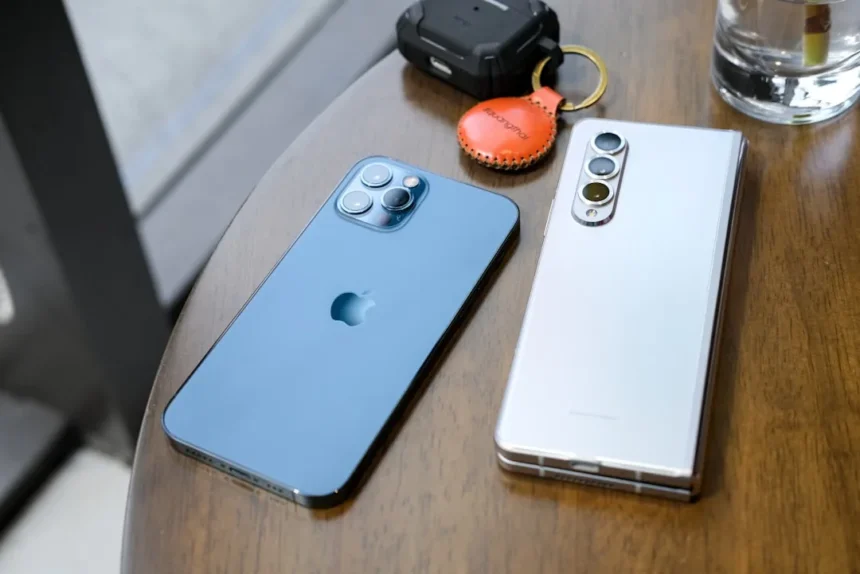
Apple’s competitors have been making foldables for years. Samsung launched the Galaxy Z Fold back in 2019, Huawei followed with the Mate X2, and companies like Oppo, Vivo, and Xiaomi have their own versions. But most Android foldables use a tall, narrow design when unfolded—they are essentially a phone with extra height. The iPhone Fold’s wider, more square-like form factor is genuinely different. It is designed to feel like a tablet, not a stretched phone. That distinction matters for how users will interact with apps, multitask, and consume content.
The iPhone Fold Design and Engineering
Apple’s engineering approach to the iPhone Fold reveals how seriously the company is taking this transition. The device will feature a minimized crease on its foldable display, similar to the approach Oppo used on the Find N. A crease is the foldable phone’s biggest usability problem, so minimizing it is critical. The outer display will measure 5.3 inches, while the inner foldable OLED panel stretches to 7.6 or 7.8 inches. That size difference is intentional—it gives users a genuine reason to unfold the device rather than just using the outer screen for everything.


The iPhone Fold will run on the A20 Pro chip, built on TSMC’s 2nm process. This is Apple’s most advanced processor yet, designed to handle the demands of running two displays simultaneously and powering productivity features that take advantage of the larger unfolded screen. The device will include a 5,500mAh battery and a quad-camera setup. , Apple is ditching Face ID on this model in favor of a side-mounted Touch ID integrated into the power button. This is a pragmatic choice—Face ID becomes unreliable when a device has two different orientations and screen states, so Touch ID is the smarter biometric for a foldable.
Pricing, Launch Timeline, and Production Reality
The iPhone Fold will start at over $2,000, making it the most expensive iPhone Apple has ever released. Some rumors suggest prices could reach $2,500. This positions the device alongside MacBook Pro in Apple’s premium tier, not as a mass-market phone. Apple is clearly betting that early adopters and power users will pay a significant premium for hybrid phone-tablet functionality.



Apple will announce the iPhone Fold in September 2026 alongside the iPhone 18 Pro and Pro Max. However, the actual release may be delayed until December, mirroring Apple’s strategy with the iPhone X. This staggered approach allows Apple to build hype, refine production, and align the launch with holiday shopping. Production is already advancing—the device entered engineering verification and pre-production stages by late 2025, with display mass production scheduled for July 2026. Initial shipments are projected at 3-5 million units in 2026, ramping to 20+ million annually by 2027 when a second-generation model launches.
What the iPhone Fold Means for Apple’s Lineup
The iPhone Fold is not replacing the standard iPhone 18 or iPhone 18 Pro. It is a third pillar of Apple’s smartphone strategy, positioned above the Pro models in price and capability. This is a crucial distinction. Apple is not cannibalizing its existing lineup—it is creating a new category for users who want more screen real estate and hybrid functionality. The second-generation iPhone Fold, planned for 2027 to coincide with the iPhone’s 20th anniversary, will likely refine the design and introduce new capabilities. By 2027, annual shipments could exceed 20 million units, suggesting Apple expects meaningful adoption despite the steep price.
This strategy echoes how Apple treated the iPad when it first launched. The iPad was not meant to replace the MacBook or iPhone—it was a new device for a new use case. The iPhone Fold follows the same logic. It is designed for users who want a phone that can expand into a tablet when they need it, without carrying two devices.
How Does the iPhone Fold Compare to Android Foldables?
The key difference between the iPhone Fold and existing Android foldables comes down to form factor and ecosystem. Samsung’s Galaxy Z Fold, Huawei’s Mate X2, and other Android devices use a tall, narrow design when unfolded—they feel like stretched phones. The iPhone Fold’s wider, 4:3 aspect ratio makes it feel like an actual tablet, which is a meaningful distinction for productivity and content consumption. Additionally, Apple’s ecosystem means the iPhone Fold will have native support for iPadOS-style features and app layouts that Android foldables cannot match. The software experience will be deeply integrated from day one, not bolted on as an afterthought.



Should You Wait for the iPhone Fold?
If you are considering a new iPhone in 2025 or early 2026, the iPhone Fold is worth waiting for if you value screen real estate and hybrid functionality. The $2,000+ price tag is steep, but for professionals, content creators, and power users, the productivity gains of an unfolded 7.6-inch display could justify the cost. If you are happy with a standard-sized phone, the iPhone 18 or iPhone 18 Pro will remain the smarter choice. The iPhone Fold is a premium product for a specific audience, not a universal upgrade.
When will the iPhone Fold actually launch?
Apple will announce the iPhone Fold in September 2026, but actual availability may not begin until December 2026. This delayed release strategy gives Apple time to stabilize production and build supply ahead of the holiday season. Early adopters may face limited availability in the first few months.
How much will the iPhone Fold cost?
The iPhone Fold will start at over $2,000, with some projections suggesting prices could reach $2,500. This makes it the most expensive iPhone ever, positioned as a premium flagship device rather than a mainstream phone.
What makes the iPhone Fold different from Samsung’s Galaxy Z Fold?
The iPhone Fold uses a wider, book-style design with a 4:3 aspect ratio that feels like an iPad when unfolded, whereas Samsung’s Galaxy Z Fold has a taller, narrower form factor that feels like a stretched phone. Apple’s integrated ecosystem also means the iPhone Fold will have native productivity features designed specifically for the foldable form factor from launch.
The iPhone Fold represents a watershed moment for Apple. After a decade of rumors and development, the company is finally ready to fundamentally reimagine the iPhone. It is not the next incremental upgrade in a familiar line—it is a new category that could reshape how millions of people think about portable devices. Whether the $2,000+ price tag and December 2026 availability will attract mainstream adoption remains uncertain, but the ambition is undeniable. This is the iPhone’s biggest evolution since it went from a phone to a smartphone.
Edited by the All Things Geek team.
Source: Tom's Guide




