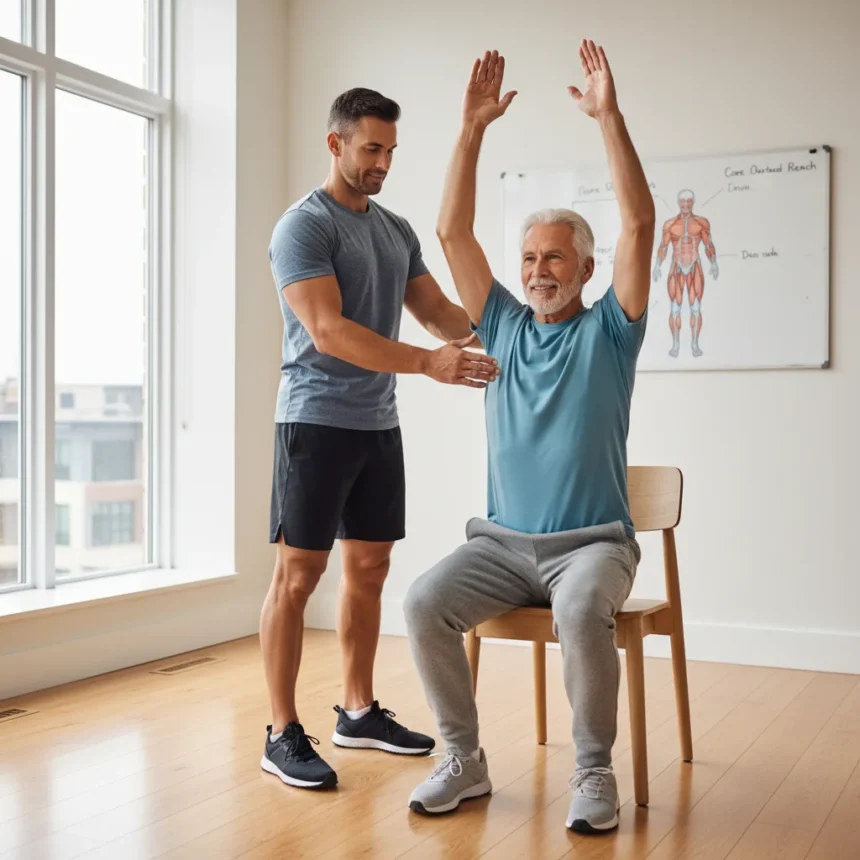
Functional core strength matters more as we age. A personal trainer at Tom’s Guide has spent over six years working with his 72-year-old father to build the stability and mobility needed for daily life, and he credits one particular exercise as the foundation of that progress.
Key Takeaways
- One exercise forms the cornerstone of a 72-year-old’s functional core strength routine.
- The trainer has worked with his father for over six years on age-focused strength training.
- Functional core strength supports balance, mobility, and everyday resilience in older adults.
- Hip mobility and core stability work together to prevent falls and improve movement quality.
- The exercise requires no special equipment and fits into a sustainable training program.
Why Functional Core Strength Matters for Aging Bodies
Functional core strength differs from aesthetic ab training. It means the ability to stabilize your spine, control movement through your hips, and maintain balance during real-world activities—reaching for something on a high shelf, stepping off a curb, or simply standing without losing your footing. As people age, this kind of practical strength becomes the difference between independence and limitation.
The trainer’s approach with his father focuses on movements that translate directly to life outside the gym. Rather than chasing bulk or definition, the goal is resilience. Hip mobility pairs with core stability to create the foundation for safe, controlled movement. When either one falters, everyday tasks become risky.
The Single Move That Works
The specific exercise at the heart of this training approach builds functional core strength while improving hip mobility simultaneously. The trainer has found this move so effective that it appears consistently in his programming with his father, and it anchors a broader set of exercises designed to keep a 72-year-old strong, stable, and mobile.


What makes this exercise valuable is its simplicity. It requires no special equipment, no expensive gym membership, and no complex setup. The movement pattern is natural enough that a beginner can learn it quickly, yet it scales to challenge more experienced trainees. The trainer prescribes it with controlled tempo, proper bracing cues, and attention to form—elements that matter far more than raw intensity or high repetitions.
Building a Sustainable Training Program Around Functional Core Strength
The trainer does not rely on a single exercise to transform his father’s fitness. Instead, he uses functional core strength work as the anchor, then layers in complementary movements that address balance, lower-body control, and mobility. Related exercises in his broader programming include single-leg work for balance, overhead pressing for shoulder and core integration, and lower-body movements that build resilience against injury.



The programming philosophy prioritizes consistency over intensity. Six years of steady training beats six weeks of aggressive effort, especially for someone in their seventies. The trainer emphasizes controlled movement, proper breathing, and progressive challenge over time. This approach respects the realities of aging—recovery takes longer, joints need more respect, and sustainability matters more than short-term gains.
Functional Core Strength vs. Traditional Strength Training
Many older adults approach fitness the same way younger people do: heavy weights, high volume, aesthetic goals. The trainer’s work with his father shows a different path. Functional core strength prioritizes movement quality and real-world application over numbers on a scale or muscle size. A 72-year-old who can step down stairs without gripping the railing has achieved something more valuable than hitting a personal record on a leg press.
The exercise featured in this training story sits at the intersection of core work and hip mobility—two qualities that directly support balance and fall prevention, the top injury risk for older adults. By addressing both simultaneously, the trainer maximizes the return on his father’s training time.
Is This Exercise Safe for Beginners?
Safety matters in any training program, especially for older adults or those returning to exercise after time away. If you are beginning a new fitness routine, are recovering from injury, or have any underlying health conditions, consult a qualified healthcare provider or physical therapist before starting. Proper form and controlled movement are non-negotiable—moving too fast or with poor alignment can undermine the benefits and create risk.



Can You Do This Exercise at Home?
Yes. The trainer uses this movement with his father in various settings because it requires minimal equipment and space. A clear floor and enough room to move safely are all you need to begin building functional core strength.
How Often Should You Train Functional Core Strength?
Consistency beats intensity. The trainer’s six-year track record with his father suggests that regular, moderate training delivers better long-term results than sporadic hard sessions. Most functional strength routines work best when practiced 2-4 times per week, allowing adequate recovery between sessions.
The real takeaway from this trainer’s work is that functional core strength is not a destination—it is a practice. One exercise does not transform a 72-year-old into an athlete, but one good movement, done consistently with attention to form, builds the stability and mobility that make aging feel less like decline and more like sustained capability. That is worth far more than any single workout.
Edited by the All Things Geek team.
Source: Tom's Guide