





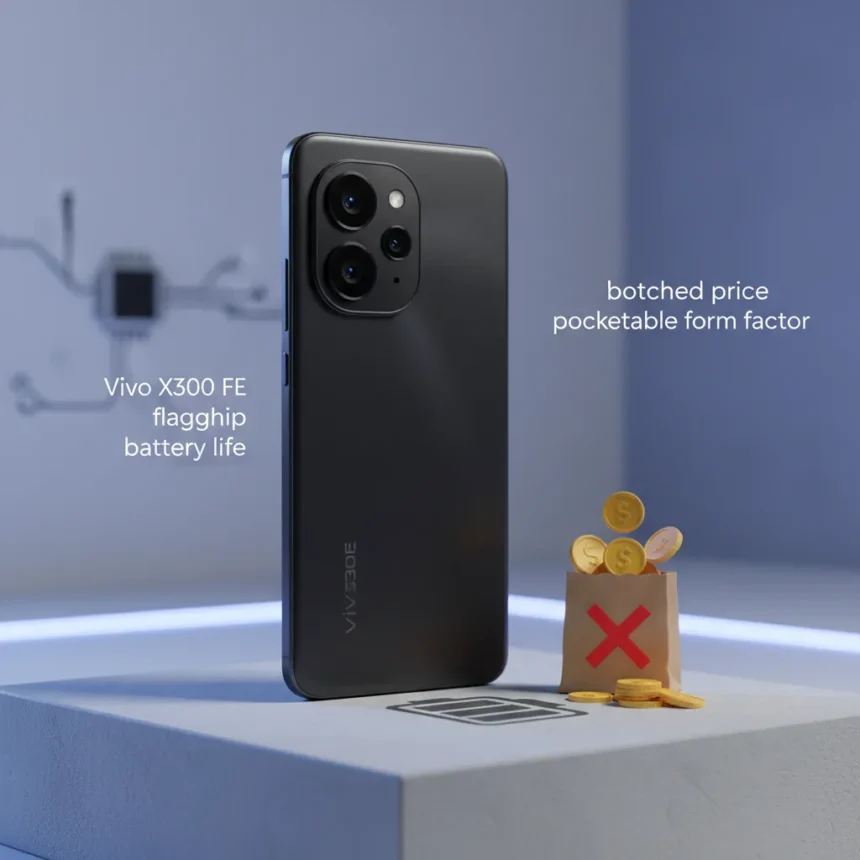
The Vivo X300 FE is a compact flagship Android phone that proves small doesn’t mean weak—but Vivo’s pricing strategy threatens to derail what could have been a genuinely compelling alternative to larger flagships. After two months of daily use, this 6.31-inch device delivers the kind of battery endurance and everyday usability that larger phones struggle to match. The problem? Vivo is asking too much for it.
Key Takeaways
- 6,500mAh silicon-carbon battery lasts 2 full days with normal use, beating larger flagships.
- MediaTek Dimensity 9300 Plus processor handles flagship workloads without throttling.
- UFS 3.1 storage is outdated; competitors now ship UFS 4.0 even at mid-range prices.
- 50MP main camera matches the X200/X300, but wide-angle lens trails Pro models.
- IP68/IP69 rating and Wi-Fi 7 support justify the flagship positioning.
Why Compact Phones Matter in 2026
The smartphone market has spent five years chasing bigger screens and larger bezels. The Vivo X300 FE arrives at a moment when that trend is finally reversing. Compact phones are no longer a niche—they’re becoming a legitimate category again, and the X300 FE proves that small form factors don’t require compromise on performance or battery life. The device fits comfortably in one hand, slides into pockets that larger flagships cannot, and does not require a two-handed grip for basic navigation. For anyone who has grown tired of wrestling with 6.8-inch slabs, this phone feels like relief.
The real achievement here is the 6,500mAh BlueVolt silicon-carbon battery, which achieves 845Wh/L density and consistently delivers two full days of battery life under normal use, or roughly 1.5 days under heavy workloads. That is not a marketing claim—that is sustained performance across a two-month review period. Larger flagships like the Vivo X200 Pro cannot match this endurance, despite their significantly larger batteries. The silicon-carbon chemistry is the differentiator, and it proves that battery technology matters more than raw capacity.
Vivo X300 FE vs. Compact Alternatives
The Vivo X300 FE competes in a space where options are genuinely limited. The OnePlus 13s is the closest rival, but the X300 FE’s battery advantage and more refined compact design give it the edge. Where the X300 FE falters is against the Vivo X300 Pro, which adds dual 200MP sensors and the Snapdragon 8 Elite Gen 5 processor—a significant leap in camera capability that justifies the Pro’s premium positioning. The X300 FE uses the same 50MP main sensor as the X200 and X300 base models, which is solid but does not compete with the Pro’s imaging prowess.


The camera system itself is competent without being exceptional. The 50MP main camera delivers sharp detail and accurate color, the 3x telephoto handles mid-range zoom adequately, and the 50MP front camera excels at selfies and video calls. The weak link is the 8MP ultrawide lens, which does not match the quality of the Pro models’ wider-angle coverage. For everyday photography, this setup is more than sufficient. For users who demand professional-grade optics, the X300 FE will feel like a step down.
The Storage Problem Nobody Is Talking About
Here is where the Vivo X300 FE reveals its cost-cutting reality: it ships with UFS 3.1 storage, a technology that was already aging when the X200 launched and is now frankly outdated in 2026. Mid-range phones from competitors are shipping UFS 4.0 as standard, yet Vivo is still using the older standard on a device positioned as a flagship. The performance difference is measurable—UFS 4.0 delivers faster app launches, quicker file transfers, and smoother multitasking. On a device with a 12GB base configuration (or 16GB with extended RAM), this storage bottleneck feels like a deliberate compromise to protect margins on the more expensive X300 Pro.



The 512GB model does offer 16GB of extended RAM, which is useful for heavy multitasking, but it does not solve the underlying storage speed issue. This is the kind of specification that reviewers notice but consumers often overlook until they experience the lag firsthand. Vivo should have upgraded to UFS 4.0 across the board—the cost difference is minimal, and the performance improvement is noticeable.
Display and Design Excellence
The 6.31-inch AMOLED display with 120Hz refresh rate and 1.5K resolution is genuinely excellent for a compact phone. Colors pop without oversaturation, blacks are deep, and the 120Hz smoothness makes scrolling feel premium. The screen-to-body ratio is high, and the bezels are minimal without being distracting. The overall design is comfortable to hold—the curved edges and modest weight distribution make extended use fatigue-free. The IP68/IP69 rating provides confidence for everyday durability, and Wi-Fi 7 support future-proofs the connectivity.
The Pricing Elephant in the Room
The Chinese variant, the Vivo S30 Pro mini, launched at RMB 3,999 (approximately $557 USD equivalent). The global Vivo X300 FE pricing has not been officially confirmed, but early indications suggest it will command a significant premium over that baseline. That is where the entire value proposition collapses. A compact flagship is only compelling if it undercuts the larger, more feature-rich alternatives. If the X300 FE prices close to the X300 Pro, there is no reason to buy it—just get the Pro and accept the larger size. If it prices significantly higher than mid-range compacts, it becomes a luxury item for a niche audience, not a genuine alternative to flagship phones.
Vivo has created a genuinely excellent compact phone. It holds well, lasts for days on a charge, performs without lag, and delivers a refined user experience. The MediaTek Dimensity 9300 Plus processor is more than capable for gaming and heavy apps, Android 15-based Funtouch OS (or OriginOS in global variants) is responsive, and the overall package feels considered. But none of that matters if the price is wrong. A compact flagship only succeeds if it offers clear value over its alternatives. Right now, the X300 FE feels like a phone searching for a price point that justifies its existence.



Should You Buy the Vivo X300 FE?
If you need a small phone that genuinely competes with larger flagships, the X300 FE is worth serious consideration—but only if the price is right. At the Chinese launch price equivalent, it is a steal. At the premium pricing some retailers are already suggesting, it is a harder sell. The battery life alone is exceptional, and the compact form factor is increasingly rare in a market dominated by 6.7-inch+ devices. The UFS 3.1 storage is a legitimate annoyance, and the camera system, while solid, does not match the Pro tier. For users who prioritize one-handed use and multi-day battery life over latest optics, this phone delivers.
Does the Vivo X300 FE really last two days on battery?
Yes, under normal use—email, messaging, social media, light gaming. Heavy users (constant video streaming, intensive gaming, frequent camera use) should expect around 1.5 days. Real-world battery life varies by usage pattern, but the 6,500mAh silicon-carbon battery is genuinely exceptional for a compact phone.
How does the Vivo X300 FE camera compare to the X300 Pro?
The main 50MP sensor is identical, but the X300 Pro adds dual 200MP sensors and superior telephoto reach. The X300 FE’s wide-angle lens is noticeably weaker, and it lacks the Pro’s advanced zoom capabilities. For everyday photography, the X300 FE is more than adequate; for professional-grade imaging, the Pro is the clear choice.
Is UFS 3.1 a dealbreaker on the Vivo X300 FE?
Not for casual users, but it is a noticeable limitation compared to competitors shipping UFS 4.0. App launches and file transfers are slower, and the gap will become more apparent as apps grow larger. It is a cost-cutting measure that feels out of place on a flagship-positioned device.
The Vivo X300 FE is a genuinely excellent compact flagship that proves small phones can deliver flagship-level performance and battery life. The real question is not whether it is good—it clearly is. The question is whether Vivo’s pricing strategy will allow it to reach the audience it deserves. At the right price, this is the compact phone many users have been waiting for. At the wrong price, it is a missed opportunity.
Edited by the All Things Geek team.
Source: Android Central




