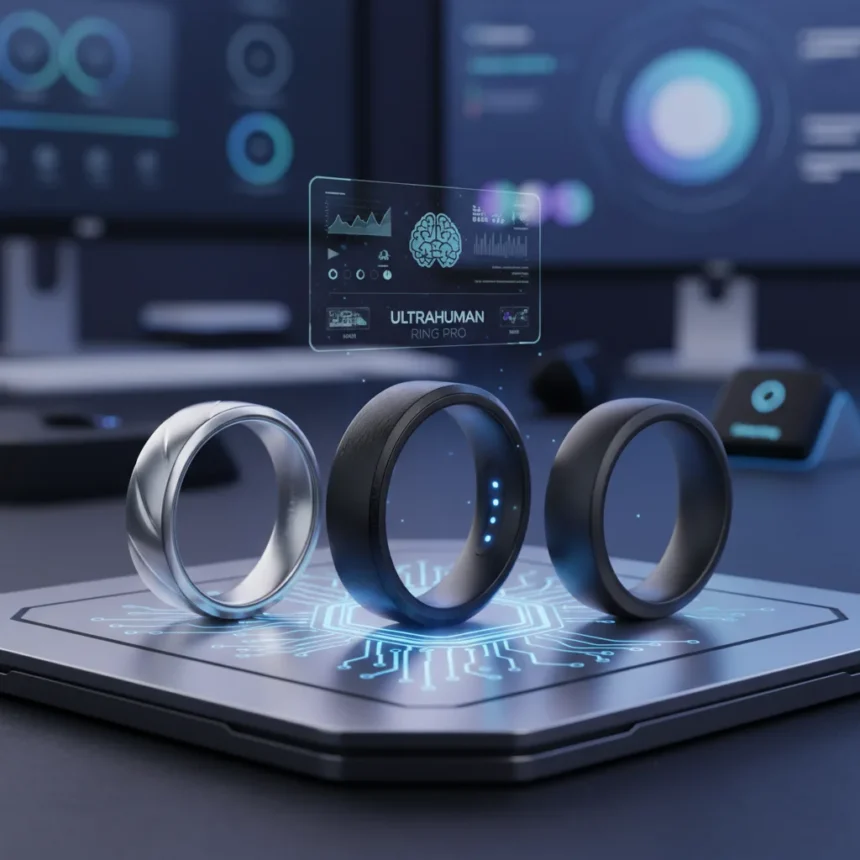
The Ultrahuman Ring Pro is a flagship health-monitoring smart ring launched by Ultrahuman, priced at $479, available in sizes 5–14 with finishes including Bionic Gold, Space Silver, Aster Black, and Raw Titanium. After a pause caused by patent disputes with Oura, the Ultrahuman Ring Pro returns to US pre-orders following customs clearance, marking a significant comeback in a crowded smart ring market where battery life and durability now define competitive advantage.
Key Takeaways
- Ultrahuman Ring Pro delivers up to 15 days of battery life per charge, 3-4x longer than Oura Ring 4 or Galaxy Ring
- Titanium unibody construction and ProRelease Technology for emergency removal make it more durable than lighter competitors
- Free Jade AI system provides real-time health insights across all Ultrahuman devices, no subscription required
- Trade-in program offers up to $115 off for owners of Ultrahuman Ring Air or other smart rings
- Dual-core processor handles on-device computing and stores up to 250 days of health data
Why Ultrahuman Ring Pro’s Battery Life Matters
Battery longevity is the Ultrahuman Ring Pro’s defining strength. At 15 days per charge—extending to 45 days with the new PRO Charging Case—the ring outlasts Oura Ring 4 by more than double. This isn’t incremental improvement. Oura Ring 4 manages roughly 7 days, while Galaxy Ring and Ring Air hover at 4-6 days. According to Ultrahuman CEO Mohit Kumar, “Ring Pro’s battery life is 3 to 4 times that of the competition. It’s a fundamental breakthrough”. Fewer charging cycles mean less wear on the device and more consistent health tracking without interruption—a practical advantage that matters daily.
The extended battery window addresses a real frustration with wearables: constant charging. A ring you wear for two weeks without thinking about power management outperforms devices that demand daily or every-other-day attention. For travelers, athletes, and anyone tracking sleep patterns across weeks, this changes the calculus.
Titanium Build and Emergency Safety Features
The Ultrahuman Ring Pro uses a titanium unibody architecture, weighing 5-6% more than the Ring Air launched in July 2023. That extra weight comes with durability gains—titanium resists scratches, dents, and corrosion better than aluminum or stainless steel. More importantly, Ultrahuman added ProRelease Technology, which allows emergency removal or cutting if the ring becomes too tight due to swelling or injury. This is a safety detail that Oura Ring 4 and Galaxy Ring do not advertise, addressing a legitimate medical concern for wearables that sit on fingers.


The dual-core processor handles health analysis on-device rather than relying solely on cloud processing, improving privacy and reducing latency for real-time insights. The ring stores up to 250 days of health data locally, meaning you retain information even if connectivity drops.
Ultrahuman Ring Pro vs Oura Ring 4 and Galaxy Ring
The Ultrahuman Ring Pro enters a market dominated by Oura, which sued Ultrahuman over patent disputes, forcing Ultrahuman to pull Ring Air from US shelves by end-2025. Ultrahuman countersued in Delhi High Court, a case still pending. The Ring Pro represents Ultrahuman’s redesigned answer to that dispute, engineered to clear US Customs and return to market.



Against Oura Ring 4, the Ultrahuman Ring Pro wins decisively on battery—15 days versus 7 days—and on price transparency: $479 is clear and global, whereas Oura’s pricing varies by region and subscription tier. Oura Ring 4 excels in ecosystem maturity and brand recognition, but Ultrahuman’s free Jade AI system, which delivers personalized health insights without a subscription, removes a major friction point that Oura requires. Samsung Galaxy Ring, launched more recently, competes on ecosystem integration with Android devices but similarly underperforms on battery life.
The trade-in program—offering up to $115 off for owners of Ring Air or other smart rings—directly targets Oura and Galaxy Ring users, lowering the switching cost.
Jade AI: The Free Health Intelligence Layer
Ultrahuman launched Jade alongside the Ring Pro—a real-time biointelligence AI system that analyzes health data and offers personalized recommendations. Unlike Oura’s subscription model, Jade is free for all users, including existing Ring Air owners in the US. This shifts the value proposition: you pay once for the hardware, then access AI insights indefinitely without recurring fees. For users hesitant about subscription creep in wearables, this is a tangible differentiator.
Availability, Sizing, and Trade-Ins
US pre-orders for the Ultrahuman Ring Pro are now open following customs clearance. The ring ships in sizes 5–14, with a pre-order sizing kit arriving first, followed by the device in 4-6 weeks. Global pre-orders began in late February 2026, with shipments starting in March/April 2026. The company is operating on a first-come-first-served basis. Ring Air remains unavailable in the US market, but Ultrahuman offers other products like Blood Vision and Home Monitor.



Will the Ultrahuman Ring Pro’s patent workaround hold?
Ultrahuman redesigned the Ring Pro specifically to address Oura’s patent concerns and submitted it to US Customs for clearance. The fact that it cleared suggests the new architecture sidesteps the disputed patents, but the underlying lawsuit between Ultrahuman and Oura in Delhi High Court remains pending. If Oura wins, Ultrahuman could face injunctions or damages, though a US ruling would not automatically affect the device’s market status.
How does the Ultrahuman Ring Pro compare to Ring Air on price and features?
Ring Air originally launched at $349 and is no longer available in the US due to patent disputes. The Ultrahuman Ring Pro costs $479, a $130 premium, but delivers 15-day battery life versus Ring Air’s 4-6 days, titanium construction instead of lighter materials, and ProRelease Technology. For users who already own Ring Air, a trade-in credit of up to $115 reduces the upgrade cost to $364.
The Ultrahuman Ring Pro’s return to the US market signals that smart ring competition is intensifying beyond Oura’s dominance. With 15-day battery life, free AI insights, and a titanium build engineered for durability, Ultrahuman has built a credible alternative for buyers tired of constant charging and subscription fees. Whether the patent workaround holds long-term remains uncertain, but for now, the Ring Pro offers real advantages that justify its $479 price and warrant serious consideration from anyone shopping for a premium health ring.
Edited by the All Things Geek team.
Source: Android Central