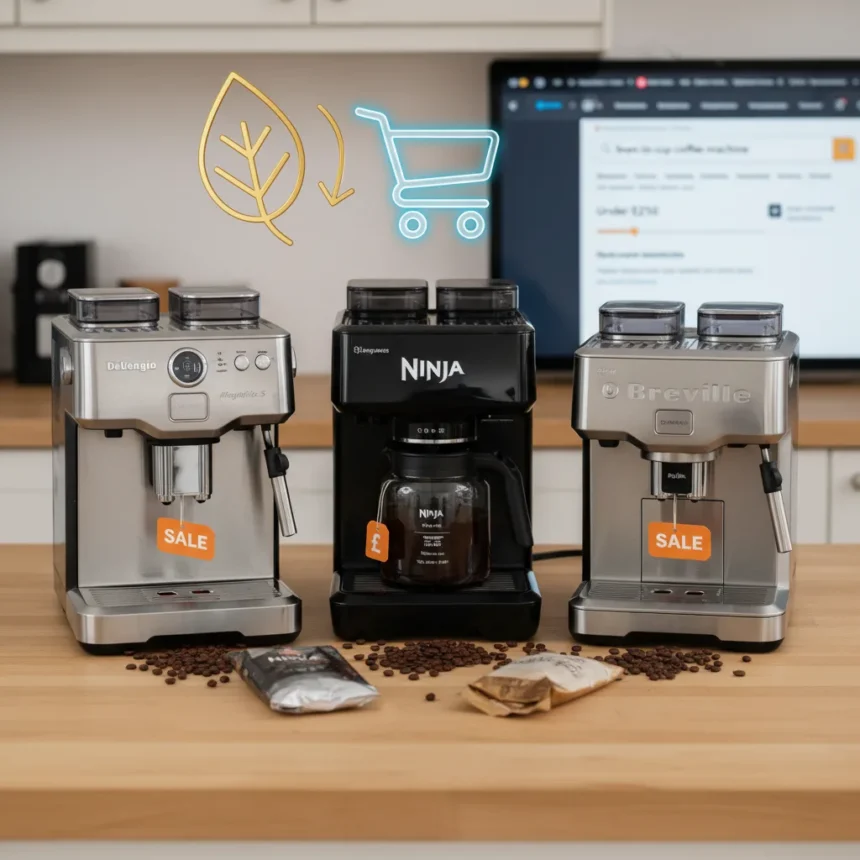
Bean-to-cup coffee machine deals are flooding Amazon’s spring sale, with 12 top-tier machines now discounted across multiple price tiers. If you’ve been waiting for premium home espresso to drop below £250, this sale is your moment. Machines from De’Longhi, Ninja, Breville, and Sage are all competing for your attention, and the savings are genuinely impressive for once.
Key Takeaways
- Amazon’s spring sale features 12 bean-to-cup coffee machine deals spanning budget and premium categories
- Top deals available under £250 and under £500, making high-end espresso accessible to budget buyers
- Leading brands featured include De’Longhi, Ninja, Breville, and Sage across all price tiers
- Savings described as impressive across the full range, from entry-level to premium machines
- Availability limited to Amazon UK with regional restrictions likely applying outside UK
Why bean-to-cup coffee machine deals matter right now
Bean-to-cup machines have always occupied an awkward price space. You either spend under £150 on a basic grinder-and-brew setup that frustrates you daily, or you drop £1,000+ on something that feels like overkill for a home kitchen. Amazon’s spring sale is finally collapsing that gap. Machines that typically sit at £400 to £600 are now hitting the £250 mark, which changes the entire value calculation. For anyone who drinks espresso-based drinks regularly, that price point transforms the category from luxury into genuine utility.
The brands competing in this sale matter too. De’Longhi, Ninja, Breville, and Sage aren’t budget manufacturers throwing out commodity machines. These are the same companies selling machines in coffee shops and specialty retailers. When they discount, it signals genuine market movement, not just clearance desperation. The fact that all four brands are represented suggests Amazon negotiated real volume deals rather than cherry-picking a few stragglers.
Budget options under £250 reshape the entry-level market
The under-£250 tier is where this sale gets genuinely interesting. That price point has historically meant plastic bodies, unreliable grinders, and milk frothers that barely work. The machines in Amazon‘s spring sale at that price flip the script entirely. You’re looking at machines with proper burr grinders, temperature stability, and milk-frothing systems that actually produce microfoam rather than hot foam soup.


What makes this tier compelling is the brand pedigree. Getting a Breville or Sage machine under £250 is rare enough that it reshapes what you should expect from a home espresso setup. These aren’t stripped-down versions of premium machines; they’re full-featured units that happen to be discounted during this specific sale window. The savings are described as impressive, and for machines in this category, that typically translates to £100-£150 off the regular asking price.
The £250-£500 sweet spot for serious home baristas
If you’re willing to stretch to the under-£500 tier, the bean-to-cup coffee machine deals in this sale open up machines that compete with café equipment. Breville’s premium lines and Sage’s professional-grade models sit in this zone, and at these discounted prices, they represent genuine value for anyone serious about home espresso. The difference between a £250 machine and a £450 machine isn’t just more features; it’s consistency, reliability, and the kind of build quality that survives five years of daily use without degradation.

This tier also matters because it’s where machine longevity becomes a real consideration. A £150 bean-to-cup machine might last two years before the grinder clogs or the heating element fails. A machine at the £400-£500 mark, even discounted, is built to last a decade. When you factor in that you’re not buying a new machine every two years, the effective cost per espresso actually drops significantly compared to cheaper alternatives.
What to know before buying
The biggest caveat here is regional availability. These deals are exclusive to Amazon UK, and the pricing is in British pounds. If you’re shopping from outside the UK, you may not have access to these specific machines at these prices, and currency conversion will shift the value proposition. It’s worth checking your local Amazon store to see if similar machines are discounted, but don’t assume the UK deals translate directly to your market.
The other consideration is that bean-to-cup machines have a learning curve. These aren’t automatic espresso makers that produce identical shots every time. You’ll need to dial in grind size, tamp pressure, and extraction time. If you want consistency without effort, a fully automatic machine or a pod system might be a better fit. But if you’re willing to spend 30 seconds dialing in each shot, the flavor ceiling on a proper bean-to-cup machine is dramatically higher than anything else at these prices.
How do these prices compare to regular retail?
Bean-to-cup machines rarely drop this low outside of major sales events. The under-£250 deals are particularly unusual because machines in that category typically stay above £300 year-round. The under-£500 tier sees more regular discounts, but Amazon‘s spring sale appears to be bundling aggressive markdowns across the entire lineup, which is why this moment matters. If you’ve been researching machines for months, this is the sale to act on rather than waiting for a potentially better deal later.



Should I buy a bean-to-cup machine during this sale?
If you drink espresso-based drinks at least twice a week, yes. The machines in this sale at the under-£250 and under-£500 tiers offer enough quality and reliability that they’ll pay for themselves in coffee shop visits within a year. The only reason not to buy is if you’re genuinely uncertain about whether you’ll use it, or if you live outside the UK and can’t access these specific deals.
What’s the difference between bean-to-cup and other espresso machines?
Bean-to-cup machines automate the grinding step, pulling fresh grounds directly from whole beans into the group head. This is different from manual espresso machines, where you grind separately and dose by hand, and different from super-automatic machines, which also steam milk automatically. Bean-to-cup machines sit in the middle: they handle grinding but require you to manage tamping and extraction, giving you control without the full manual workflow.
Are these machines reliable long-term?
De’Longhi, Breville, Sage, and Ninja all back their machines with multi-year warranties and have established service networks. Machines from these brands in the £250-£500 range are built for durability and typically last five to ten years with basic maintenance like regular descaling and cleaning. Cheaper machines from unknown brands often fail within two years, making the upfront investment in a recognized brand worth the extra cost over time.
Amazon’s spring sale on bean-to-cup coffee machines is a rare convergence of brand discounts and market timing. These aren’t artificial markups being slashed by 10%; these are genuine price reductions on machines that hold their value. If you’ve been on the fence about upgrading from instant coffee or café visits, the machines available under £250 and £500 in this sale represent the best entry point in months. Act soon—these deals are tied to the sale window, and once stock clears, prices will reset to regular retail levels.
Where to Buy
38% OFFChefmanCraftBrew Espresso Machine$80$129shop now | 29% OFFAIRMSENGrind & Brew Coffee Maker$100$140shop now | 10% OFFSECPOEDR20Bar Espresso Machine $95$106shop now | 22% OFFNinjaSpecialty Coffee Maker$140$180shop now | 23% OFFDe'LonghiDedica Duo Espresso Machine$230$300shop now
Edited by the All Things Geek team.
Source: T3