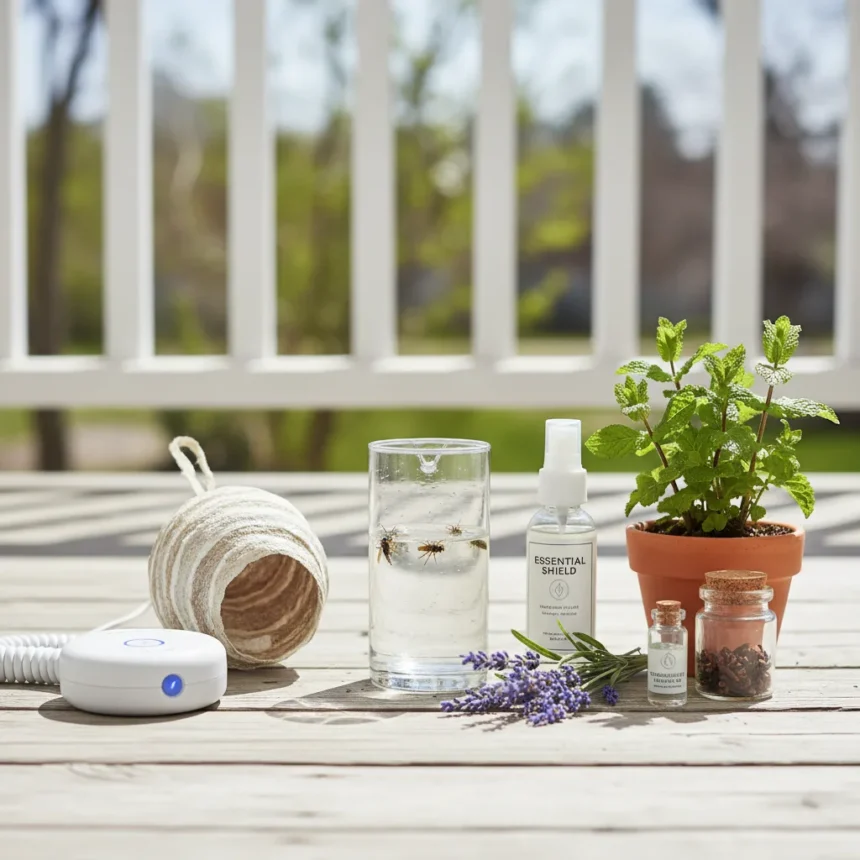
Wasps descend on porches the moment sunny weather arrives, and if you want to keep wasps off your porch before they establish nests, now is the time to act. The good news: you don’t need toxic chemicals or expensive exterminators to reclaim your outdoor space. Five practical methods—most using household items—can deter wasps and trap them before they become a problem.
Key Takeaways
- Wasps are territorial and avoid areas with existing nests or strong repellent scents.
- DIY traps using 2-liter bottles, dish soap, and grape jelly cost almost nothing and work effectively.
- Essential oil sprays with peppermint, clove, or lemongrass repel wasps when reapplied after rain.
- Fake wasp nests made from brown paper bags fool wasps into avoiding your porch.
- Seal cracks in siding, frames, and vents to prevent wasps from nesting in hidden areas.
Build a Decoy Nest From Brown Paper
Wasps are territorial insects. When they spot what appears to be an established nest, they avoid the area entirely. This territorial behavior is the foundation of the decoy nest method. The process takes five minutes: stuff a simple brown paper lunch bag with crumpled newspaper or other packing material, tie off the top with string or a twist tie, and hang it under your eaves or covered porch where it stays protected from rain. Wasps will see the fake nest and move on to find territory elsewhere. Pre-made fake nests are available commercially for around $9.95 for a four-pack, but the brown paper bag version costs almost nothing and is reusable year after year.
The key is placement. Hang decoy nests in the exact spots where you’ve seen wasps congregate—under roof overhangs, near porch railings, or in corners where they tend to investigate. Multiple decoys across your porch multiply the effect, making your space look too densely nested to be worth the risk for real wasps.
Create Wasp Traps Using Household Items
Two simple DIY trap designs work without chemicals. The first uses a 2-liter bottle: fill the bottom with water, add a squirt of dish soap, and drop in a spoonful of grape jelly. Wasps enter from the top, attracted by the jelly, and drown in the soapy water. The second design requires cutting an empty plastic bottle in half horizontally. Fill the bottom half with sugar water just below the rim, then flip the top half upside down (remove the lid first) and insert it into the bottom half like a funnel. Wasps climb in through the narrow opening and cannot escape. Both traps cost pennies to make and should be emptied and refreshed every few days during peak wasp season.


Place traps away from seating areas but still on your porch—near railings, on small tables, or hanging from hooks. The farther traps sit from where you actually spend time, the better, since they attract wasps before capturing them. Check traps daily and dispose of dead wasps safely.
Use Essential Oil Sprays to Repel Wasps Off Your Porch
Wasps despise certain scents. Mix 10 to 15 drops of peppermint, clove, or lemongrass essential oil with a squirt of dish soap and water in a spray bottle, then spray the mixture directly onto porch furniture, eaves, window sills, and door frames. The dish soap helps the oil cling to surfaces rather than evaporating immediately. Reapply the spray every few days or after rain to maintain effectiveness. An alternative approach is soaking cotton balls in the essential oil mixture and placing them in wasp-prone corners—under eaves, near vents, or along railings. The scent spreads without requiring you to spray actively.


Other effective oils include spearmint, mint, lavender, and citronella. You can also mix citrus sprays or vinegar solutions for similar results. The advantage of essential oils is that they’re non-toxic to humans and pets while being genuinely repellent to wasps. The disadvantage is that they require regular reapplication, especially in humid or rainy climates where the scent fades faster.
Burn Coffee Grounds to Deter Wasps
Used coffee grounds, when smoldered, release a smoky aroma that wasps find deeply unpleasant. Dry used grounds completely, place a spoonful in a fireproof container (a metal dish, ceramic ramekin, or ashtray works well), and light them so they smolder rather than flame. The smoke rises and spreads the deterrent scent across your porch. Place the burning container in wasp-prone areas—near vents, along sills, under loft hatches, or beside extractor fans—one or two times weekly during spring and early summer. This method is especially useful for outdoor gatherings and barbecues.
The coffee ground method works best in sheltered areas where the smoke doesn’t immediately disperse. Never leave burning grounds unattended, and use only in outdoor spaces or very well-ventilated areas. The scent lingers for hours after the grounds stop smoking, providing a window of deterrence even after you’ve extinguished them.
Seal Cracks and Install Fine-Mesh Screens
Prevention beats removal every time. Before wasps nest, seal all entry points and gaps in your home’s exterior. Use caulk, expandable foam, or steel wool to close cracks in siding, window frames, door jambs, soffits, vents, and roofing edges. Wasps exploit these openings to access lofts, attics, and wall cavities where they build protected nests. Inspect your porch and home perimeter in early spring, paying special attention to areas where utilities enter the house or where different materials meet.



Install fine-mesh bug screens (20-mesh or smaller) over vents, windows, and any openings that need to remain open for airflow. Retractable screens are available for porches and patios, offering flexibility without sacrificing protection. These physical barriers work year-round and don’t require reapplication like sprays or decoys.
What Attracts Wasps (and What to Avoid)
Understanding what draws wasps to your porch helps you eliminate temptation. Brightly colored, nectar-producing flowers attract wasps relentlessly. If you love flowering plants, position them away from your porch and seating areas—place them in garden beds at the far end of your yard instead. Remove fallen fruit, sugary drinks, and food scraps immediately after eating outdoors. Garbage cans should have tight-fitting lids, and compost bins should be sealed or located far from entertaining spaces.
Avoid using aerosol wasp sprays on your porch unless a nest is actively forming and you’ve called a professional exterminator. Sprays kill individual wasps but don’t address the root problem, and they introduce chemicals unnecessarily. If a nest does form in a hidden location like a soffit or attic, contact a licensed exterminator immediately rather than attempting removal yourself—the risk of stings and incomplete removal is too high.
FAQ
Do fake wasp nests really work?
Yes. Wasps are territorial and will avoid areas where they believe other nests already exist. Decoy nests made from brown paper bags or purchased pre-made versions fool wasps into seeking territory elsewhere. They work best when placed in multiple locations around your porch and maintained throughout the season.
How often should I reapply essential oil sprays?
Reapply every few days or immediately after rain, since water washes away the oil and soap mixture. During peak wasp season (late spring through early fall), weekly applications are a safe baseline. Cotton balls soaked in essential oil require less frequent attention but should be replaced when they dry out or lose scent.
What’s the best time to set up wasp prevention?
Early spring, before wasps become active and begin nesting. Once nests are established, DIY methods become less effective and professional removal becomes necessary. Set traps, hang decoys, apply repellent sprays, and seal structural gaps as soon as warm weather arrives and before you see the first wasps.
The five methods outlined here—decoy nests, DIY traps, essential oil sprays, coffee ground deterrents, and structural sealing—give you a layered defense against wasps this spring. Combine multiple approaches for maximum effectiveness. Most cost almost nothing and use items already in your home. Start early, stay consistent with reapplication, and you’ll reclaim your porch without chemicals or expensive service calls.
Where to Buy
RESCUE!2-Pack Wasp Traps$24.34shop now
Edited by the All Things Geek team.
Source: Tom's Guide