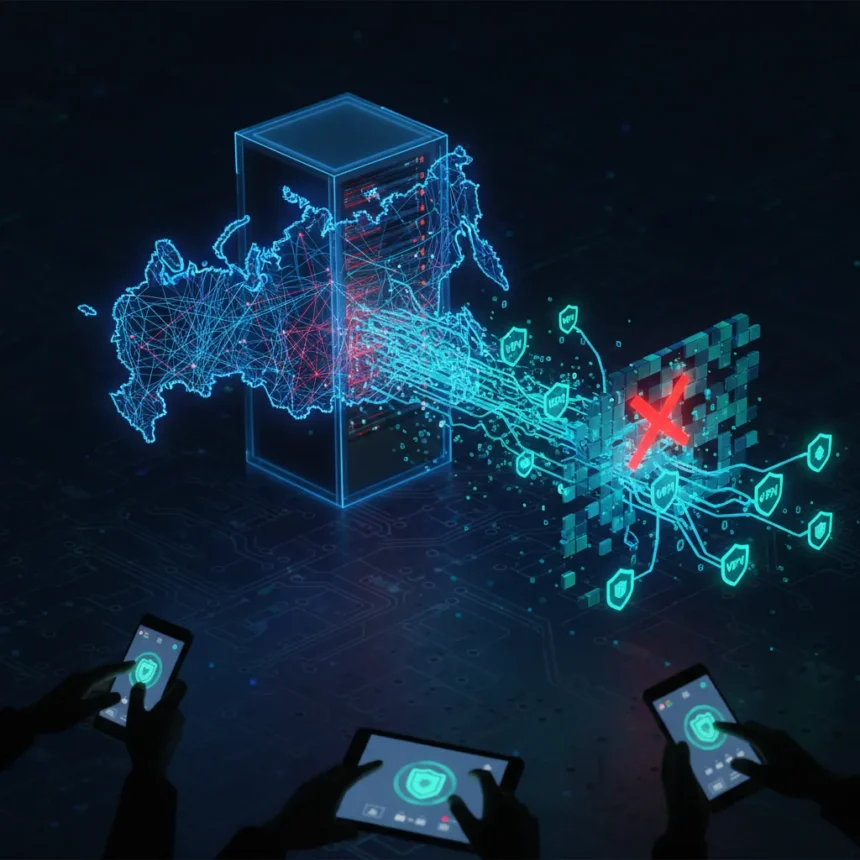
Russia’s internet crackdown represents one of the most aggressive digital censorship campaigns in recent history, forcing millions of users to seek workarounds as the government systematically blocks access to independent platforms and communication tools. The escalating restrictions are reshaping how Russians access information online and creating ripple effects across global tech markets.
Key Takeaways
- Russia’s government is accelerating internet shutdowns and blocking VPN services to control digital access.
- Millions of users are migrating to alternative platforms and encrypted communication tools.
- The crackdown targets major platforms including Telegram and independent news sources.
- VPN demand has surged as the primary workaround for accessing blocked content.
- The restrictions signal a broader shift toward digital authoritarianism in Russia.
How Russia’s Internet Crackdown Is Intensifying
Russia’s internet restrictions have moved beyond selective blocking into systematic suppression of digital freedom. The government is implementing increasingly sophisticated methods to identify and block VPN services, making it harder for ordinary users to access information outside state-approved channels. This is not a temporary policy—it reflects a fundamental shift in how the Russian state views internet control as essential to maintaining political stability.
The crackdown extends beyond simple website blocking. Authorities are targeting the infrastructure that enables circumvention, including VPN protocols and proxy services. Users who once could easily switch between blocked and unblocked services now face cat-and-mouse scenarios where new workarounds appear only to be blocked within weeks. This continuous cycle of restriction and adaptation has become the new normal for Russian internet users.
Why VPN Demand Is Surging Amid the Russia Internet Crackdown
VPNs have become the primary tool for Russians seeking access to blocked content, driving unprecedented demand for these services. Unlike static website blocks, VPNs mask user location and encrypt traffic, making them far harder for authorities to detect and disable. As traditional blocking methods prove insufficient, VPNs represent one of the few remaining options for users who want to access independent news, social media, and communication platforms.


The surge in VPN adoption reflects a fundamental mismatch: the government’s blocking capabilities continue to improve, but so does user demand for circumvention tools. This creates a perpetual arms race where each new restriction triggers innovation in workaround technology. For millions of Russians, VPNs are no longer optional—they are essential infrastructure for accessing the broader internet.
The Broader Impact of Russia’s Internet Crackdown on Global Markets
Russia’s crackdown has consequences far beyond its borders. Tech companies face pressure to comply with Russian blocking demands or lose access to the Russian market entirely. Telegram, one of the world’s largest messaging platforms, has been repeatedly targeted, forcing the service to adapt its infrastructure to maintain availability. This pattern—where Russian restrictions force global platforms to make difficult compliance choices—is likely to intensify.



The crackdown also signals a model that other authoritarian regimes are watching closely. As Russia demonstrates that systematic internet control is technically feasible and politically sustainable, other governments may adopt similar strategies. This has implications for global internet architecture and the future of digital freedom worldwide.
What Users Are Turning To Instead
Beyond VPNs, Russian users are migrating to alternative platforms that offer stronger privacy protections or are harder to block. Encrypted messaging apps, decentralized social networks, and alternative browsers designed for circumvention are all seeing increased adoption. The shift reflects a broader recognition that relying on a single tool or platform is risky when governments are actively trying to block access.
This diversification of workarounds makes the government’s task harder but also more fragmented. Instead of a single dominant circumvention tool, users are spreading across multiple platforms and services, each with different technical characteristics and vulnerabilities. Over time, this may create a more resilient ecosystem of alternatives, though it also means less coordination and standardization among users seeking access.
Is Russia’s internet crackdown likely to continue expanding?
Yes. The Russian government has shown no signs of reversing these policies, and the technical infrastructure for blocking continues to improve. As long as authorities view internet control as essential to political stability, the crackdown will likely intensify. Expect more aggressive targeting of VPN services, encrypted messaging platforms, and independent news sources.



Can VPNs reliably bypass Russia’s blocks?
VPNs remain effective for many users, but their reliability is declining as the government develops more sophisticated detection methods. Some VPN services can still function, while others are blocked regularly. The cat-and-mouse game between authorities and VPN providers means that no single solution is permanently reliable.
How does Russia’s approach compare to other countries’ internet restrictions?
Russia’s crackdown is more aggressive and systematic than most democracies but follows patterns already established in China and Iran, which have implemented even more comprehensive filtering systems. However, Russia’s approach is distinctive in its speed and the breadth of platforms targeted simultaneously, making it one of the most rapid digital transformations toward censorship in recent years.
Russia’s internet crackdown represents a critical moment for global digital freedom. As one of the world’s largest internet markets moves toward comprehensive censorship, the implications extend far beyond Russian borders. For users inside Russia, the era of open internet access is effectively over—replaced by a system where circumvention is necessary and constantly under threat. For the rest of the world, Russia’s approach serves as a cautionary example of how quickly digital freedom can be dismantled when governments prioritize control over openness.
Edited by the All Things Geek team.
Source: TechRadar